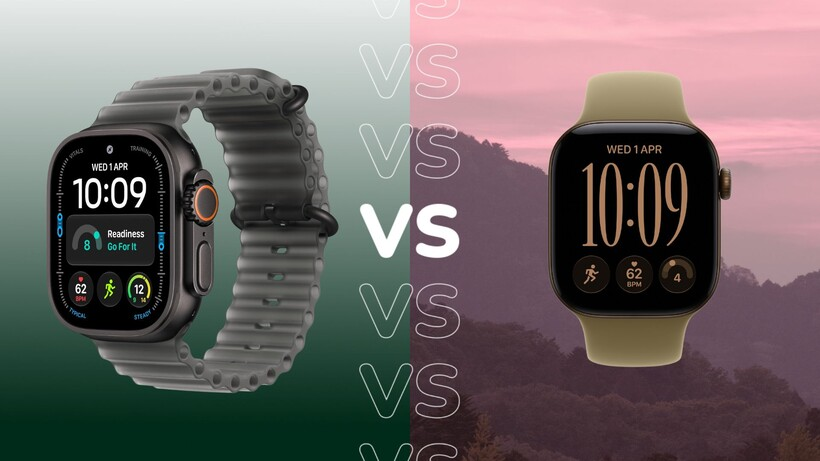
Apple has two very different ideas of what a modern smartwatch should be. On one side, there is the rugged, feature-packed Apple Watch Ultra 4, designed with demanding outdoor activities and longer sessions in mind. On the other, there is the more familiar Apple Watch Series 12, aimed at people who want a slim, versatile smartwatch for everyday life.
At first glance, choosing between them might seem straightforward. The Ultra sounds like the obvious choice for serious athletes, while the Series 12 looks more appropriate for ordinary daily use. But the real differences are more interesting than that.
For UK users, the decision can come down to everything from commuting and fitness tracking to weekend hikes, battery life and how comfortable the watch feels on the wrist.
Two Different Approaches to the Apple Watch
The most important thing to understand about the Apple Watch Ultra 4 vs Watch Series 12 comparison is that these watches are not simply two versions of the same product.
The Ultra range is built around rugged smartwatch design, a larger presence on the wrist and features aimed at outdoor enthusiasts. It is the kind of watch that makes sense when GPS accuracy, durability and battery endurance are high priorities.
The Series 12 takes a different approach. Its appeal is largely about balance. It is intended to work just as naturally with a work outfit as it does with gym clothes, making it easier to wear throughout a normal day.
That difference in philosophy is arguably more important than any individual specification.
Design: Rugged Versus Refined
The Apple Watch Ultra 4 has a noticeably more substantial appearance. Its larger case, robust construction and outdoor-focused design give it the look of equipment rather than simply another piece of consumer electronics.
That can be appealing if you regularly go hiking, cycling or running outdoors. It also suits people who simply prefer a more rugged aesthetic.
The Apple Watch Series 12, meanwhile, follows the familiar Apple Watch formula. Its slimmer profile and lighter feel make it easier to wear for long periods, particularly if you sleep with your smartwatch on.
For many British users, this could be an important distinction. A watch worn during a morning commute, at the office, during a lunchtime walk and while sleeping needs to be comfortable as well as capable.
Display and Everyday Visibility
A smartwatch display needs to work in very different environments. You might check a notification indoors, glance at directions outside or look at workout information under bright daylight.
The Apple Watch Ultra 4 is designed with outdoor visibility in mind, making it particularly attractive to people who spend considerable time outside. Its larger display can also make information easier to read during exercise.
The Watch Series 12 takes a more compact approach while still providing the familiar Apple Watch experience. For messages, notifications, timers, workouts and quick interactions, its smaller footprint can actually be an advantage.
The choice therefore depends partly on what you do most often. If your smartwatch is primarily an extension of your iPhone, the Series 12 may provide everything you need. If the watch itself is becoming a major tool, the Ultra becomes more interesting.
Fitness Tracking Goes Beyond Counting Steps
Modern smartwatches are no longer simply digital pedometers.
Both the Apple Watch Ultra 4 and Watch Series 12 can become useful companions for people who want to monitor activity, workouts and general health trends. But the Ultra’s positioning gives it an advantage for people who take outdoor training more seriously.
For runners, cyclists and hikers, advanced fitness tracking, GPS workout tracking and access to more detailed information can become increasingly important.
Imagine heading out for a long walk through the Lake District. Weather conditions can change quickly, mobile coverage can vary and you may want to keep your phone in your pocket. In that situation, a watch designed around outdoor use can feel considerably more useful.
For someone whose typical workout is a gym session, a run around the local park or a daily walk, the Series 12 may already cover the essentials.
Battery Life Can Change the Experience
One of the biggest practical differences between the two approaches is Apple Watch battery life.
Battery performance is easy to overlook when buying a smartwatch. After all, watches are small devices. But the battery becomes much more important when you are using GPS, tracking workouts, monitoring activity or wearing the watch overnight.
The Ultra line is built around longer endurance, which can make it particularly appealing to users who spend long periods away from a charger.
The Series 12 is more focused on the everyday smartwatch experience. For many users, charging as part of a regular routine may not be an issue at all.
This is worth considering before buying. Someone who regularly takes long weekend adventures may value additional battery endurance far more than someone who spends most of the week near a charger.
Outdoor Features Make the Ultra Stand Out
The Apple Watch Ultra 4 is ultimately designed for users who want their smartwatch to do more outside the home.
Its appeal extends beyond running. Hiking, cycling, swimming and other outdoor activities can benefit from a watch that places greater emphasis on navigation, location tracking and durability.
That makes the Ultra particularly relevant to Britain’s outdoor culture. From coastal walks and countryside trails to weekend cycling routes, there are plenty of situations where a rugged smartwatch can become more than a notification screen.
The Series 12 can still be a capable fitness companion, but its priorities are broader. It is designed to fit into ordinary life rather than specifically targeting adventure.
Health Features Remain Central
For many people, the most useful smartwatch features have nothing to do with extreme sports.
Heart rate monitoring, sleep tracking, activity reminders and workout information can all become part of a normal routine. These features can encourage users to move more, understand their habits and keep an eye on changes over time.
This is where the Apple Watch Series 12 makes considerable sense. Its more understated design means it can sit comfortably alongside a normal daily routine.
The Ultra offers many of the same broad smartwatch principles but adds a stronger outdoor identity. The difference is therefore less about whether one can track health and more about how far you want to take the experience.
Which One Fits Everyday British Life?
For a typical day in the UK, the Series 12 has an obvious appeal.
It can accompany you on the train, display incoming messages during a meeting, track a lunchtime walk, provide workout information at the gym and monitor activity throughout the day without demanding much attention.
The Ultra is a different proposition. Its strengths become more apparent when your day involves long periods outdoors, demanding workouts or activities where durability and battery endurance matter.
That does not mean you need to be an elite athlete to appreciate the Ultra. Some people simply prefer having more capable hardware on their wrist.
Think About How Long You Will Keep It
There is another factor worth considering: long-term smartwatch use.
A smartwatch is not something most people want to replace every year. Battery health, software support, durability and continued performance can all influence how long a device remains useful.
This makes battery condition particularly important as the watch ages. Like other rechargeable electronics, smartwatch batteries gradually lose capacity through normal use. A battery replacement can sometimes extend the useful life of an older device, particularly when the hardware still meets the user’s needs.
For buyers thinking several years ahead, choosing a model based on actual requirements rather than simply buying the most expensive option can therefore make a meaningful difference.
Apple Watch Ultra 4 vs Watch Series 12: The Real Difference
The Apple Watch Ultra 4 vs Watch Series 12 debate is ultimately about priorities rather than simply specifications.
The Ultra focuses heavily on rugged design, outdoor fitness, GPS tracking, longer battery life and a larger, more adventure-oriented experience. The Series 12 takes a more balanced approach, combining fitness tracking, health monitoring, notifications and everyday smartwatch features in a slimmer and more conventional package.
For someone who spends weekends hiking, cycles regularly or wants a smartwatch that can handle longer outdoor sessions, the Ultra’s approach is likely to be particularly relevant.
For someone who mainly wants a stylish everyday smartwatch for notifications, health tracking, workouts and staying connected to an iPhone, the Series 12 offers a very different proposition.