The laptop market is entering an interesting new phase. Artificial intelligence is becoming a bigger part of everyday computing, with manufacturers putting AI features at the centre of their latest Windows PCs. From productivity assistants and intelligent search to image generation and on-device processing, the modern laptop is expected to do far more than simply run Word, browse the web and stream Netflix.
But there is a question that often gets lost in the excitement over AI: what happens to battery life?
For British consumers, this is hardly a minor detail. A laptop used on a train from Manchester to London, in a university library in Edinburgh, or at a coffee shop in Bristol needs to last beyond the nearest wall socket.
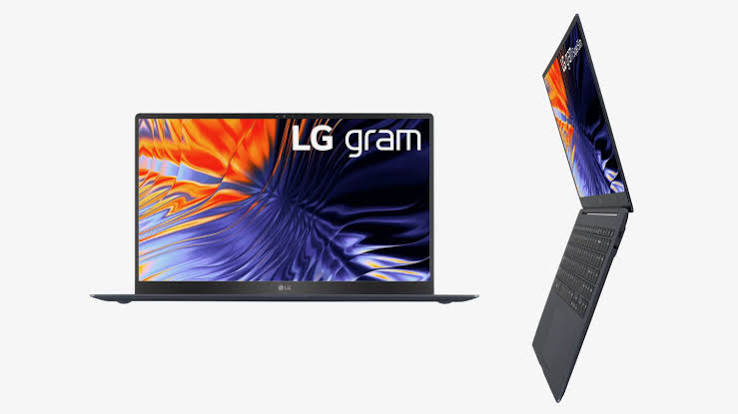
That is where the LG Gram 17 / SuperSlim series provides an interesting case study. These machines have long focused on portability and battery endurance, highlighting a challenge that is becoming increasingly important as laptops become more powerful: can smarter computing remain genuinely mobile?
The AI PC Is Changing What We Expect from a Laptop
AI is no longer simply a feature reserved for specialist software. It is increasingly being integrated into everyday computing experiences.
Modern laptops can use AI capabilities for tasks such as meeting assistance, transcription, photo editing, content creation and productivity. Some workloads can also be processed locally rather than relying entirely on cloud services.
That sounds impressive, but more processing can potentially mean greater demands on hardware and power management.
This creates a new consumer dilemma. Buyers may be attracted by the latest processor, AI acceleration and intelligent features, but they may also expect the laptop to remain cool, quiet and capable of lasting through a full working day.
The LG Gram 17 / SuperSlim series sits neatly within this conversation because its appeal has traditionally centred on keeping a large-screen or highly portable laptop surprisingly easy to carry.
The question is no longer simply, “How powerful is this laptop?”
It is increasingly becoming, “How much can it do before I need to charge it?”
Why Battery Life Matters More in Britain
British laptop users have some particularly awkward real-world scenarios.
Commuters may spend hours travelling by rail, often moving between trains, stations, offices and home. University students can spend an entire day moving between lectures, libraries and shared study spaces. Hybrid workers may alternate between a home office, co-working space and local café.
In all these situations, battery life becomes a practical advantage rather than a specification buried on a product page.
A laptop with excellent performance but disappointing endurance can quickly become inconvenient.
This is one reason the LG Gram 17 / SuperSlim series remains an interesting proposition. A lightweight design is useful, but portability is much more meaningful when users are not constantly carrying a charger as well.
For many people, the ideal laptop is not necessarily the one with the highest benchmark score. It is the one that disappears into a bag in the morning and simply keeps working throughout the day.
The LG Gram 17 Challenge: Big Screen Without the Big Weight
The traditional 17-inch laptop has often been associated with desktop replacement machines. Large screens usually meant large chassis, heavier power supplies and limited portability.
The LG Gram 17 / SuperSlim series challenges that assumption.
A large display can be useful for spreadsheets, coding, research, video editing and multitasking. For professionals working with multiple windows, the extra screen real estate can make a noticeable difference.
Yet the entire point of a lightweight laptop is defeated if its battery cannot support that mobility.
This makes battery performance particularly relevant to a large-screen machine. A user might happily take a lightweight 17-inch laptop on a train, but if it needs to be plugged in halfway through the journey, the advantage becomes less obvious.
The balance between display size, processing power, weight and battery capacity is therefore becoming increasingly important.
SuperSlim Shows the Other Side of the Equation
The LG Gram 17 / SuperSlim series also highlights another trend: consumers increasingly want premium hardware without unnecessary bulk.
Slim laptops look attractive and are convenient to carry, particularly for people who work away from a fixed desk. But reducing physical size can make engineering more complicated.
There is less room for cooling components, batteries and other hardware.
That means manufacturers have to make difficult decisions about efficiency. A modern laptop cannot simply rely on brute-force performance. It needs intelligent power management as well.
This is particularly relevant in the age of AI PCs, where specialised processing hardware is becoming part of the laptop platform.
The more intelligently a system can distribute workloads between different processing units, the greater the opportunity to balance performance with energy consumption.
Battery Health Could Become the Next Big Buying Factor
There is another issue that deserves more attention: battery ageing.
A laptop might offer excellent battery life when new, but lithium-ion batteries naturally lose capacity over time. After years of daily charging and discharging, the same computer may no longer deliver the endurance its owner remembers.
This is where the conversation around AI laptops becomes surprisingly connected to the refurbished market.
A used laptop with powerful hardware can still be perfectly capable for office work, studying and entertainment. But if its battery has significantly degraded, the ownership experience can be very different.
For buyers considering a second-hand LG Gram 17 / SuperSlim series, checking battery condition could therefore be just as important as checking the processor, RAM or SSD.
In some cases, restoring the battery may make more sense than replacing an otherwise capable laptop.
The Refurbished Market Changes the Calculation
The UK market for refurbished electronics continues to reflect a broader shift in consumer behaviour: people are becoming more interested in getting additional years from technology rather than automatically replacing it.
Cost is obviously part of the equation, but sustainability matters too.
Producing a new laptop requires materials, manufacturing capacity, packaging and transport. Keeping an existing machine in use for longer can reduce the pressure to replace perfectly serviceable hardware.
This makes battery replacement particularly interesting.
If an older LG Gram 17 / SuperSlim series still offers the screen, performance and connectivity a user needs, a tired battery does not necessarily mean the entire machine has reached the end of its useful life.
For consumers watching their budgets, that can be a compelling proposition.
AI Features Should Not Distract from the Basics
There is a temptation in the current PC market to focus heavily on AI branding.
AI assistants, neural processing units and intelligent software are exciting, but they do not change the fundamentals of a good laptop.
The keyboard still needs to be comfortable. The display still needs to be good. The machine still needs to be reliable. And, perhaps most importantly for mobile users, the battery still needs to last.
The LG Gram 17 / SuperSlim series demonstrates why these fundamentals remain relevant.
A laptop does not become genuinely mobile simply because it is thin. It becomes mobile when users can confidently leave the charger in their bag and get on with their day.
What Should Buyers Look for in 2026?
For anyone shopping for a new or refurbished laptop in Britain, battery performance deserves a place alongside processor specifications and AI capabilities.
Rather than relying entirely on advertised figures, buyers should consider how they actually use their machines.
Someone working mainly at home may care more about performance and screen size. A commuter might prioritise endurance and weight. A student could need a balance between battery life, portability and price.
For a prospective LG Gram 17 / SuperSlim series buyer, battery condition should also be considered when purchasing an older model.
Look for signs of unusual battery drain, unexpected shutdowns or a significant reduction in runtime. If everything else about the laptop remains suitable, replacing the battery can potentially extend its useful life considerably.
The Smarter Laptop May Be the One That Lasts Longer
The AI PC revolution is making laptops more capable than ever. But smarter software and faster processors do not automatically create a better mobile computer.
For British users, especially commuters, students and hybrid workers, endurance remains one of the most valuable features a laptop can offer.
That is why the LG Gram 17 / SuperSlim series makes such an interesting case study. Its emphasis on lightweight design reflects the direction of modern mobile computing, while its battery performance raises a question that every AI laptop manufacturer will increasingly have to answer.
The future of laptops may not simply be about making computers smarter.
It may be about making them smarter without making users reach for the charger more often.
As AI becomes a standard part of everyday computing, battery efficiency could quietly become one of the most important battlegrounds in the next generation of laptops. And for consumers, that could mean one thing: when comparing the newest AI machines, the best specification may still be the one that keeps working when the power socket is nowhere in sight.