Microsoft raises base Surface prices by 20 percent

A 13-inch Surface Pro now starts at $1,200.

Add Microsoft’s Surface lineup to the list of gear that now costs more.XDAfirstspottedprice hikes of around 20 percent for most existing models. The damage applies to the Surface Laptop and Surface Pro lines, as well as power bricks.

  • Surface Laptop, 13.8-inch— now $1,199.99, up from $999.99
  • Surface Pro, 13-inch— now $1,199.99, up from $999.99
  • Surface 65W Power Supply— now $119.99, up from $89.99
  • Surface 127W Power Supply— now $174.99, up from $124.99

The starting prices of the13.8-inch Surface Laptopand13-inch Surface Proincreased from $1,000 to $1,200. Of course, the new devicesMicrosoft launched on Tuesdaystand pat. (And their curiously high prices now make more sense.) Only the 15-inch Surface Laptop was spared, sticking to its original $1,300.

Even accessories like power supplies are part of the fun. The 65W Surface power supply shot up from $90 to $120, and the 127W variant went from $125 to $175.

PCMagnotesthat retail partners like Best Buy and Amazon still show the original prices. So, if you were considering a new Surface, that’s a good place to start.

>>>Replacement battery for Microsoft Surface Pro X 13″ Tablet
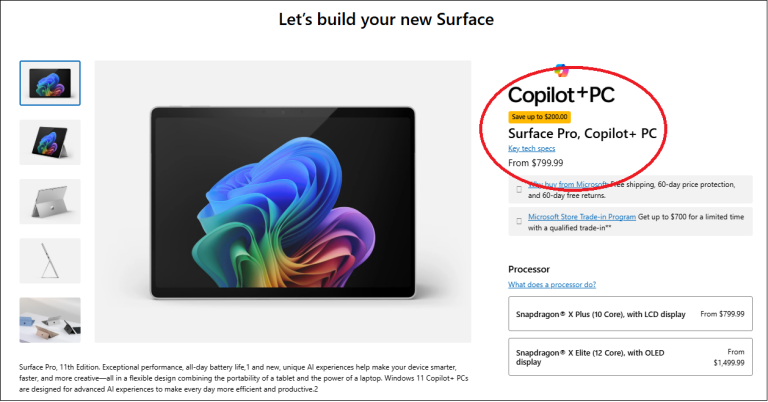
Surface Pro price on May 5 (Credit: Wayback Machine/Microsoft)
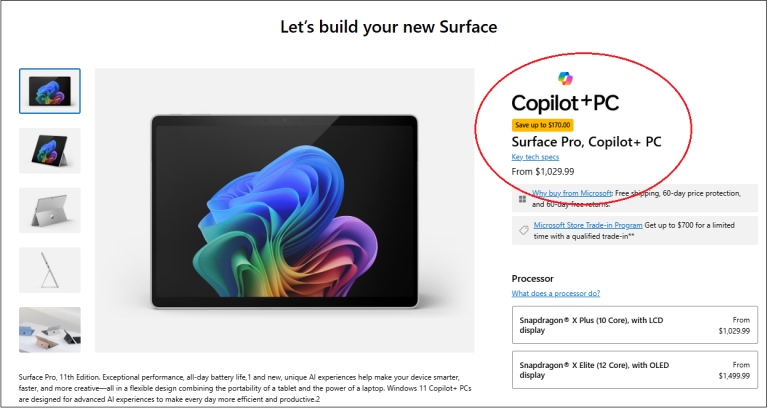
Surface Pro price on May 7 (Credit: Microsoft)

The move followslast week’s Xbox price increases. The Xbox Series X is now $80 more expensive, while an Xbox Series X costs an extra $100.

>>>Replacement battery for Microsoft Surface Pro 8

Unsurprisingly, Microsoft hasn’t explicitly tied the price hikes to President Trump’s tariffs. WhenXDA‘s Rich Woods asked the company about the surprisingly expensive entry-level Surface modelsintroduced this week, it neither confirmed nor denied the connection.

App Store rule change takes the headache out of buying books on iOS Kindle app

Making purchases from your iPhone just got a whole lot easier

A hand holding an iPhone 12 Mini showing the updated buying page on the Kindle iOS app

It’s finally getting easier to buy ebooks on the iOS Kindle app after a major App Store rule change.

In response to a court order in the case ofEpic Games, Inc. v. Apple Inc.,Applehas been forced to stop charging a commission on purchases made outside of the App Store. This is good news foriPhoneusers in general, but solves an especially annoying issue with the iOS Kindle app, which has received an update to make buying ebooks on your iPhonemucheasier.

Thanks to this court order, making purchases from your iPhone just got a whole lot simpler.

>>>Replacement battery for Amazon Kindle Paperwhite 5

iOS Kindle app gets desperately-needed update after App Store rule change

If you opened the iOS Kindle app recently days, you may have noticed you now have the option to purchase books in the app… sort of.

Prior toa major App Store rule changeon May 1, you couldn’t purchase books through the iOS Kindle app at all (or the Amazon app) and instead had to go through the entire process in your web browser. Now, you can simply tap “Get Book” and the Kindle app will take you directly to the book’s purchasing page in your browser.

This is a far more streamlined process and it’s thanks to a recent court order that forced Apple to stop charging commissions on external purchases.

So, for instance, previously an app developer couldn’t include a link in their app taking the user to their web browser to make a purchase outside of the app. That rule was used to effectively force app developers to only allow purchases through their apps, which would force them to give Apple a 30% commission on every purchase.

Now, developers are allowed to include buttons and links directing users to external purchase mechanisms, mainly web browsers, without being forced to pay a commission. As a result, buying things like ebooks on your iPhone is now much more straightforward and user-friendly.

>>>Replacement battery for Amazon Kindle HD Fire

The court case slowly opening iOS to third-party app stores

As one might expect,Apple is appealing the rulingthat led to this change in the App Store rules. However, I hope for the sake of iOS andiPadOSusers that the rule change stays in effect since it contributes to a much better user experience with apps like Kindle and others that allow for digital purchases.

In fact, Epic Games, the plaintiff in the case that led to last week’s App Store change, has had an ongoing dispute with Apple over its restrictions and commission system for purchases made on iOS. Epic currently doesn’t have an iOS/iPadOS app available in the U.S. due to those restrictions.

Users in the European Union can download the Epic Games Store on their iOS and iPadOS devices thanks to the Digital Markets Act, which forced Apple to allow the use of third-party app stores, but that ruling only applies to users in the EU. Luckily,that may change soonthanks to rulings in Epic’s case against Apple.

I’m hoping Epic continues to score wins in its case against Apple since this case is finally bringing more freedom to iOS, giving users more choice over the apps they download, where they download them from, and how they purchase digital items like ebooks. Although, admittedlyI still prefer my ereaderover the Kindle app.

Google confirms Android 16’s useful new battery health tools will skip older Pixel phones

Only Pixel 8 and newer devices will get the update

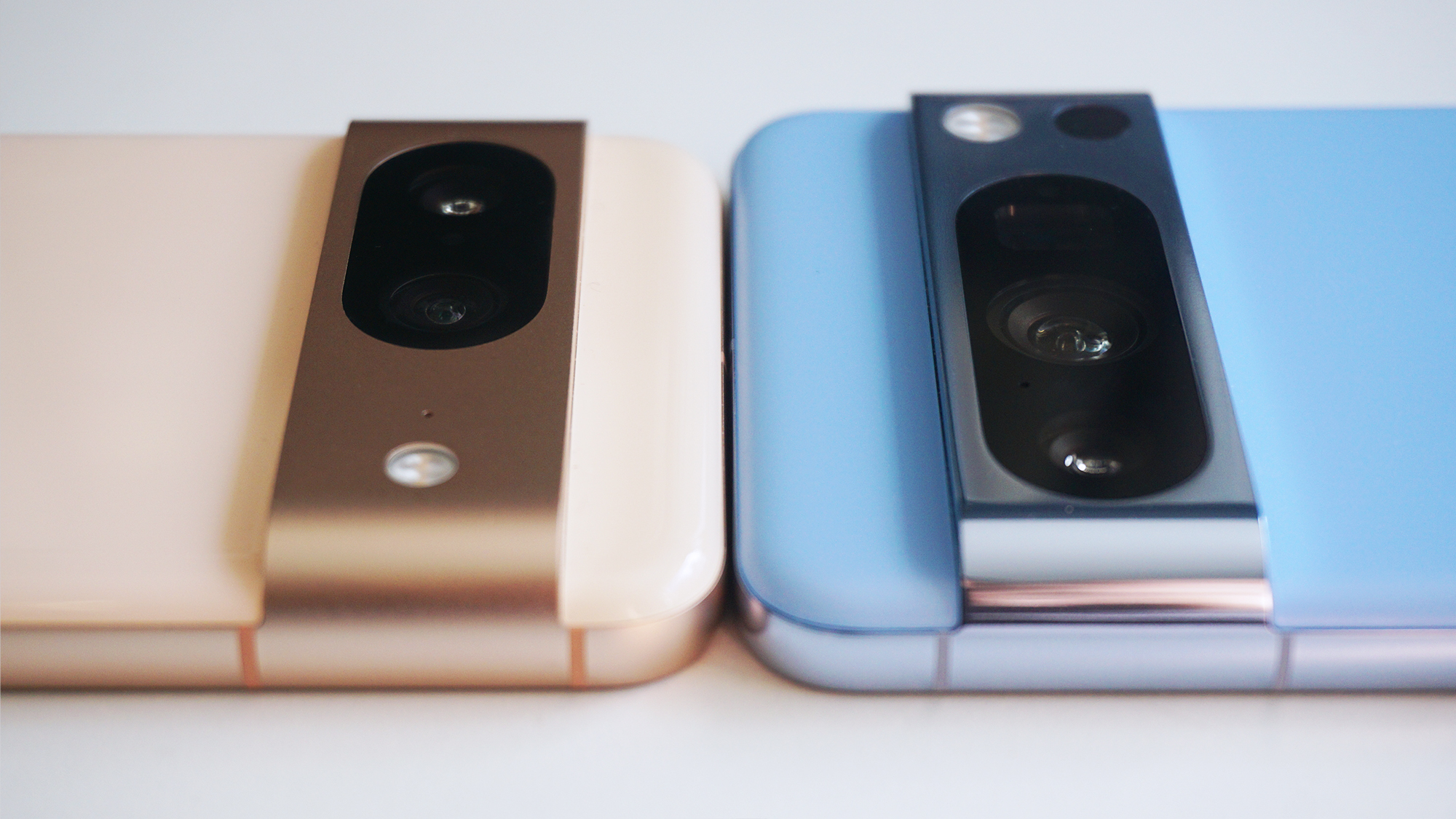
Google Pixel 8 review Pixel 8 Pro cameras tops

  • Google’s Android 16 beta includes new battery health tools
  • It has seemingly confimed they’ll be exclusive to Pixel 8 and newer devices
  • We might learn more at Google I/O on May 20, 2025

One of the most useful features coming to devices withAndroid 16will be new battery health tools found in your Pixel phone’s settings app – and we now know which devices will get them when they launch for everyone.

Android 16 will likely get detailed atGoogle I/O, but before then some software betas are cluing us into some of its features.

This includes new battery health capabilities.

The main tool is a stat at the top of the battery health page, which represents your phone’s current max battery capacity as a percentage of what a new standard battery’s capacity would be. For example, if it reads 93% that’sGooglesaying that your phone’s 100% charge is equivalent to a new battery (that is otherwise identical) being 93% charged.

It also highlights if your phone’s battery health is normal or not – all batteries degrade over time, but you’ll know if it’s degrading faster than it should be – as well as links to articles which could improve your battery health.

>>>Replacement battery for Google Pixel 9 Pro Fold

Better battery, better life

Android 16 logo on a phone

Android 16 should be detailed soon

It doesn’t necessarily add new protective measures – like theGoogle Pixel 9a’s Battery Health assistance– but it should nevertheless be a handy tool for contextualising why battery health measures are useful, and offer you useful tips if you are struggling to look after your phone’s battery.

So it’s a shame to discover that,according to Googlein an Android 16 beta bug report (via, the feature which is currently “supported in Beta 3 onPixel 8aandPixel 9products including 9 Pro Fold” won’t be coming to older Pixel devices due to “product limitations.”

Google’s phrasing strongly suggests only Pixel 8 phones and newer will get the latest battery health tools – it does leave open the door for it to come to older devices when Android 16 launches in full, though we aren’t holding our breath.

>>>Replacement battery for Google Pixel Fold

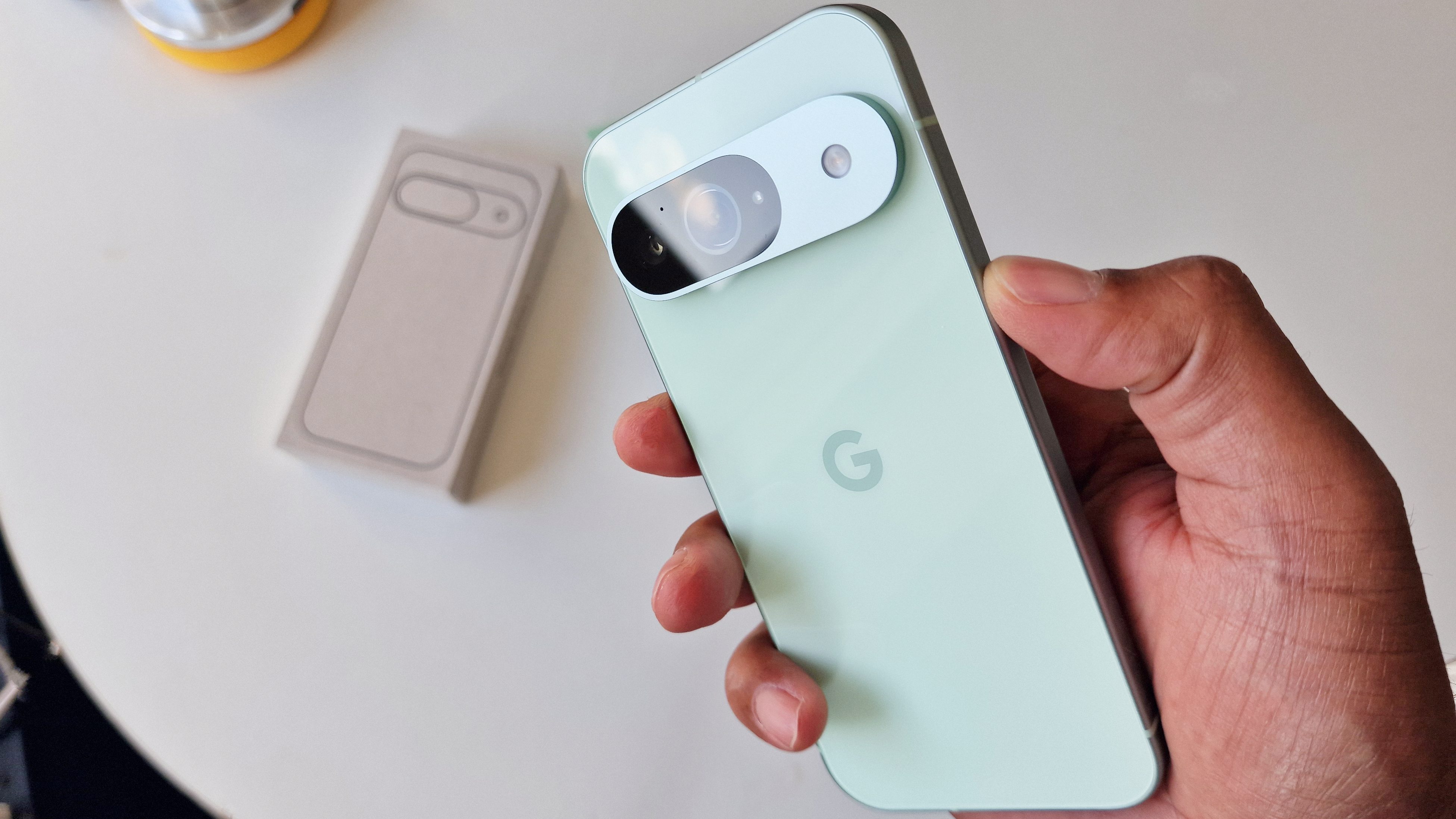
Google Pixel 9

Battery health is one of the least flashy but most useful tools software updates can provide.

Whether you replace your phone every two years or every five, knowing your device will be as reliable as possible for as long as possible is something we all appreciate. Afterall, no one likes those moments of terror as your phone’s battery ticks down at the worst possible time.

Alongside battery changes Android 16 will includea major visual refresh, anew and improved desktop mode, andUSB hack protections.

CAN YOU POWER A MONITOR BY PLUGGING IT INTO YOUR COMPUTER’S USB PORT?

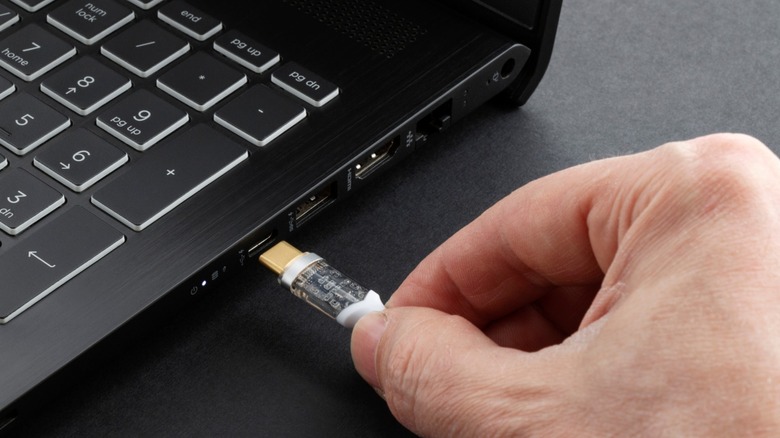
Connecting a USB-C cable to a laptop

Thin and light laptops now pack in enough performance to get you by most CPU or GPU-intensive tasks you throw at them, and yet, a few bucks spent on laptop accessories can skyrocket your productivity. An external monitor is inarguably the most effective way to do so, allowing you to view and work with multiple app windows without having to furiously alt-tab every few seconds.Setting up an external monitor is straightforward — you hook it up to a power source and connect it to your laptop or desktop over HDMI or DisplayPort. This works well if you often dock your laptop in a designated workspace, but most monitors simply aren’t portable enough, given their size and the fact that you would need to carry around a bulky power adapter. Seeing how universal and convenient USB-C has become, the idea of connecting and powering an external display using just one cable must have struck your mind, but can it actually be done?The short answer is yes, but you will need a compatible display as well as a relatively modern laptop that offers this functionality. With exponential leaps in charging speeds and data transfer rates, the right USB-C port and cable can not only carry a video signal to a portable monitor but also power it over the same connection. Here’s how to check if your laptop can power a monitor via USB-C and what to look for when shopping for one.>>>Replacement battery for Lenovo ThinkPad L16 Gen 1Exploring plug and play portable monitors

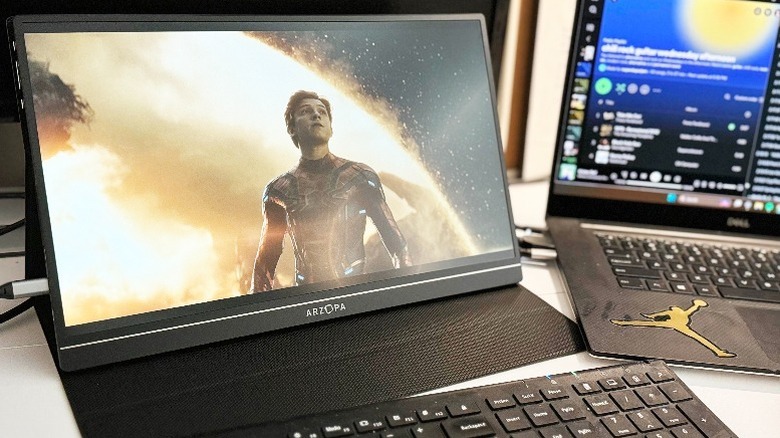
Portable monitor connected to a laptop

A quick search on Amazon reveals several listings for portable monitors from various brands, often coming in at sizes quite similar to most laptop screens. This way, you’re essentially doubling the screen real estate without being affixed to a traditional desk setup. Some of these options even offer touchscreen functionality, which can open interesting opportunities for working with interactive content. However, it’s important to go through each of the options you’re considering and look at how the portable monitor is being powered. Products like the Arzopa Portable Monitor that we went hands-on with feature this functionality, meaning you get a fully working external display powered by USB-C and displaying a video feed using the same connection. Displays that support both video and power over USB-C will list this feature explicitly, so be sure to look for it in the tech specs section.>>>Replacement battery for Lenovo IdeaPad Slim 5 14IMH9A plug-and-play portable monitor is only half the equation — in order to use USB for displays, you will also need to make sure your laptop features a USB-C port with both Power Delivery and DisplayPort Alt Mode. Most modern laptops, including MacBooks, offer this convenience, but it’s best to look for this functionality by visiting the product page. You can also directly connect a portable display to a smartphone or handheld consoles like the Nintendo Switch — although certain scenarios may have you relying on an external power source such as a power bank.

WHAT DOES THE ‘PD’ IN USB PD STAND FOR & AND WHY IS IT IMPORTANT TO USB DEVICES?

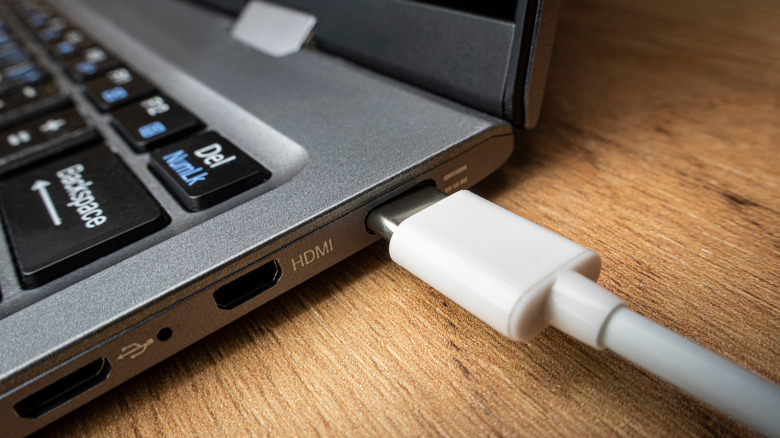
USB type C cable loosely connected to a laptop

With the growing number of devices that most people use today, be it smartphones, smartwatches, laptops, wireless earbuds, and other gadgets, charging them quickly and efficiently becomes important. That’s exactly the problem USB PD aims to solve. But what exactly is USB PD, and what makes it so special? The ‘PD’ in USB PD stands for Power Delivery. USB PD is a universal fast charging standard used in most modern-day smartphones, laptops, tablets, monitors, and more. This enables you to use a single charger to power a variety of devices, eliminating the need to carry different chargers. USB PD was first launched back in 2012 and is currently in its third revision. The latest version can deliver up to 240W, while the older versions, namely USB PD 1.0 and 2.0, topped out at 100W. While those earlier versions worked with USB-A to USB-C cables, USB PD 3.0 requires USB-C on both ends. >>>Replacement battery for HP Officejet 100 150 H470Why is USB PD special?

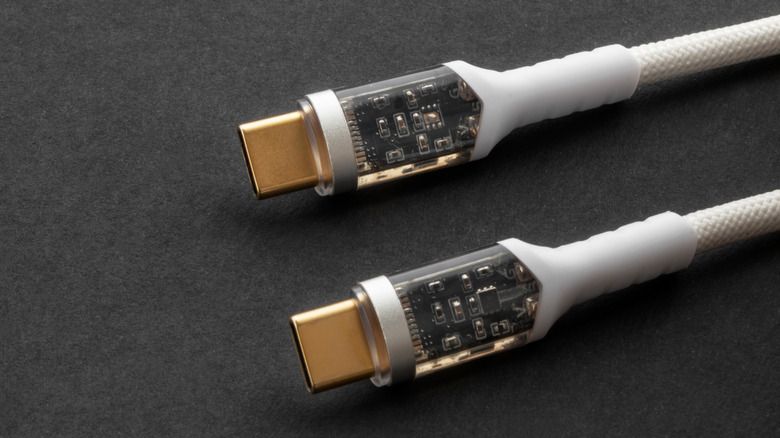
White USB C cable with transparent connector

Higher power output isn’t the only feature that makes USB PD special. It also supports multiple voltage levels like 5V, 9V, 15V, and 20V, and enables communication between both the charger and the connected device to determine the appropriate voltage level. For instance, if a smartphone only requires 18W, the USB PD charger will only supply exactly that. Similarly, a lower power headset will only receive the power it needs. This not only reduces energy waste and prevents overheating, but also makes the charging process safer. >>>Replacement battery for MSI Summit E13FlipEvo A11MT-205RU-WW71185U16GXXDX10PAnother feature that separates USB PD from other charging technologies is its bidirectional power delivery. While older USB chargers can only deliver power from the charger to the device, USB PD allows the power to flow both to and from the device. This means that you can use a smartphone that supports USB PD to charge another device, such as a laptop.To take full advantage of USB PD, you need to have a charger, a cable, and a device that all support the standard. Also, it’s important to note that while USB PD is capable of delivering up to 240W of power, most smartphones max out around 45W, and laptops usually demand up to 100W of power. That said, companies like Oppo have been working on a 240W charger, so it’s likely only a matter of time before the higher wattage support becomes a standard across devices.