We special in laptop battery ,laptop adapters for most of top brands, such as apple,acer, asus, dell, fujitsu,hp, compaq, ibm, lenovo, toshiba, samsung, sony on UK,all the ac power adapters, laptop batteries are high quality and low price.
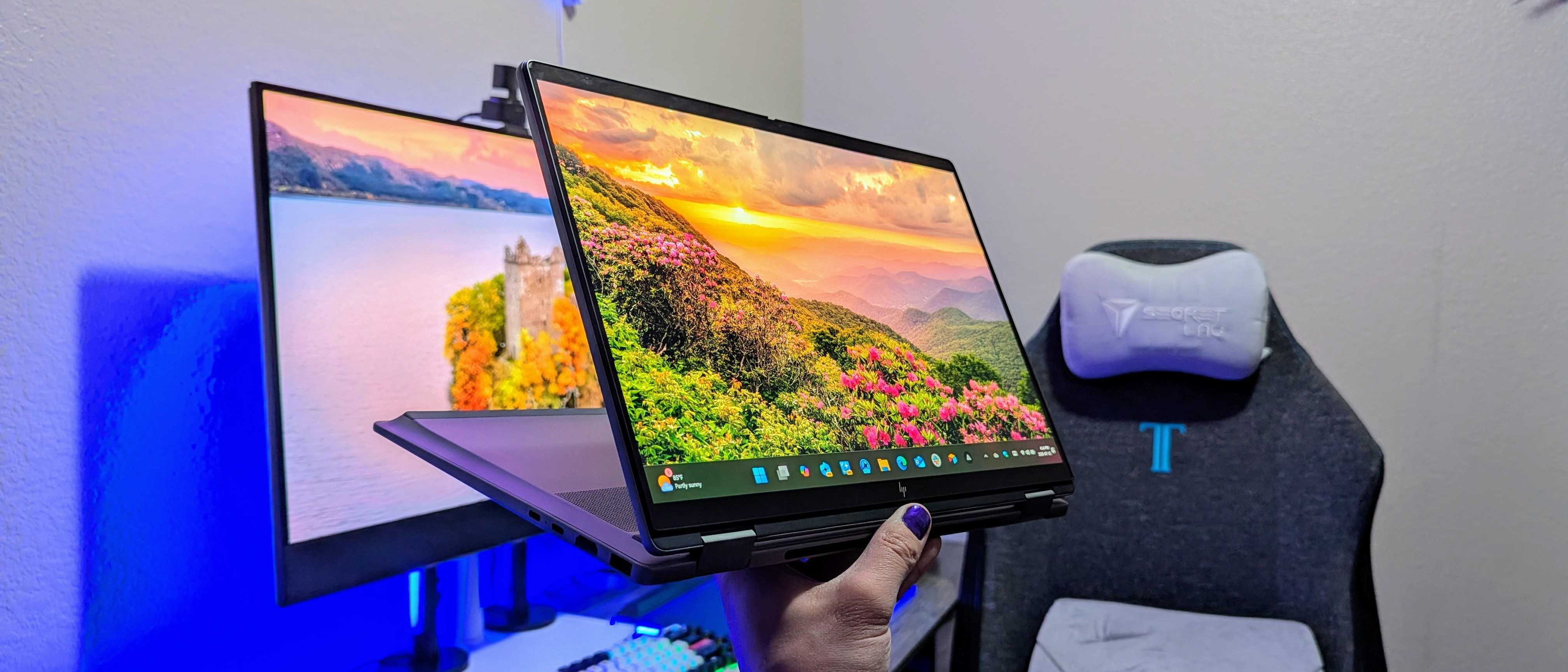
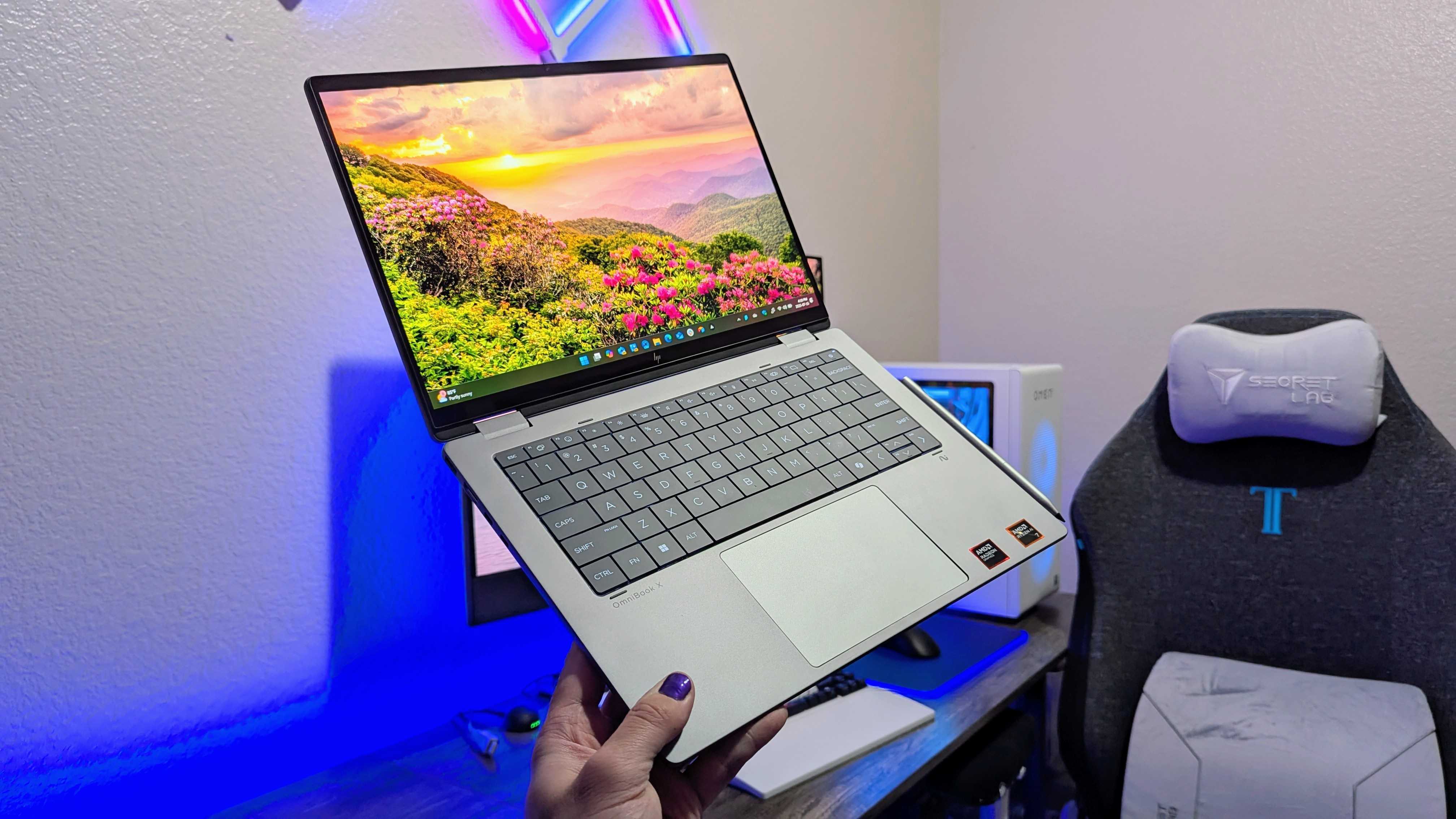
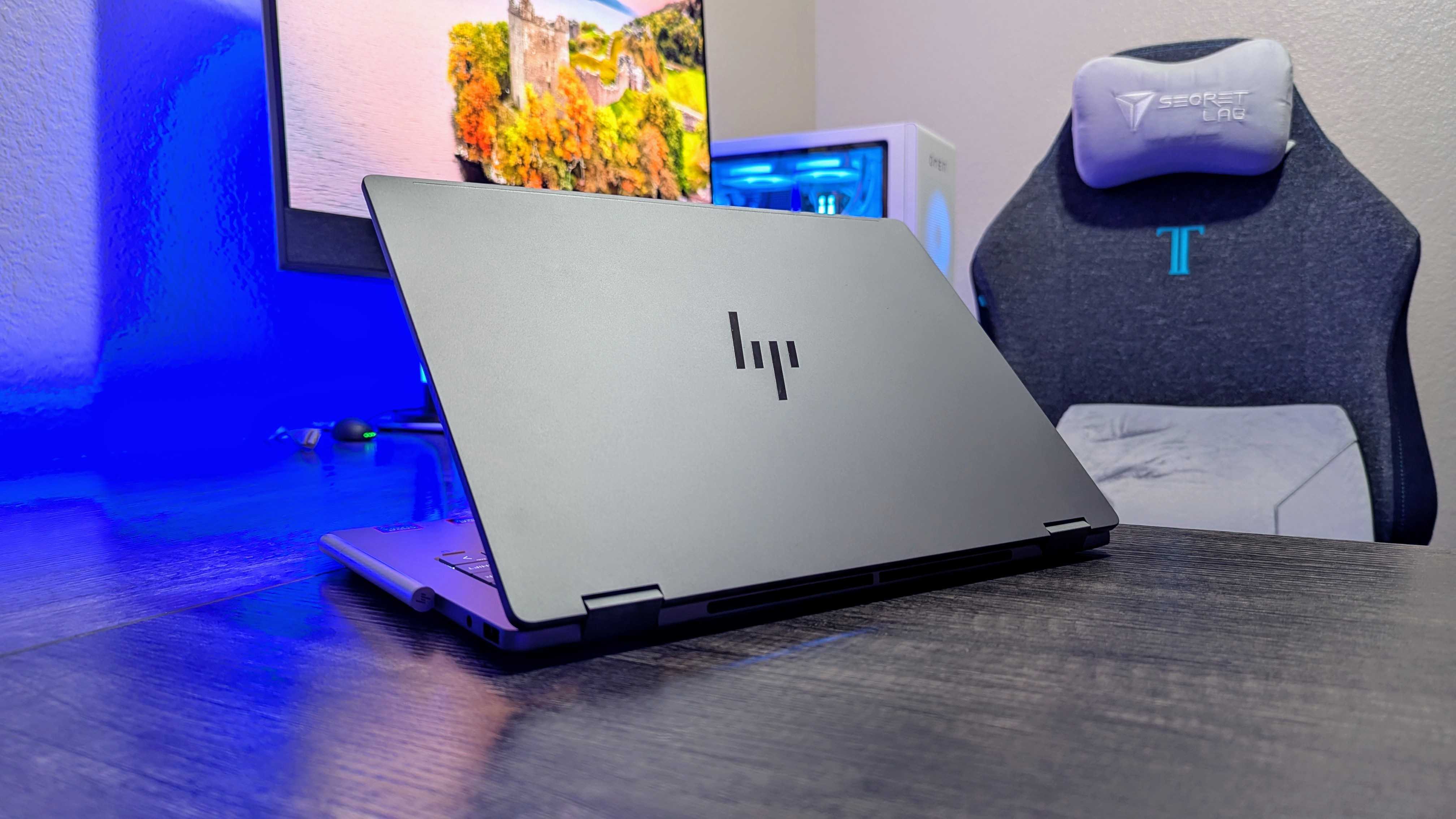
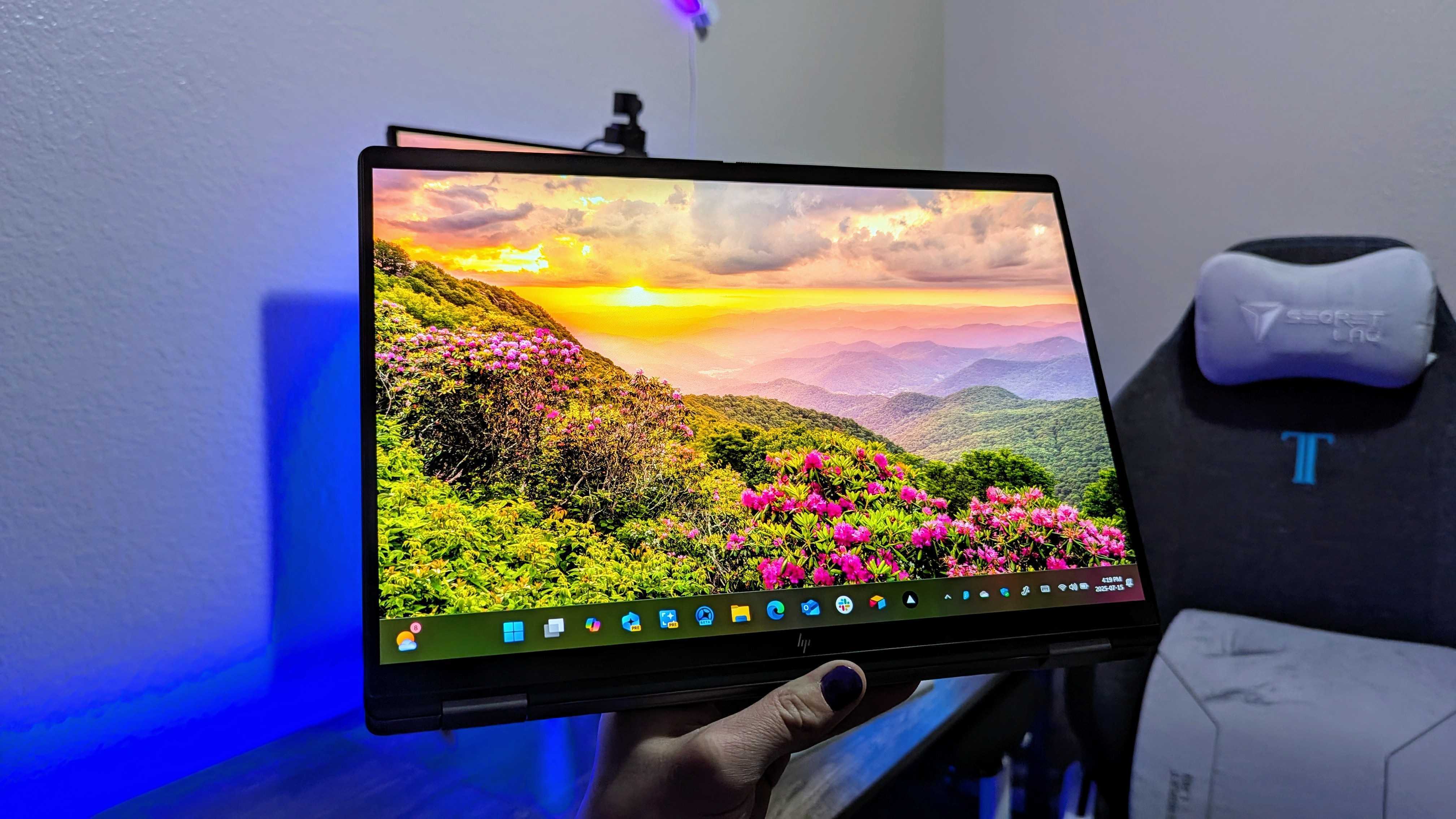
The HP OmniBook X Flip 14 (2025) is a great 2-in-1 laptop that is already benefiting from frequent deals.
Verdict
The HP OmniBook X Flip 14 (2025) isn’t an exciting laptop, but it does tick a lot of boxes for a capable and reliable mid-range 2-in-1 PC. I ended up liking the boring design more than I expected and was impressed by the performance, but the keyboard feels like a downgrade, and the battery can’t keep up with the longest-lasting laptops on the market. All my criticisms are softened by frequent discounts, though.
Pros
+Durable and practical 2-in-1 design
+Plenty of Intel and AMD configuration options
+Strong performance with AI features
+Already regularly going on sale
Cons
-Battery life isn’t too impressive
-New lattice-less keyboard design feels like a big step back
The vast majority of more affordablelaptopsare dreadfully boring, especially in the design department. It’s intentional, of course — premium devices will always be more exciting, but it does make reviewing budget and mid-range laptops a lot less interesting.
The HP OmniBook X Flip 14 (2025) is an important addition toHP’s growing OmniBook lineup, but it doesn’t escape the mid-range curse.
It’s a safe and boring laptop with a sturdy, versatile 2-in-1 design, strong enough performance to handle everything most people do with their laptops, and a range of configuration options to suit your needs or budget. It helps that it’s already regularly going on sale, too.
I did find myself enjoying this laptop’s design more than I expected (notable due to one feature), but I’m absolutely not a fan of HP’s decision to begin moving toward new lattice-less keyboards.
A safe 2-in-1 design with one unique feature
At a glance, this looks like a lot of other mid-range Windows laptops.
Most companies use androgenous designs across their entire budget and mid-range lineups, and HP is the same. The OmniBook X Flip 14 is your standard Windows laptop clad in aluminum, with dual 360-degrees hinges to support those 2-in-1 features.
At over 3lbs and between 11.4 and 17mm (depending on where you measure), the OmniBook X Flip isn’t the thinnest or lightest machine around, but it doesn’t feel bloated by any means.
I honestly dig how this laptop looks, and it all comes down to that “swoop” at the front.
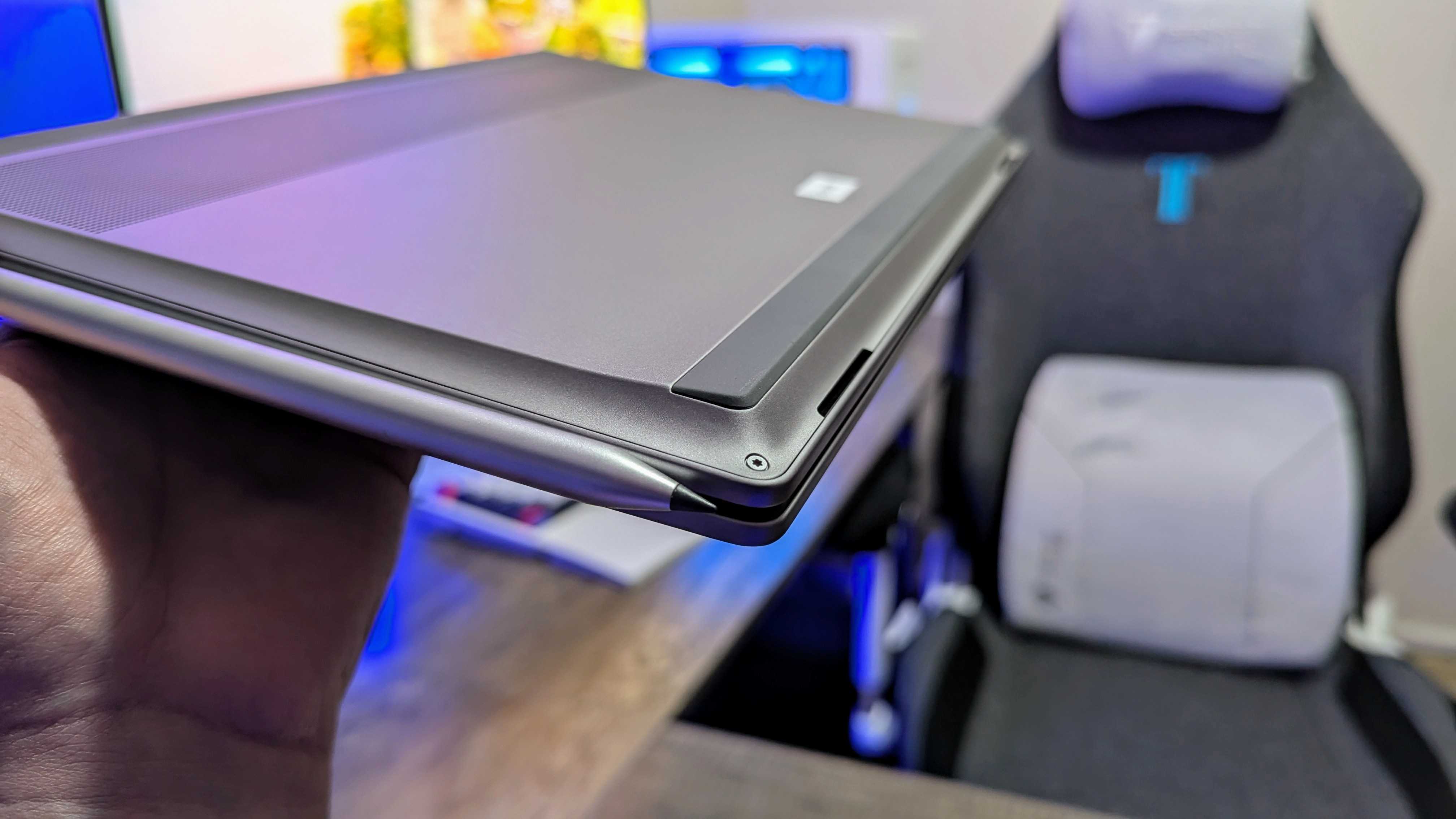
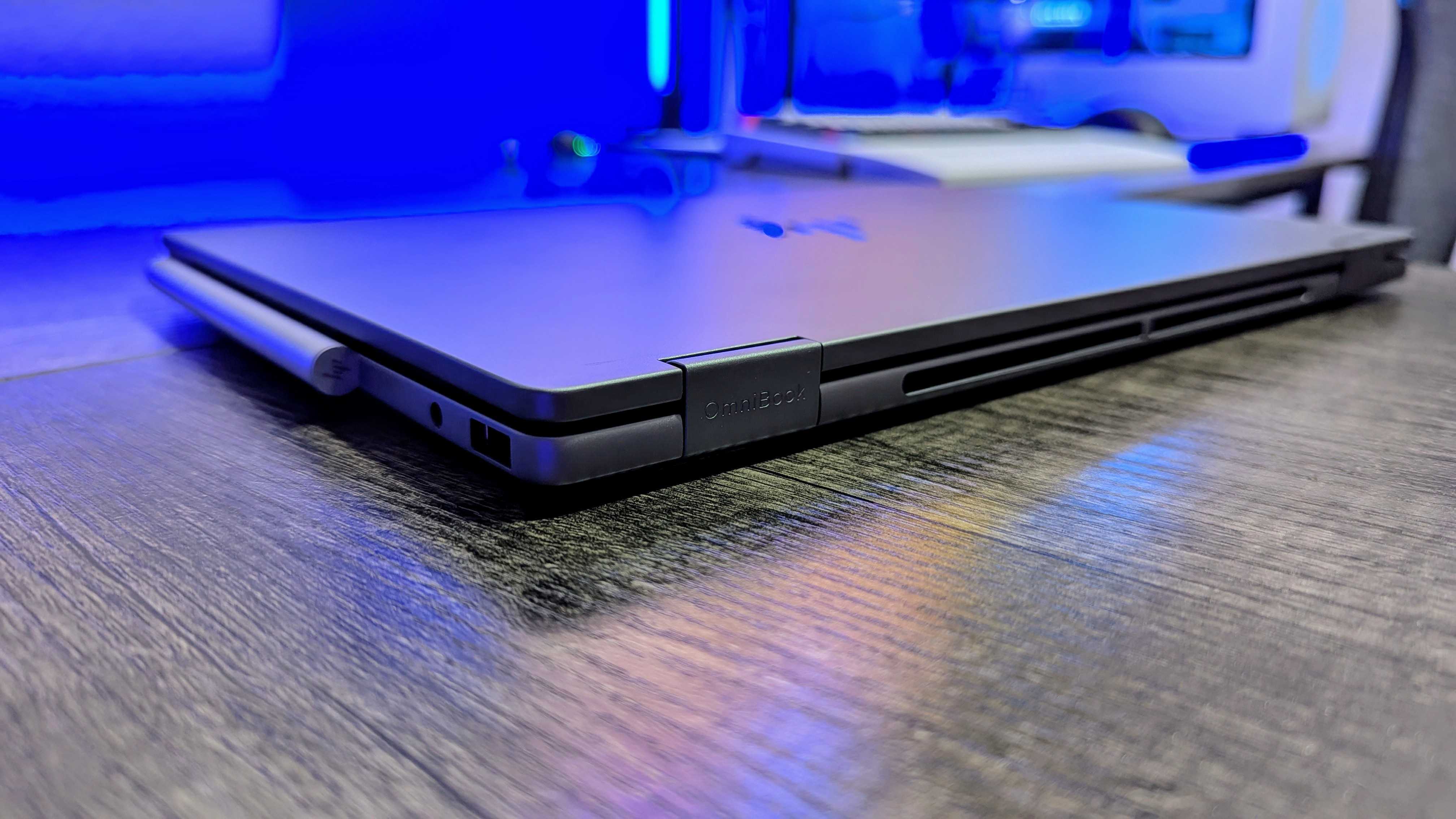
This laptop’s one unique feature is how the bottom panel “swoops” toward the front of the laptop, creating a unique side profile and providing space for the dual speaker system to fire forward, rather than downward.
These speakers aren’t the best, but this positioning is undeniably better than what a lot of cheaper laptops do, and I honestly dig how it looks. Build quality is also quite good — I’ve no complaints in that department.
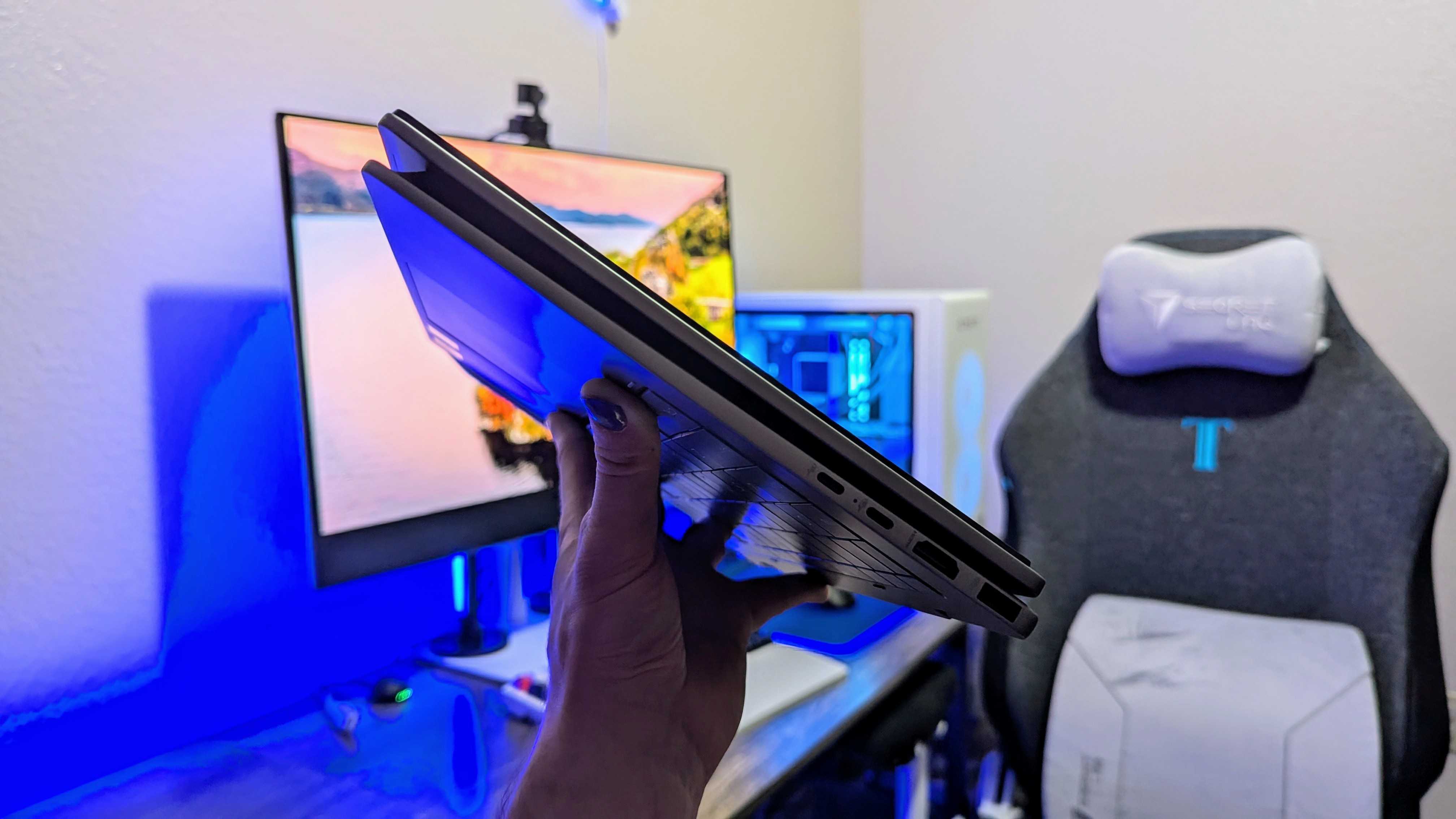
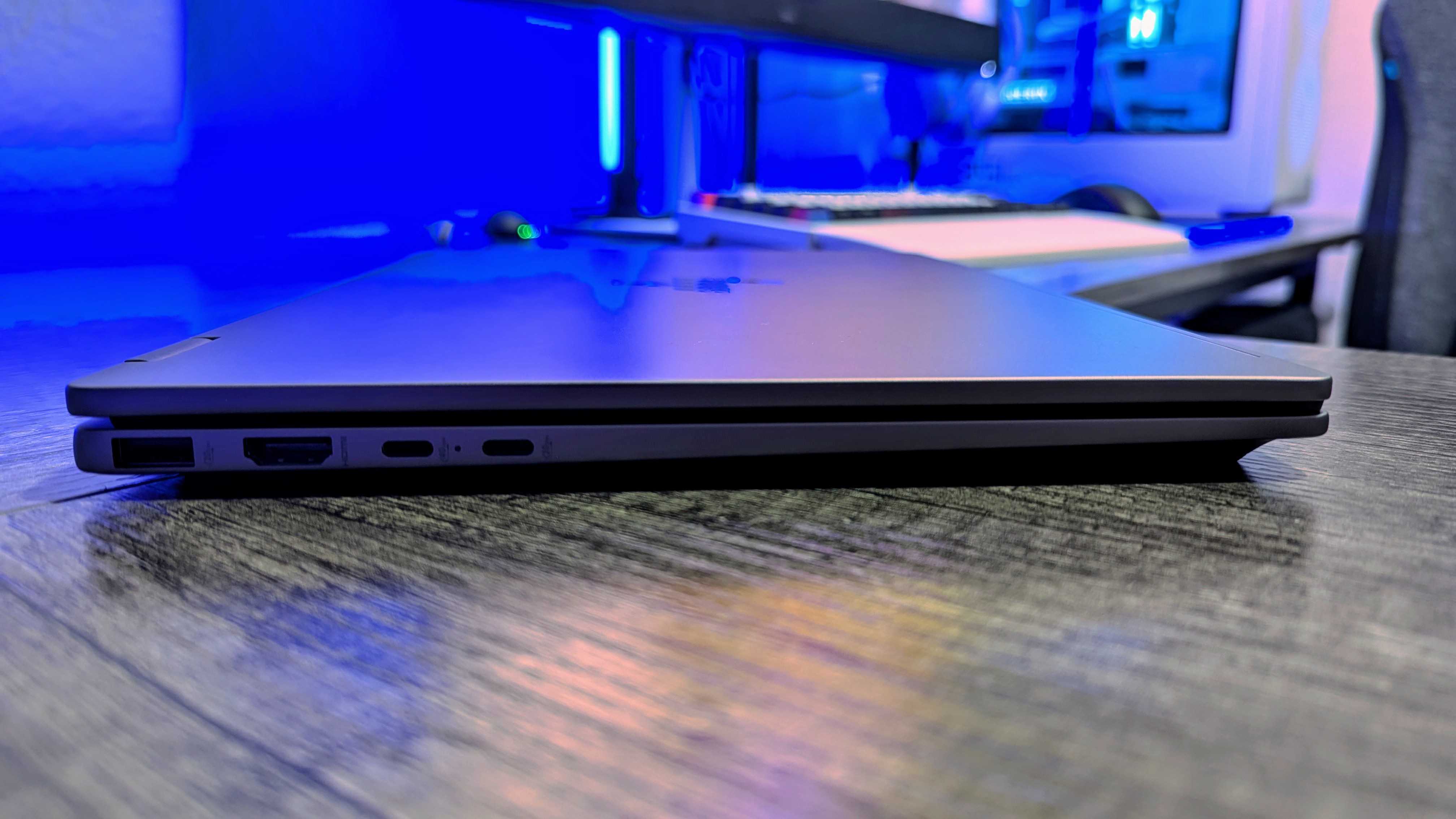
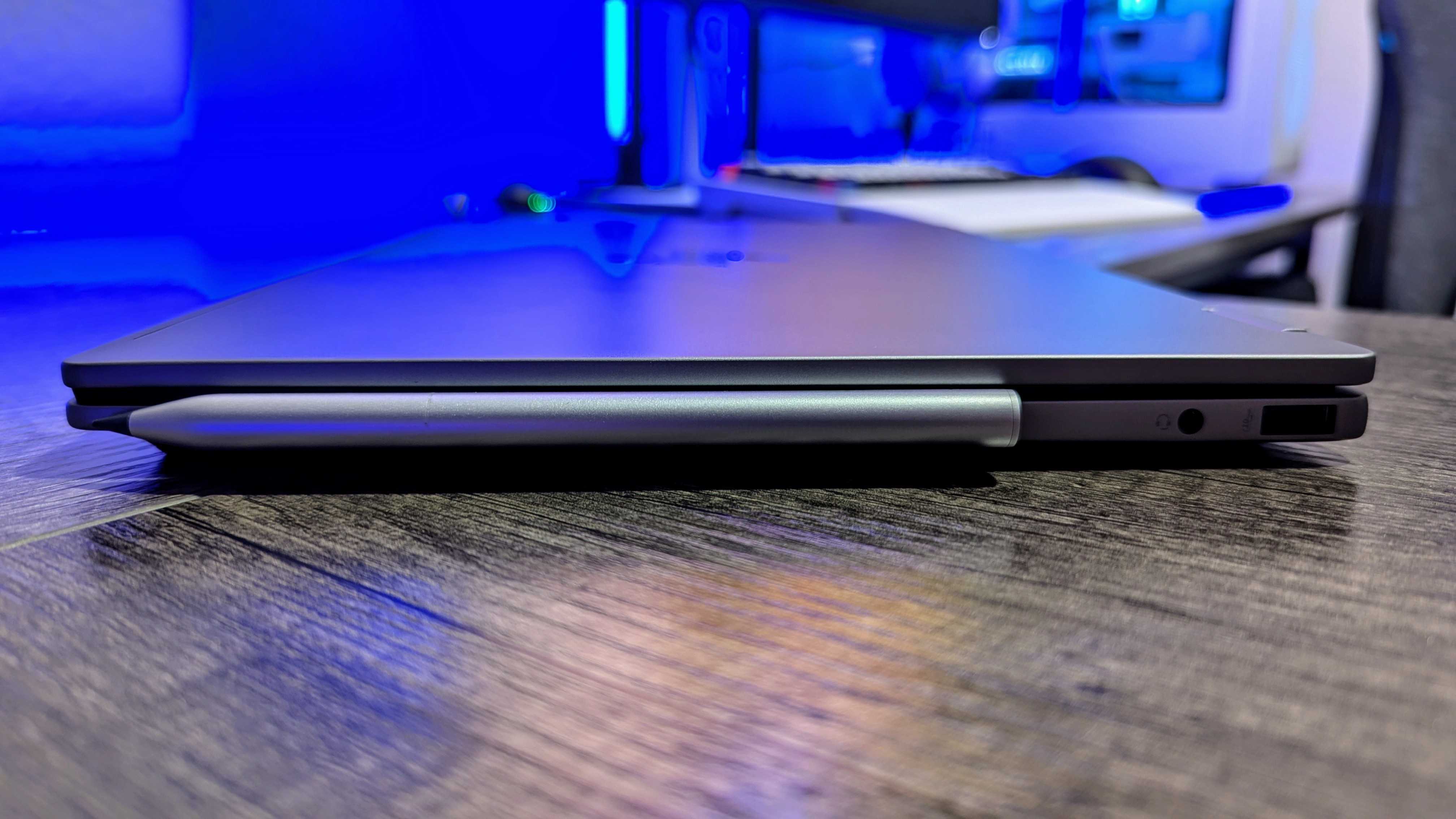
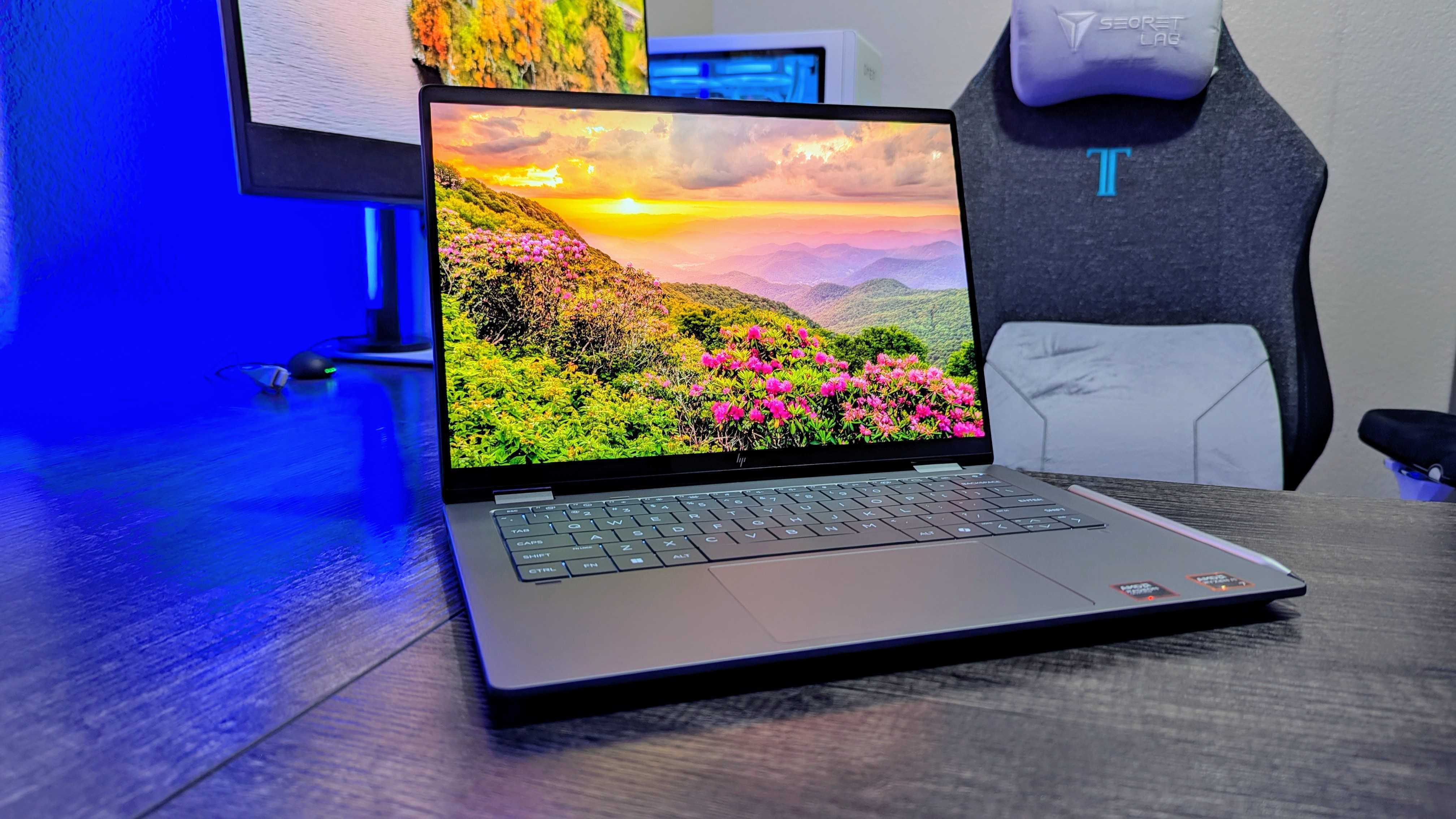
You get a nice number of ports, too, with twoUSBType-A 3.2 Gen 2, one USB Type-C 3.2 Gen 2, one HDMI 2.1, one 3.5mm audio jack, and oneUSB4(orThunderbolt 4) port. If you alsoget the HP Rechargeable MPP 2.0 Tilt Pen for$82.99 at HP(also sometimes on sale), it conveniently clips to the side of the OmniBook X Flip with some shockingly strong magnets, too.
Up front, you’ll find one of three multi-touch displays. My review sample boasts the highest-end panel, and one that we’ve seen on a lot of premium laptops — a 2.8K, 120HzOLEDdisplay with excellent color accuracy and performance. It’s still a beautiful display, but it’s honestly not the screen I recommend.
This laptop shines the most on the lower end of its price range, where it’s equipped with a 1200p IPS LCD display. It’s not nearly as fancy, but you’ll save yourself a decent chunk of change and get better battery life. That’s also the display you’ll find on all the configurations at Best Buy and the models that most often go on sale.
Most of HP’s highest-end laptops don’t provide much in the way of choice, which is always a shame. The OmniBook X Flip falls just under that line, though, and you get a wide range of configuration options.
Sure, that means choosing between the fancy OLED panel and the “basic” IPS LCD alternative, or choosing how much memory and storage you want, but it also means choosing betweenAMDand Intel chipsets.
You’ll get good performance with the OmniBook X Flip no matter what, but there’s an obvious difference between the AMD and Intel versions.
My review configuration is equipped with anAMD Ryzen AI7 350, but you can also go up to anIntel Core Ultra7 258V on the blue side. Speaking of blue, there’s also the option for a beautiful, dark blue colorway with Intel models, which I desperately wish I had received for review.
Either way, bothIntelandAMDversions are physically the same laptops for the most part, and both offer the sameAI PCandCopilot+ PCfeatures, including all of HP’s ownartificial intelligenceadditions. So, which should you choose? The answer is surprisingly straightforward.
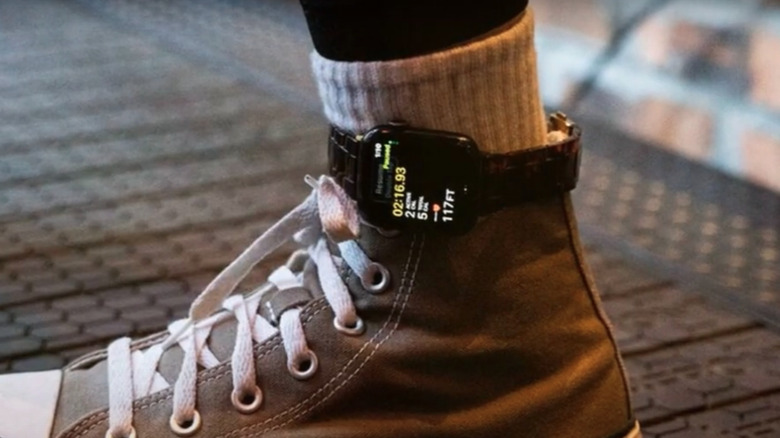
Walking pads have become a popular way for many people with sedentary jobs to get in a few extra steps during their workday. These minimalist treadmills fit under your desk, making it possible to get some exercise in without leaving your workspace and keyboard behind. That’s why many consider them to be an underrated high-tech smart office product, especially for the fitness-minded. While there’s no question that walking pads make it much easier to stay active at your desk, if you want to track your steps with your Apple Watch, you might find that the numbers aren’t adding up. That’s because the Apple Watch counts steps based on how often you move your wrist.If you’re typing on your computer or resting your arms on your desk, your Apple Watch may not recognize that you’re actually walking and assume you’re standing still, even if your feet are busy moving beneath your desk. The good news is there’s a workaround that’ll allow you to track your steps more accurately while on a walking pad: simply wear your Apple Watch on your ankle instead of your wrist. This might sound like a strange fix, but placing the watch on your ankle can help the device track your steps more accurately than when your arms are in a stationary position. If you log lots of hours on a walking pad while working, this simple change can make a big difference in your step count at the end of the day.>>>Replacement battery for Apple Watch Series 8 41mmWearing your Apple Watch on your ankle can give you more accurate step counts
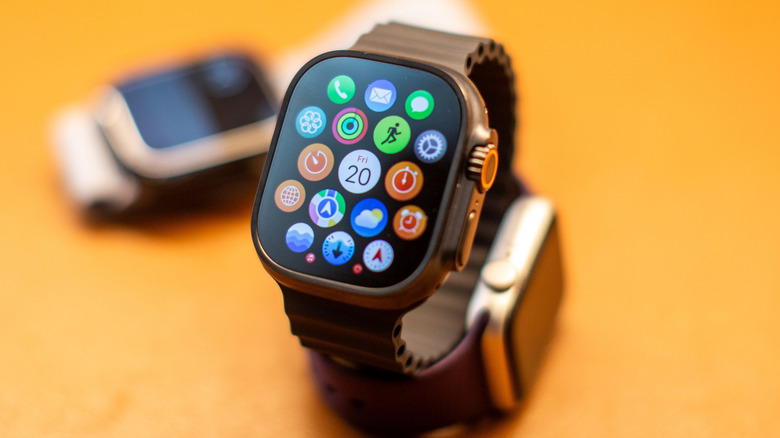
In most situations, tracking your steps using an Apple Watch is pretty straightforward. Once the watch is strapped onto your wrist and you’re moving naturally, it automatically counts your steps throughout the day. Your Apple Watch uses a combination of its accelerometer and gyroscope to track the number of steps you take, with the movement of your wrist playing a role in how it counts your steps. When your hands are busy typing or resting, which is often the case if you use a walking pad at work, the watch won’t detect much movement, even if you’re actually walking the whole time.Shifting your watch from your wrist to your ankle can help you bypass this limitation because foot motion still produces a consistent impact pattern that the accelerometer can pick up, allowing it to track your steps more reliably. In gym circles and on social media, this ankle placement has become known as the “Apple Watch hack,” with users on TikTok, Reddit, and other platforms saying this simple adjustment results in better step counts when you’re doing an activity that doesn’t involve moving your wrists. While these reports are anecdotal and Apple hasn’t officially endorsed the trend, if you’ve found your Apple Watch undercounts your steps when you’re using a walking pad, wearing it on your ankle could be a simple way to get more accurate results.>>>Replacement battery for Apple Watch Ultra 49mm S8What are the pros and cons of wearing your Apple Watch on your ankle?
Whether you’re trying to track steps while on a walking pad or pushing a shopping cart, strapping your Apple Watch to your ankle can make a real difference in your step count. This increased accuracy might help you use your Apple Watch to track calories burned more accurately, giving you a more accurate picture of your daily activity and overall fitness. You may also find ankle placement more comfortable if you have small wrists, tattoos that interfere with its sensors, or if your Apple Watch’s band irritates your skin. As useful as wearing your Apple Watch on your ankle can be, it does come with a few downsides. Apple designed its watch to track step counts using your wrists, and its algorithms are designed for that. If you move your Apple Watch to your ankle, you might notice readings for things like calorie burn, distance, or active minutes are unreliable or inconsistent. However, some users who’ve tested the ankle placement say they haven’t noticed much of a difference. Wearing your Apple Watch on your ankle can look a bit hard and make it harder to check notifications and use features like Apple Pay. But if you’re only strapping it to your ankle while walking at home, those trade-offs don’t really matter. Plus, you get the added benefit of improving your step count accuracy.
Serious performance muscle, now in an even skinnier shell.
Stuff Verdict
The Razer Blade 16 (2025) is a gaming monster, naturally, but also has fantastic battery life and a stunning screen. If you can afford one, it’s a fantastic ultraportable powerhouse.
Pros
Immense gaming muscle and desktop performance
Gorgeous, high refresh rate OLED screen
Genuinely impressive battery life for a gaming laptop
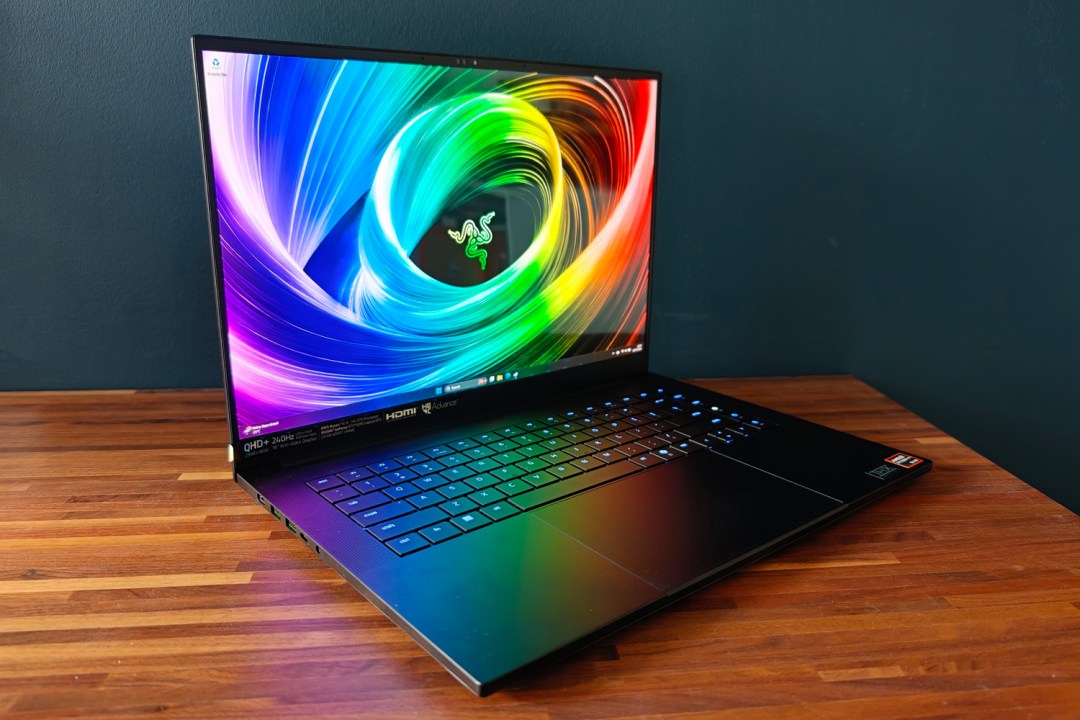
I’m not a fan of having to pick between high frame rates and portability. The most powerfulgaming laptopsare usually the biggest and heaviest – and rarely last more than a few hours as soon as you unplug their brick-like power adapters. Or at least, that used to be the case. Manufacturers have gotten much better at emphasising slimness and sleekness, without compromising on hardware. The new Razer Blade 16 might’ve just taken that to the extreme.
At a mere 17mm thick, it isn’t that far off a modern MacBook Pro’s dimensions, yet it finds room inside for top-tier Nvidia RTX 5090 mobile graphics. Razer has also opted for AMD internals for the first time to maximise battery life, and brought OLED display tech into the mix.
The laptop equivalent of a supercar never comes cheap, of course. The Blade 16 starts $2400/£2100 with an RTX 5060 GPU, but climbs up to a heady $4500/£3900 for the version tested here – and you can push that figure even further if you want extra RAM or storage. That puts it in the same ballpark as the equally svelte Asus ROG Zephyrus G16. Does the Razer do enough to justify its asking price?
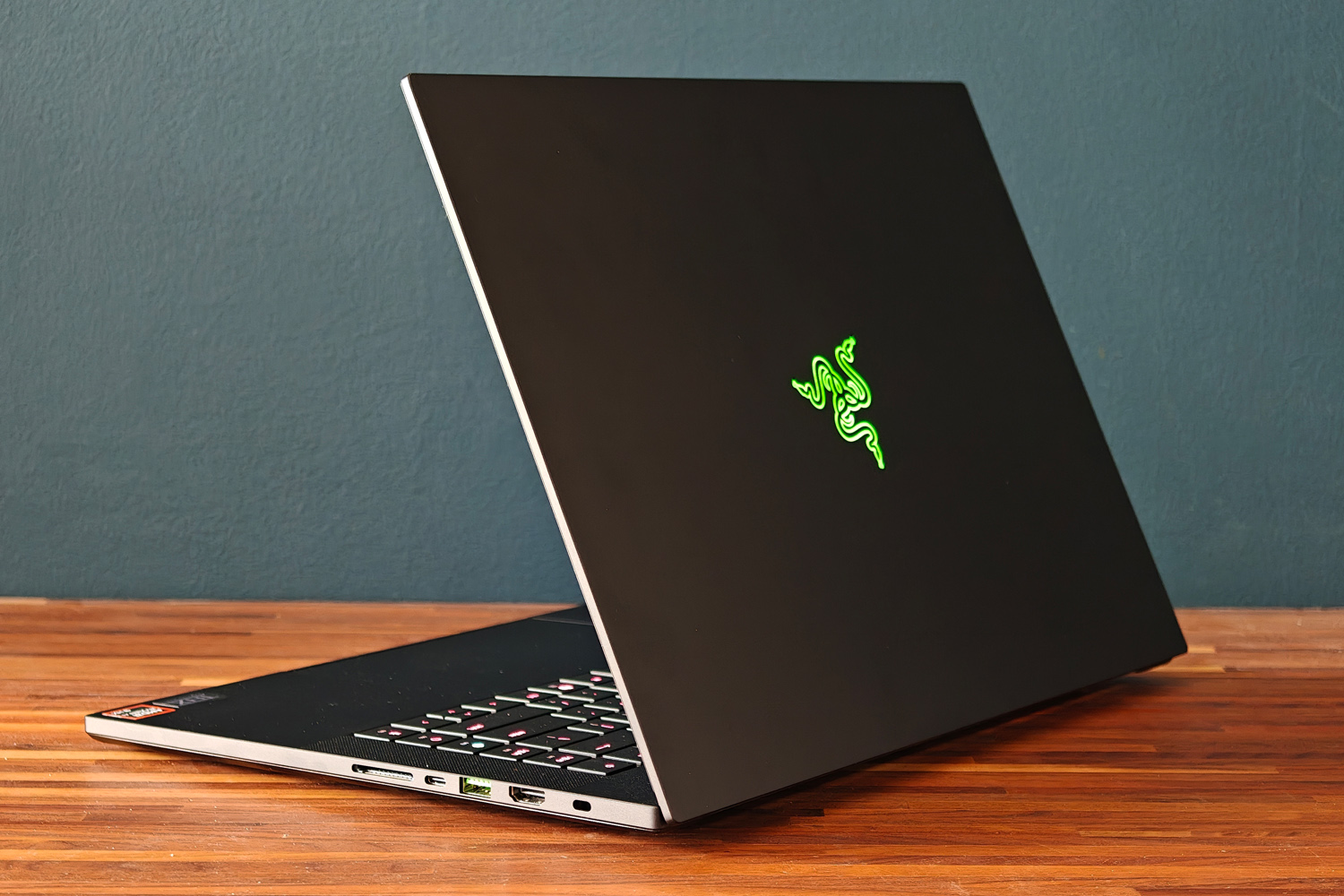
Side by side with a2023-era Blade(the last to use the old chassis), it’s seriously impressive how much skinnier this new model is – despite having to make room inside for some particularly toasty components, not least the RTX 5090 GPU. Cleverly, Razer has pulled this thinning off by actually making the new laptop larger.
The 5mm of depth that’s been shaved off has been added to the length of the laptop instead, but you’d only notice with a direct comparison. The footprint has barely grown, and it won’t affect the sort of backpacks or laptop bags the Blade will slide into. That’s handy, as given the new model is over 300g lighter than the old one, you’re going to want to take it on the move a lot more.
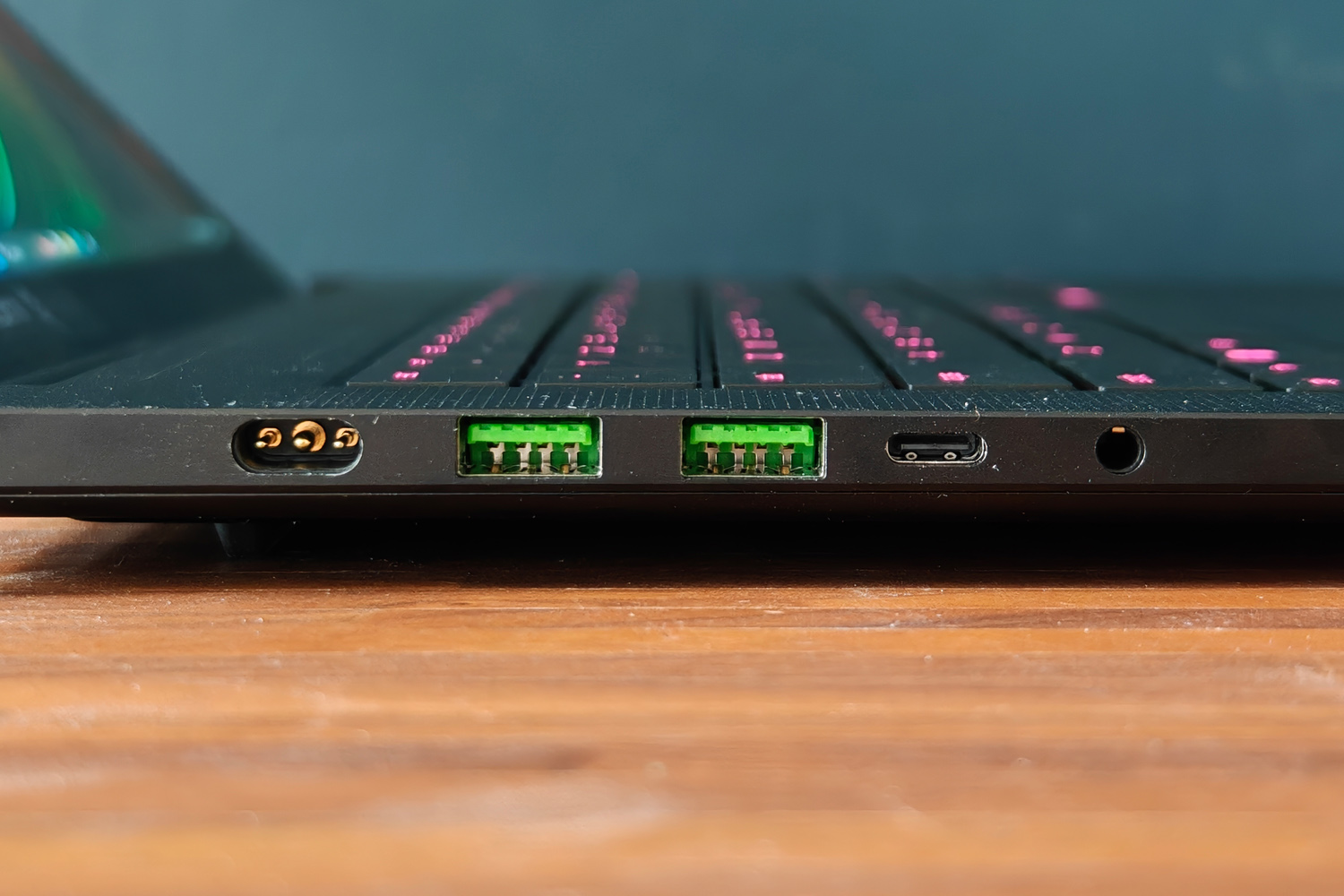
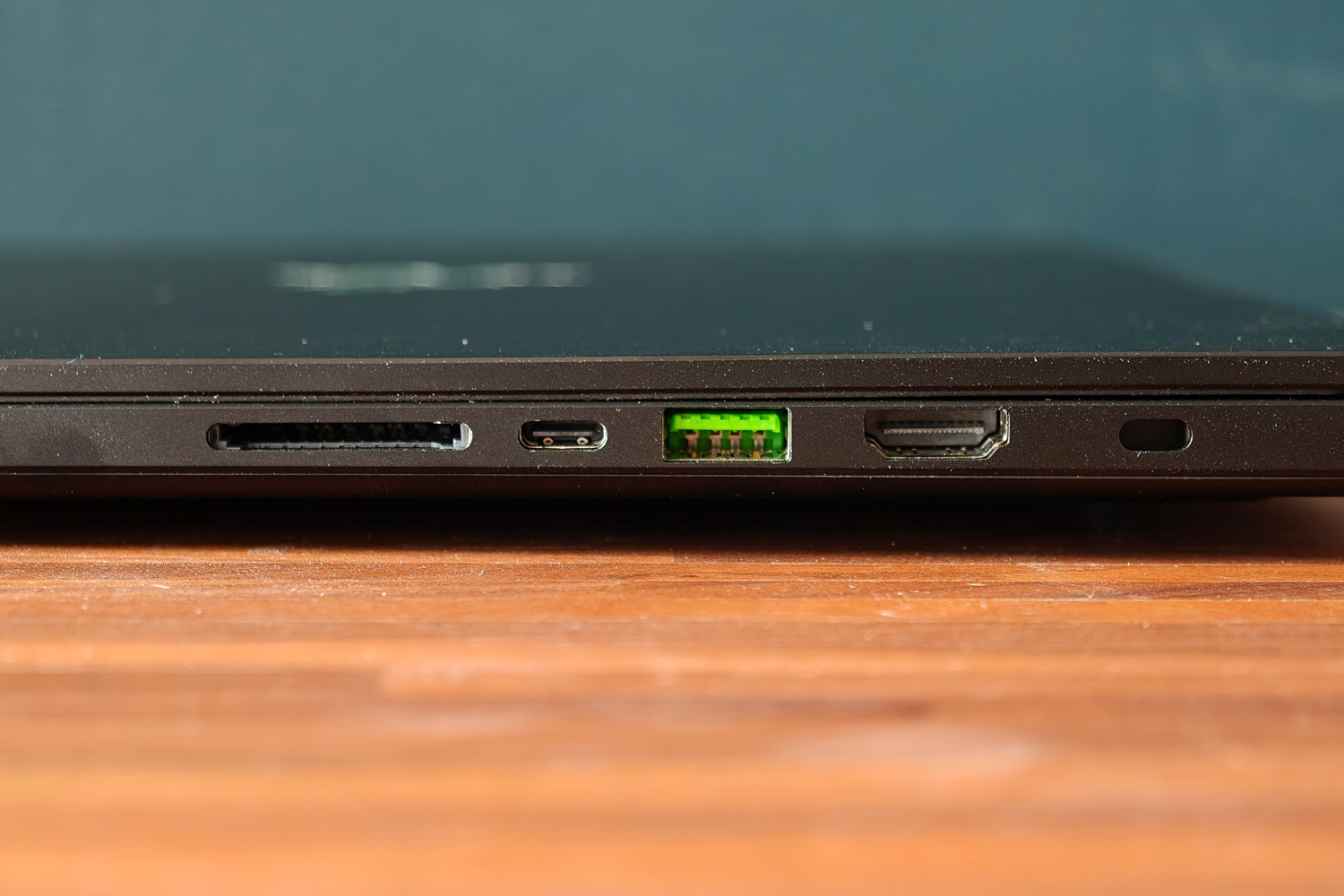
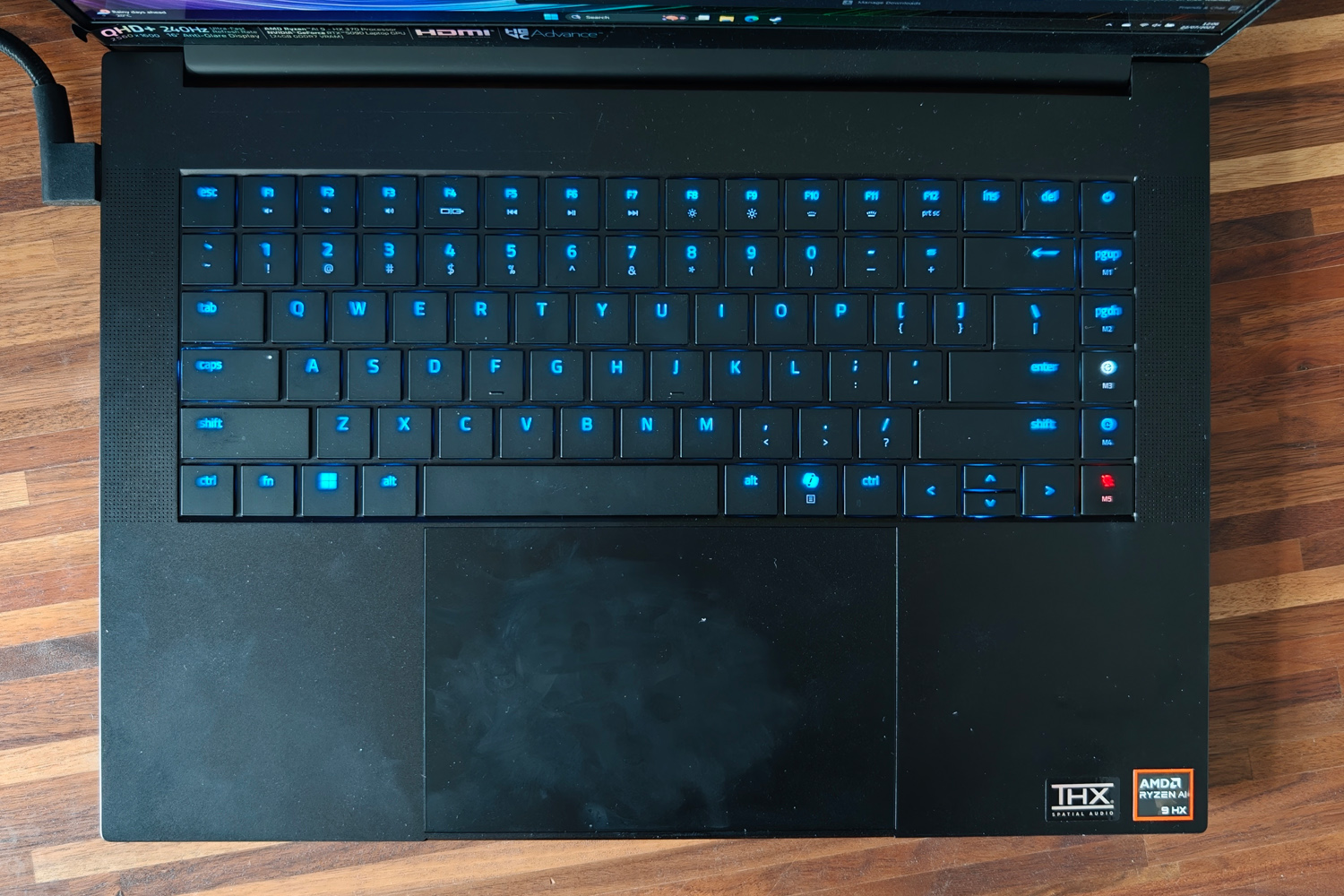
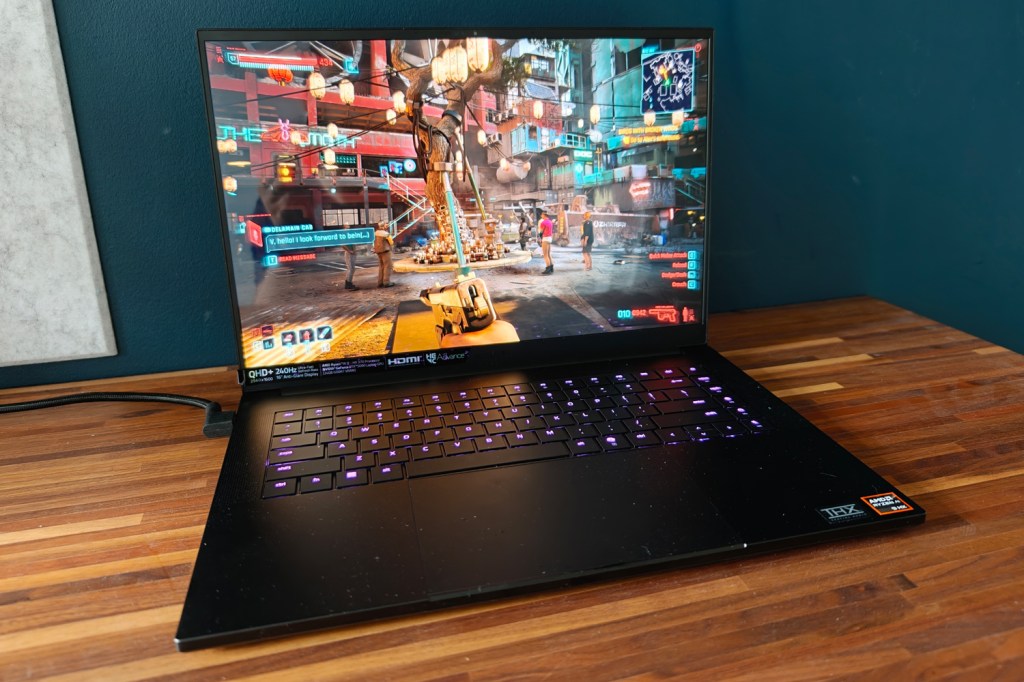
I’ve long seen Razer laptops as the yin to Apple’s yang, and that rings true again here. There’s a clear family resemblance in the milled aluminium unibody, subtle Ouroboros logo on the lid, and green accented USB ports at the sides. The matte black finish is treated to prevent wear, and does a decent job at minimising fingerprint smudges too. It looks mean, without also being shouty; as gaming laptops go, it’s wonderfully subtle unless you know what you’re looking at.
The Blade also gets a big thumbs up for not skimping on connectivity in the name of slimness. You get two USB-Cs (one USB4, one USB 3.2) and three USB type-As, as well as full-size HDMI, a 3.5mm combination headset port, and a full-size SD card reader. Having them all at the sides makes it impossible to keep cables out of sight when gaming at a desk, but convenient for quickly plugging in peripherals.
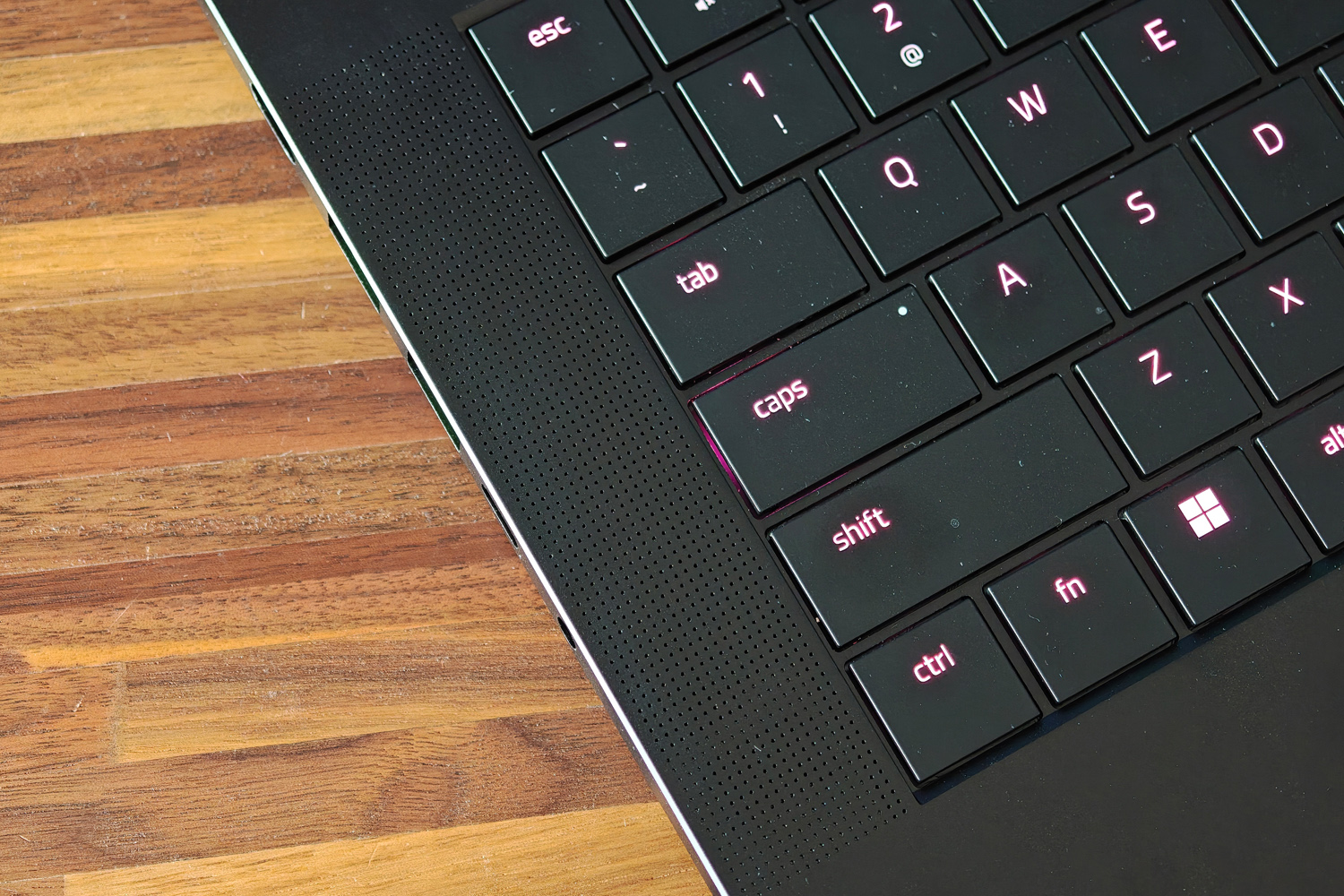
Older Blades weren’t the greatest laptops to type on, but this new one is a treat for your fingers. There’s 50% more key travel than the last-gen chassis got, and the actuation force has been adjusted so it feels like you’re pressing down with purpose before an input is detected. It’s fairly quiet to tap away on unless you type like you’re hammering nails, and each island-style key is comfortably spaced apart. It did take me a few hours to get used to how flat it all is, with no key recesses to help place your fingers.
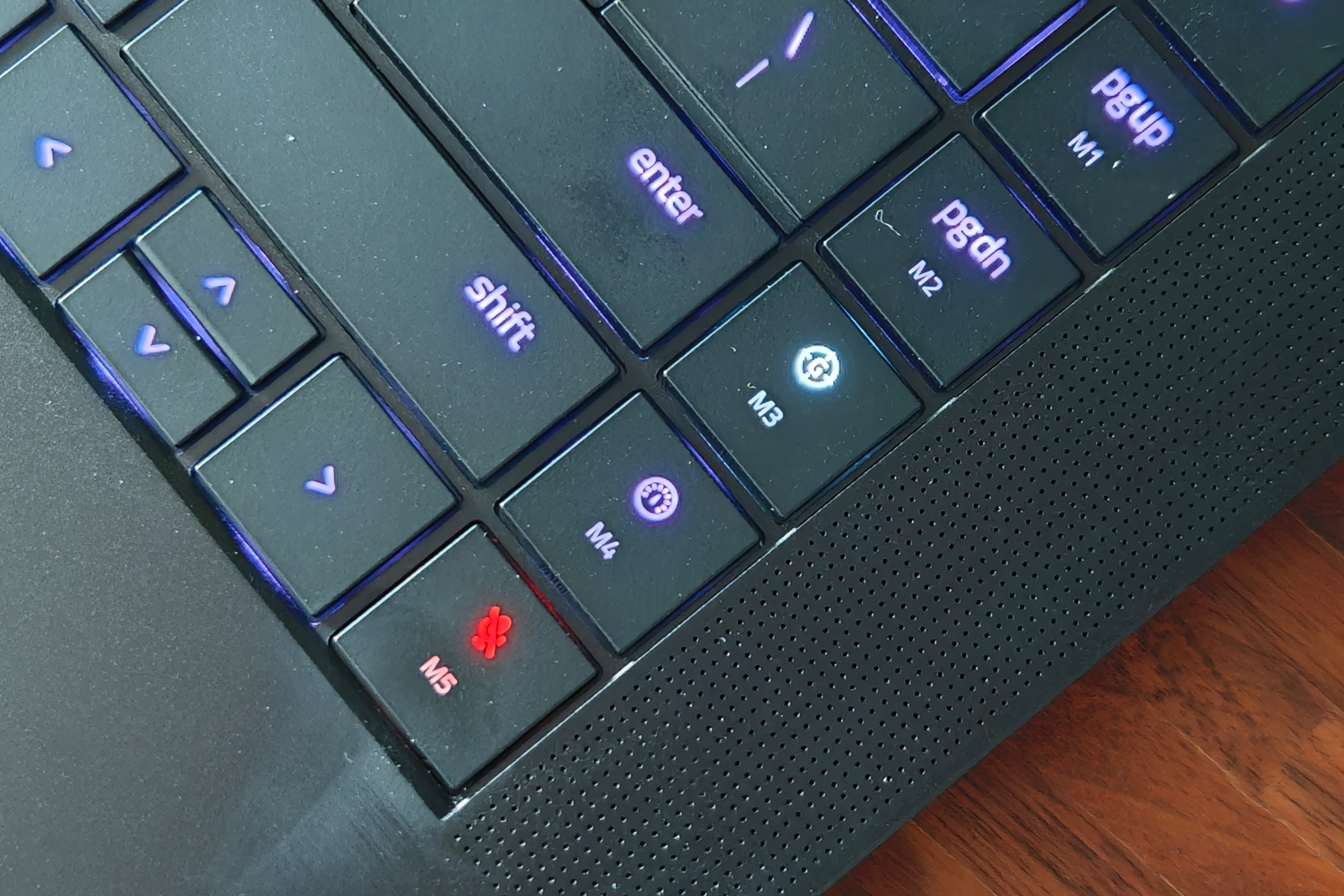
Sensibly Razer hasn’t tried to shoehorn in a numerical keypad, but has found a bit of space at the edge of the board for a few customisable macro keys. Holding down the fn button also switches the per-key RGB backlighting to highlight the top row’s multimedia functions, making things like screen brightness and the mute key far easier to find. Doubling up on LEDs for these keys mean each key cap is perfectly lit, with next to no light bleed around the edges. You can customise the lot through Razer’s Synapse software, too.
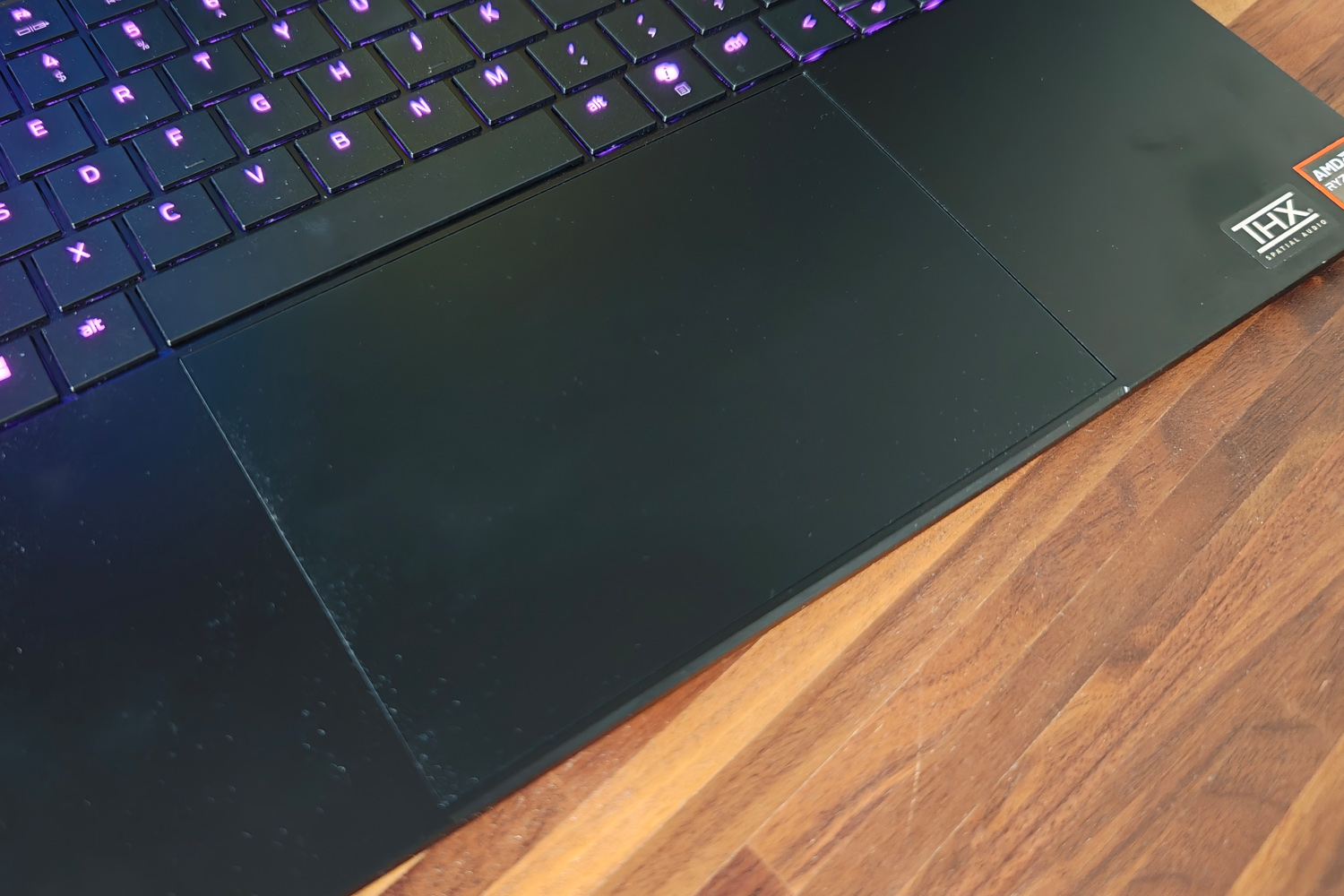
While I default to a wireless mouse for pretty much anything outside of the Windows desktop, the Blade’s touchpad is a fine substitute when away from a desk. It’s huge, with a low-friction surface that makes cursor movement a breeze. It’s accurate and has a firm physical click action.
Screen & sound: how refreshing
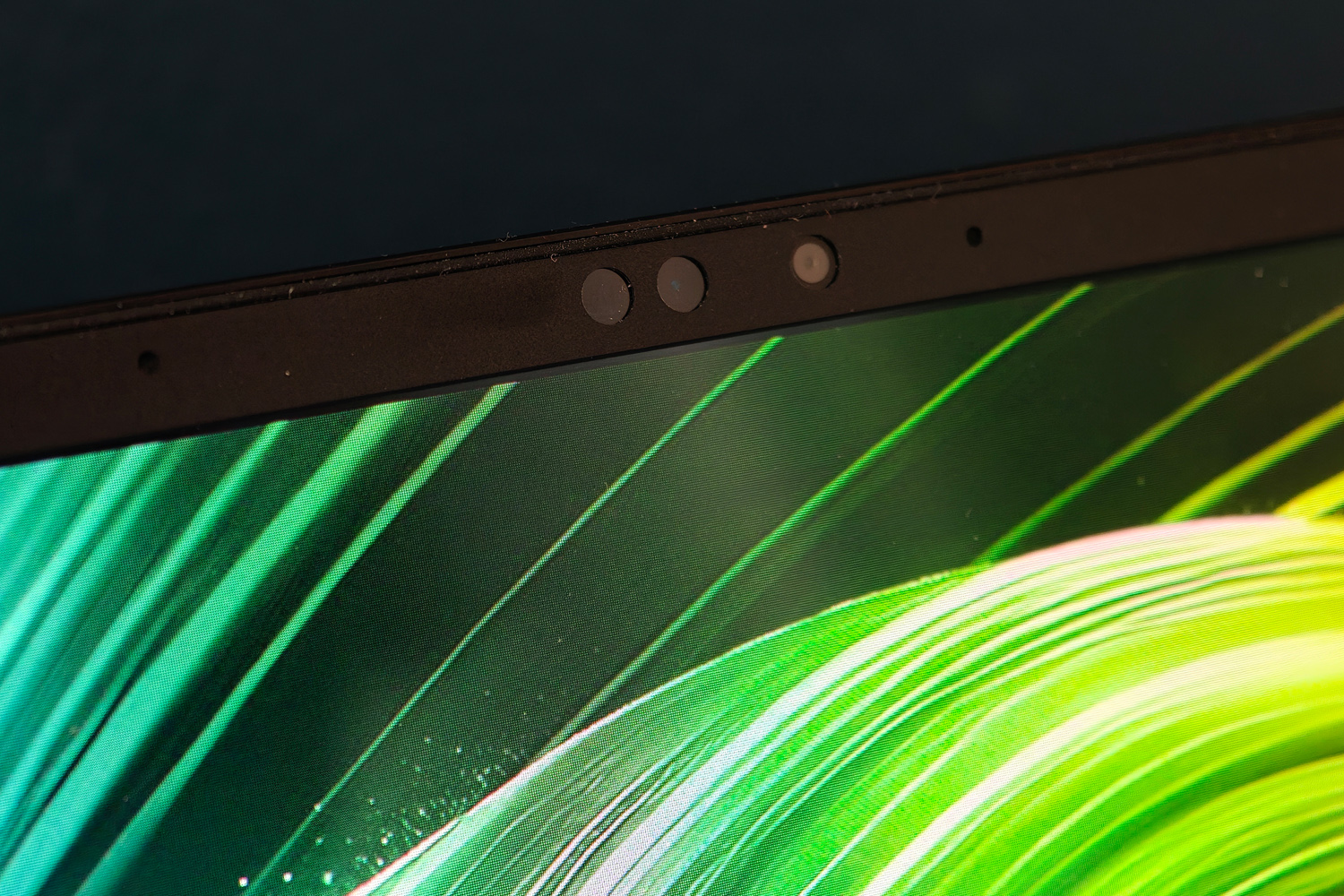
Regardless of what spec you choose, every Blade 16 gets the same QHD+ resolution display. I’m not complaining – it’s an absolute stunner, and I rarely used the last-gen Blade’s dual resolution mode anyway. Here you’re getting a 2560×1600 OLED with a rapid 240Hz refresh rate, which is ideal for hectic multiplayer gaming. While some LCD screens claim even faster refresh rates, OLED tech has inherently faster response times, so you’re getting a gloriously smooth presentation here. Variable refresh all but prevents tearing when frame rates dip below 60fps, too.
OLED also means there’s none of the light bloom or halo effect you got on the old Blade’s mini-LED panel – just perfect blacks and impeccable contrast, which give dimly lit movie scenes and dark game levels outstanding amounts of depth. Colours are deliciously vibrant, helpingCyberpunk 2077’s Phantom Libertyexpansion feel even more immersive than usual.
There’s a decent amount of brightness on tap, which helps give HDR content some welcome extra pop. Pretty much the only downside is how reflective the panel is; even at full whack, sitting by windows or underneath bright lights can be quite distracting.
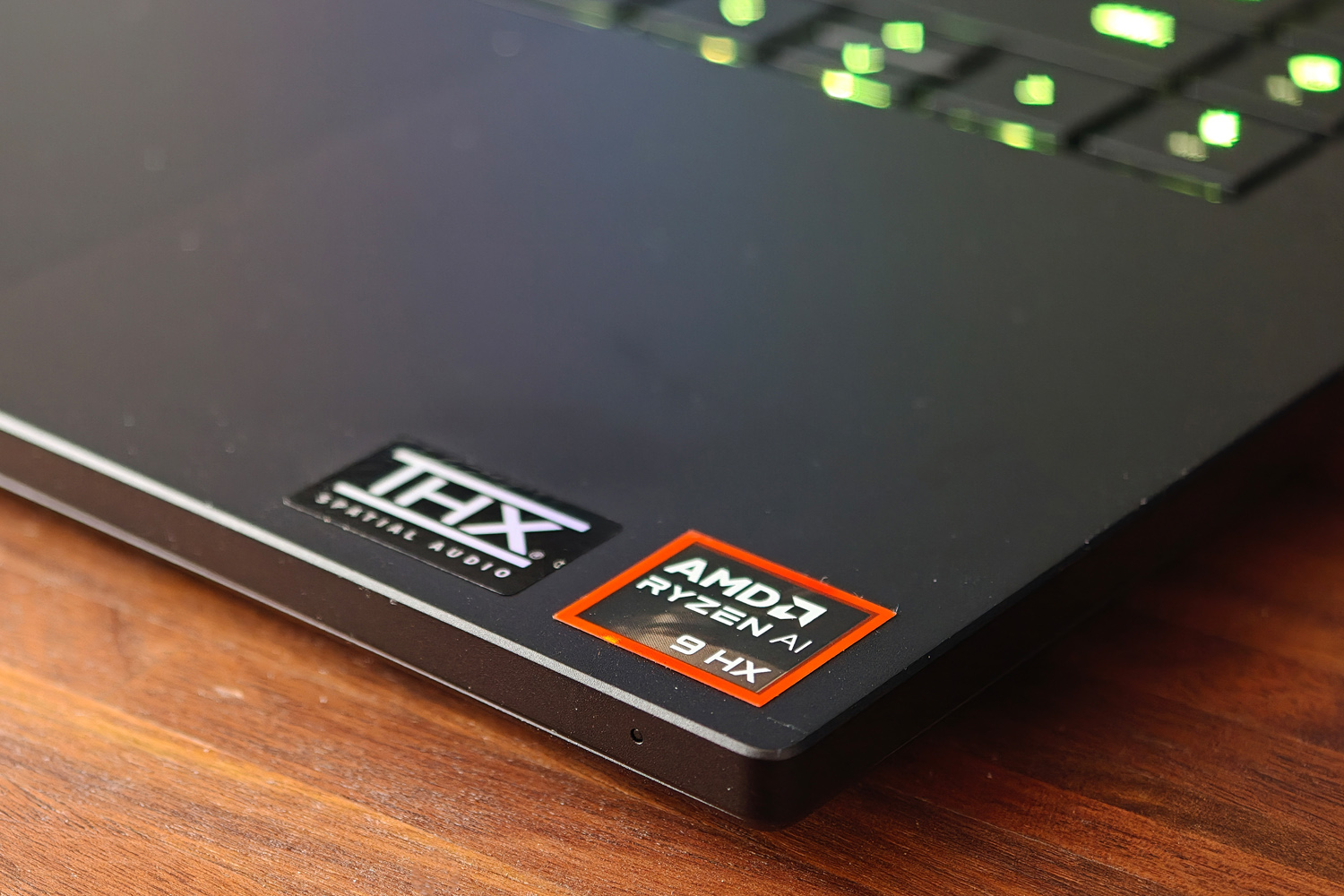
The six-speaker sound system is a great match to the screen, getting impressively loud and with decent amounts of bass for a laptop. The mid-range is clear, and THX Spatial Audio does a convincing impression of surround sound. Treble could use just a little extra bite, but I didn’t ever feel the need to plug in a headset unless I was gaming – and that was partly down to fan noise. The internal fans spin up to a noticeable degree as soon as you boot into a game, and are impossible to ignore when run at their maximum.
Performance: graphical greatness
Razer used to be all-in on Intel, but has made the switch to AMD power for this laptop generation. The Blade 16 kicks off with an AMD Ryzen AI 9 365, but steps up to a Ryzen AI 9 HX 370 once you add RTX 5090 graphics to your order. I’ve seen this twelve core, 24-thread chip in larger gaming laptops, but this is the first time I’ve tried one in such a skinny chassis. In my review unit it’s paired with a 2TB NVMe SSD and 32GB of RAM.
For desktop duties, AMD’s silicon trades back and forth with the last-gen Intel Core chips. The gap is fairly small, and there’s ample oomph for all sorts of creative jobs like image editing. Synthetic tests show very little in the way of penalty for going slim, being roughly on par with the 18inMSI Stealth A18 AI+. Certain tasks – like video encoding – are just better suited to Intel’s architecture, so keep in mind that newer doesn’t always mean better – though AMD comfortably wins out on efficiency. More on that below.
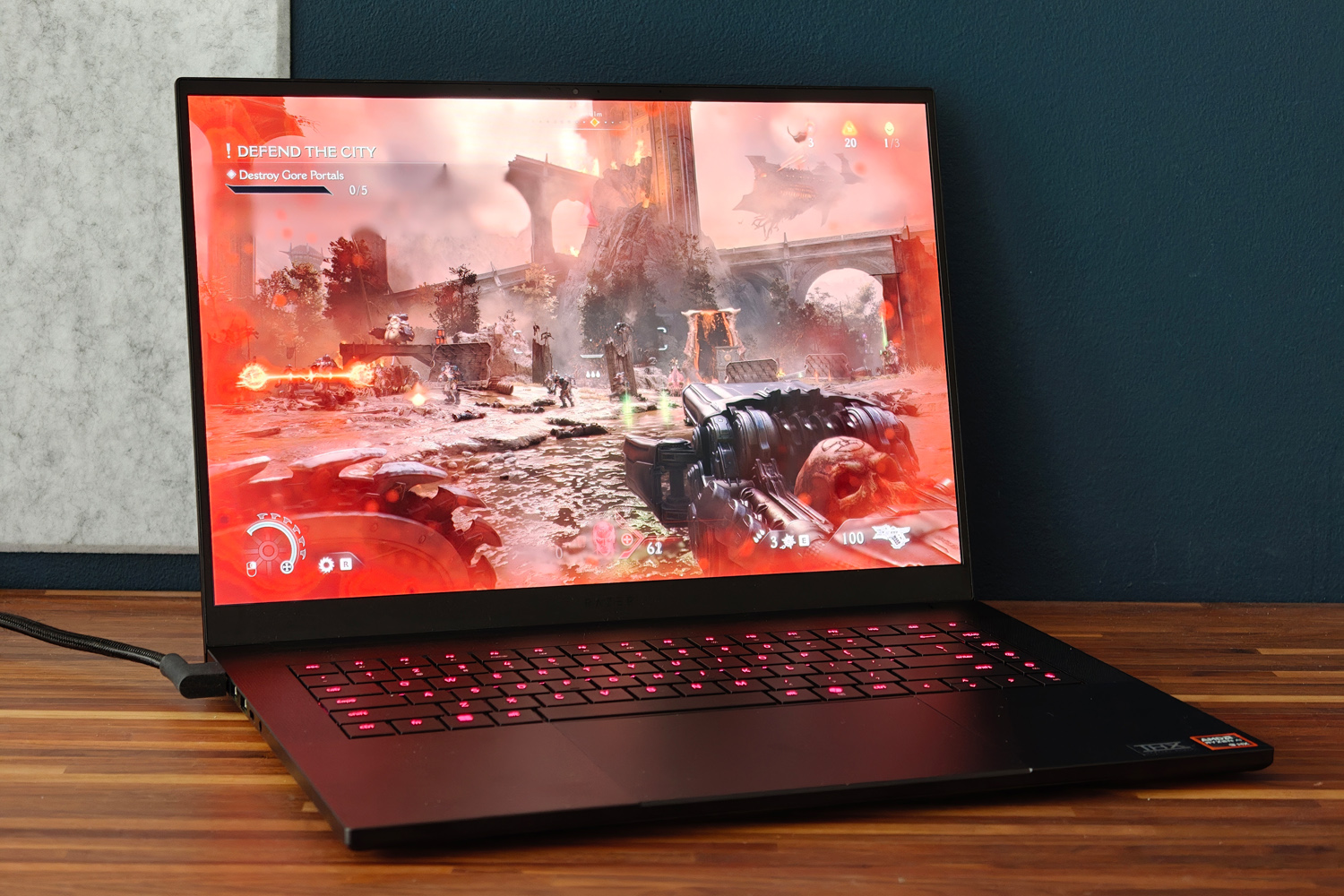
You don’t buy a Blade 16 to just work on the Windows desktop, of course. It’s gaming where this laptop truly shines, the RTX 5090 GPU and its whopping 24GB of video memory absolutely churning through modern titles. At the 2560×1600 native resolution, none of the titles I tried ever dipped below 60fps as long as ray tracing stayed disabled.Counter Strike 2comfortably saw frame rates in the 100-200fps range, which should be ideal for serious esports gamers.
Ray Tracing can still make the hardware sweat, Nvidia’s upscaling tech is on hand to assist. DLSS 4.0 and multi-frame generation are scarily good, creating entirely new frames without the tearing, blurriness or input delay seen on previous iterations.Cyberpunk 2077saw huge gains, from a barely playable 24.4fps with maximum path tracing but no upscaling, to a far smoother 53.9fps with DLSS.Doom: the Dark Ageswas equally impressive, running smoothly even when the screen was filled with demons.
This is the fastest mobile GPU money can buy, hands down – but native rendering performance isn’t a huge leap from the previous generation, and the RTX 5080 isn’t that far behind. It’s only with DLSS and multi-frame generation enabled that the 5000 series shows a truly generational leap from the 4000 series, and even then 4K gaming at maximum settings with ray tracing still looks out of reach in some titles. The Blade 16’s more restrictive thermals also limit the 5090’s potential a little, but not to the extent that games aren’t playable. Frame rates never dipped at any point, even during a marathon play session.
Razer Blade 16 (2025) gaming benchmark scores
Native rendering (2560×1600)
DLSSupscaling
3DMark Steel Nomad
5821
N/A
Cyberpunk 2077 (RT Overdrive)
24.43fps
53.9fps
Cyberpunk 2077 (Ultra, RT off)
91.42fps
111.05fps
Shadow of the Tomb Raider (RT on)
119fps
148fps
Shadow of the Tomb Raider (RT off)
156fps
161fps
Gears Tactics
130.6fps
N/A
Arguably what impressed me most when benchmarking the Blade 16 was how long it lasted while away from the mains. When looping a local video at 50% brightness, I was getting close to ten hours. That’s way more than I managed from the old Intel-powered Blade. Desktop working should see you closer to six or seven, which might be enough to see you through an entire working day – if you aren’t tempted to game during your lunch break.
Depending on the title it can last between one and three hours here. That’s still not a bad showing for a laptop with a green this big and a GPU this power-hungry.
Razer Blade 16 (2025) verdict
Razer laptops have always carried a certain gravitas, but I think the latest Blade 16 might be one of the first to truly deserve it. This is a gloriously potent gaming laptop, with the sort of screen you could happily stare at all day and enough ports at the sides to become a very effective desktop replacement. Yet it also has a long-lasting battery and is light enough that you can happily take it on the move.
OK, it’s expensive, especially in 5090 guise – but name a laptop with that GPU that isn’t. The ‘Razer tax’ does mean you pay a premium over the likes of Asus, MSI or Lenovo, but you’re getting a design that’s almost on par with Apple for your money. If you have the funds, it’ll demolish any game you can throw at it for years to come.
Stuff Says…
Score:5/5
The Razer Blade 16 (2025) is a gaming monster, naturally, but also has fantastic battery life and a stunning screen. If you can afford one, it’s a fantastic ultraportable powerhouse.
Pros
Immense gaming muscle and desktop performance
Gorgeous, high refresh rate OLED screen
Genuinely impressive battery life for a gaming laptop
A premium-feeling 14-in laptop that can tackle most applications without breaking a sweat – only the battery life disappoints
Reasons to buy
+Premium build and looks
+Competitive CPU and GPU performance
+Good keyboard and touchpad
Reasons to avoid
-Screen quality should be better
-Middling battery life
-Could be a bit lighter
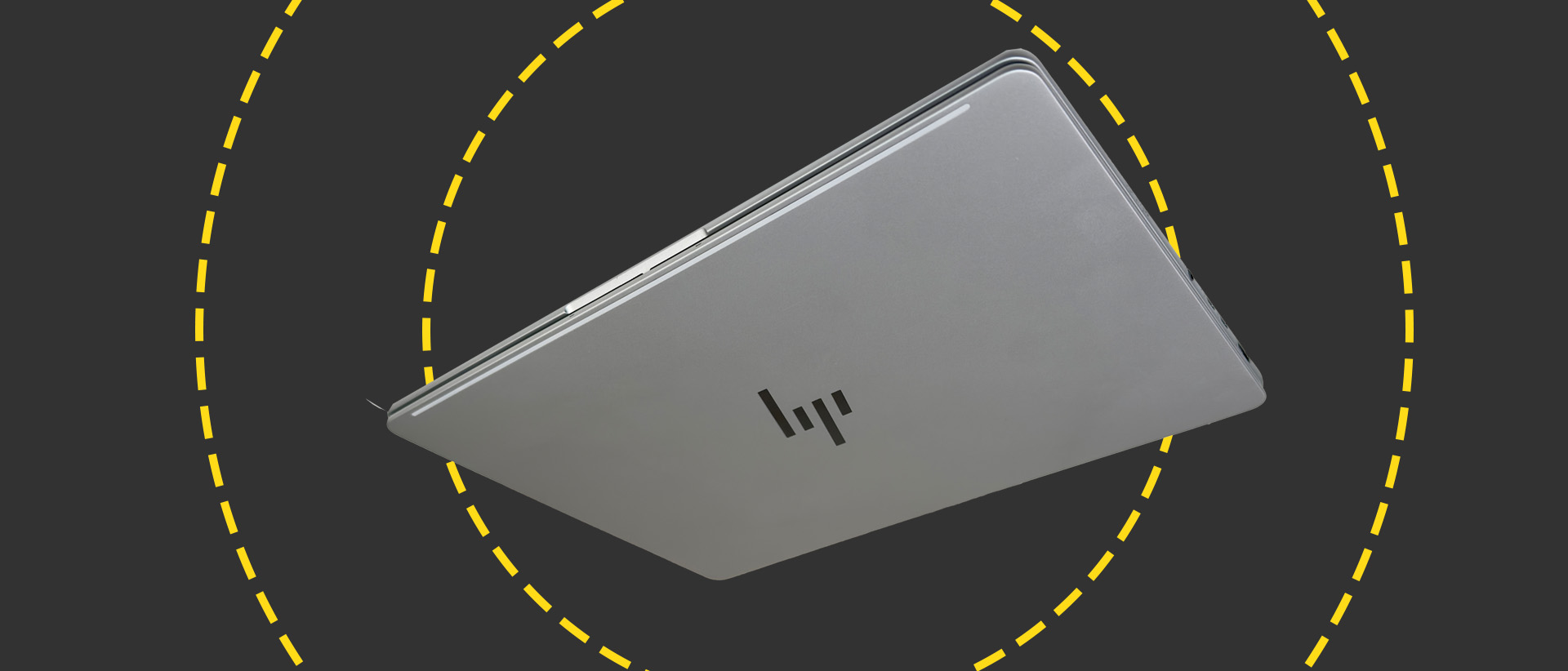
Elite is a word that indicates excellence. The very best in its field. By that definition, you’d be forgiven for having unreasonably high expectations for the HP EliteBook X G1a. But let’s cut to the chase. It is not excellent. And it most certainly is not the best. What it is, however, is good – in some ways, great. You may want to consider buying it.
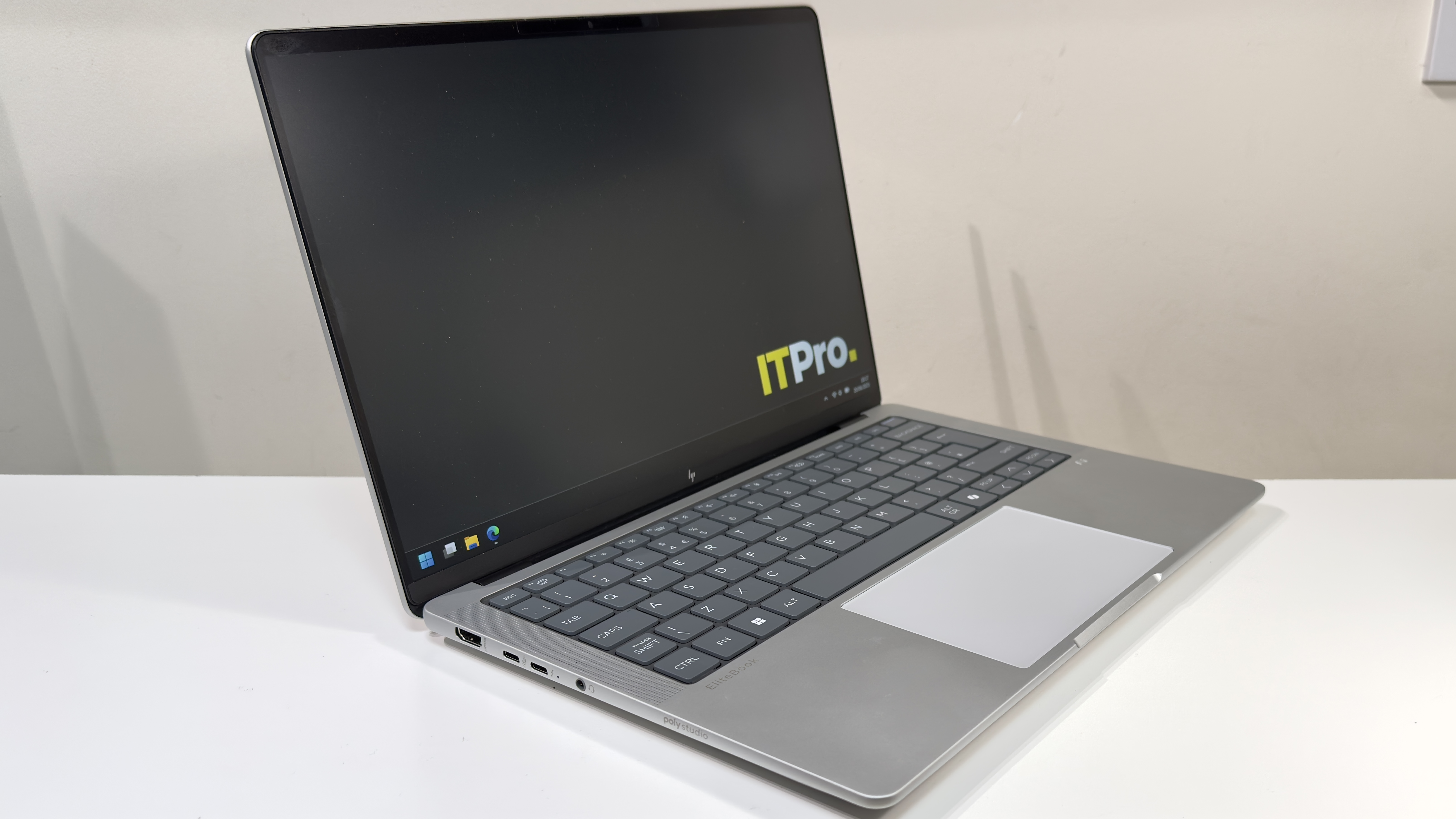
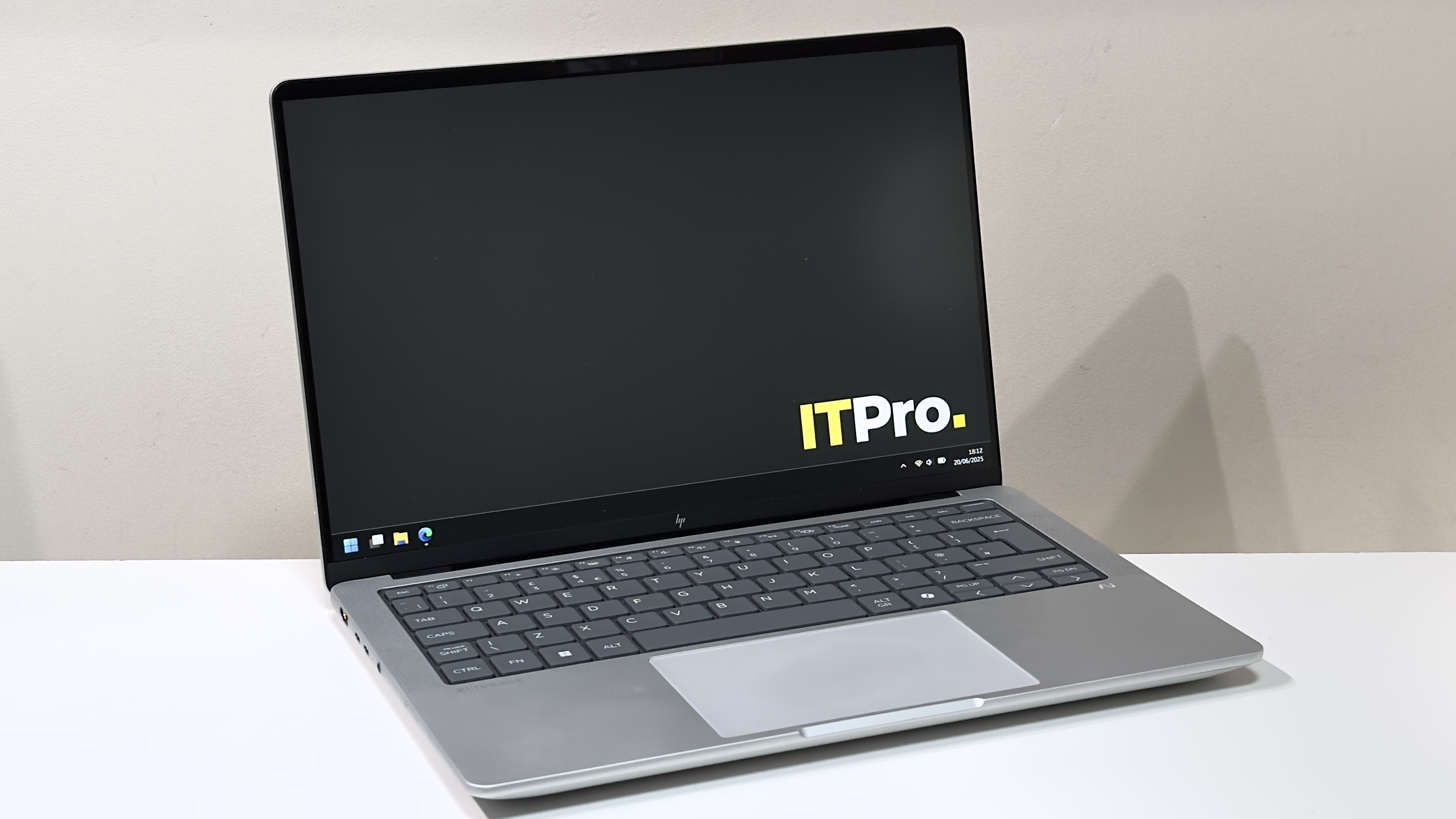
The EliteBook X gets off to a strong start. With a design brief that challenges it to distil the core talents of its pricier EliteBook Ultra sibling while trimming the luxuries, it’s good to see that it retains the burly all-aluminium build,Copilot+certification, and Thunderbolt 4 connectivity. Set your sights on the pricier models, and OLED is an option, too.
Meanwhile, the 14-inch chassis is pleasingly baggable without being ultra lightweight – thinkMacBook Prorather thanAir. And unlike the Intel-only Ultra models, you get a selection of capable chips from both AMD and Intel, with prices starting around £1,240 and creeping up and over the £2,000 mark.
The design is great. The sandwich of light silver aluminium and rounded edges is more than a little reminiscent of the 14-inch MacBook Pro, and it feels really well constructed. There’s barely any give in the base, and even the lid feels incredibly taut and tough. No amount of bad-tempered prodding caused any show-through on the LCD panel inside, either. Hats off to HP here.
The downside of the burly build (and the huge 74.5Wh battery which we’ll discuss later in the review) is weight. The EliteBook X tips the scales at 1.59kg, which is 40-odd grams heavier than the 14-inch MacBook Pro. Compared to the 1.14kgDell Pro 14 Premium, the HP does feel like a bit of a lump.
Thankfully, it doesn’t look like one, but you may want to take HP’s quoted dimensions with a pinch of salt: they conveniently ignore the thick rubber feet on the underside. Those feet mean that the claimed 13mm thickness translates to just shy of 19mm when the laptop is sat on a desk. To be fair, though, you’d have to be working in very cramped conditions for this to prove problematic.
Cast an eye around the EliteBook X’s flanks and it’s well connected. You get a full-sized HDMI 2.1 port, two Thunderbolt 4 ports (one on each side), and one USB-A and USB-C port apiece, both of which reach USB 3.2 Gen 2 speeds. You also get a 3.5mm headset port, and a Kensington lock slot for good measure.
Wireless connectivity, meanwhile, stretches toWi-Fi 7and Bluetooth 5.4 courtesy of a MediaTek MT7925 adapter.
This is one of the high points for the EliteBook X. You’d think that keyboards would be a solved design problem in 2025, but with big names such asDellmaking an absolute hash of it, it’s not something you can take for granted.
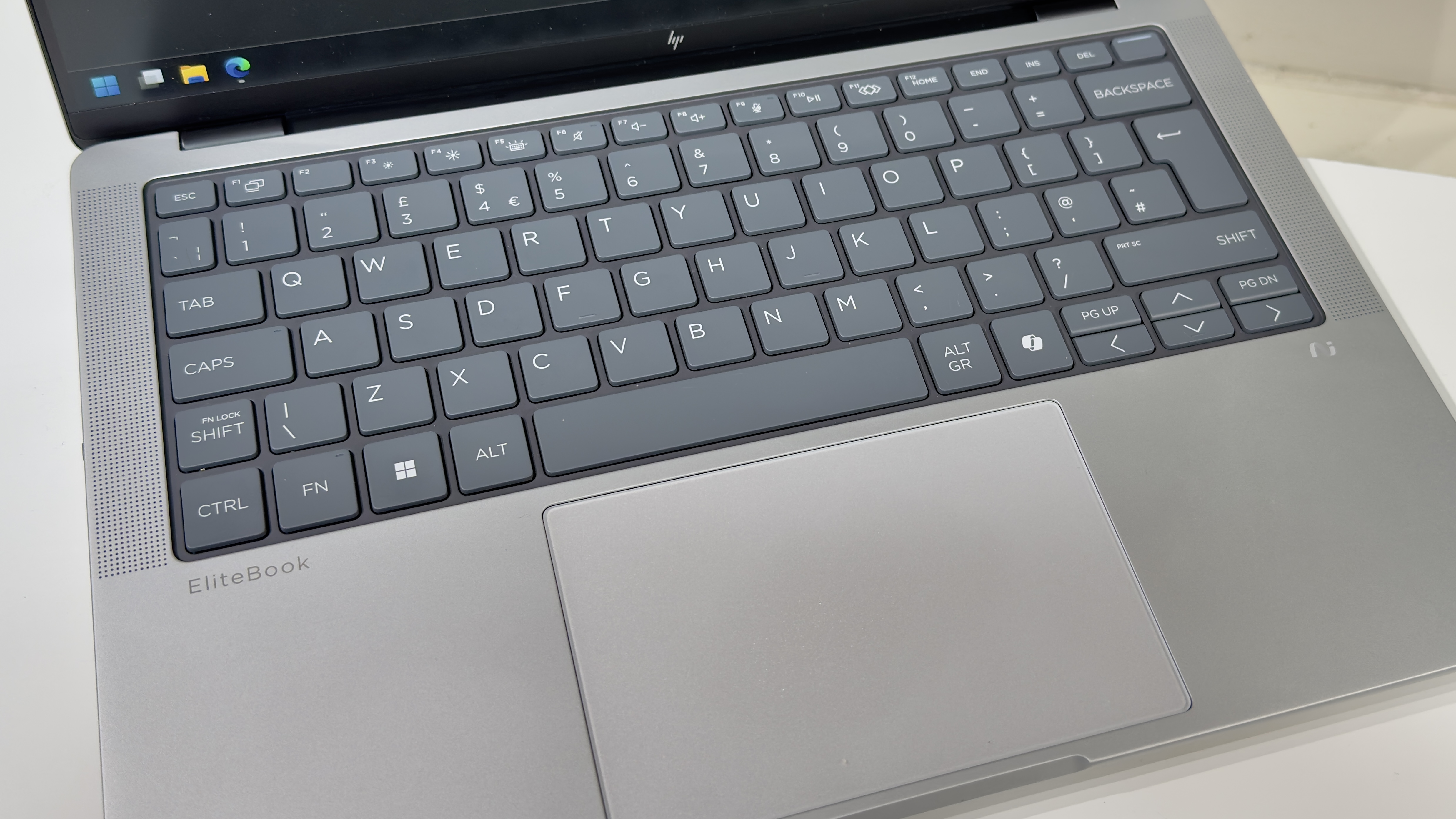
HP, happily, has put usability first. You get a dark grey panel of rounded chiclet keys, each of which respond with a lovely, light action. Unlike the zero-lattice designs onrival laptops, the chiclet design means that every key is separated by a 2mm channel. The result is a keyboard that feels spacious – and it also makes it easier to feel your way around with your fingertips.
Thankfully, there are no attempts here to revolutionise the keyboard. The function row is bog-standard keys which default to their secondary shortcut functions, adjusting brightness and volume, and so forth. There’s the usual Fn Lock arrangement for those who prefer function keys, and a little LED on the FN key illuminates when it’s active.
One nice touch is HP’s programmable button on the function row – this can be customised to launch specific apps, websites, folders or files; trigger a sequence of keypresses (up to five), or input up to 2,000 characters of text. Naturally, we set it to launch theITProwebsite with a single keystroke, although other websites are available.
One of the regular pitfalls for modern laptops is the combined power button and fingerprint reader set just to the right of the Delete key, but here HP’s engineers have actually thought about usability. Jab at the Delete key a little too imprecisely, and even if you do hit the power button, the laptop won’t turn off if you’re on the Windows desktop or in an app – it only responds instantaneously on the lock screen or when you’re trying to wake the laptop. If you’re booted into Windows, however, then you’ll need to hold the power button down for a couple of seconds to send the laptop to sleep (or shut down, depending on your preferred settings).
If we take issue with any part of the keyboard layout, it’s the decision to position the Page Up and Page Down keys hard up against the left and right cursor keys. It may just be our particularly oversized fingertips, but we often found our cursor bouncing up or down a page when we were intending to move up or down a single line. It’s potentially something we might get used to, but during our time with the laptop, it was an annoyance.
The EliteBook X cuts costs with a large, mechanical touchpad in place of a fancier haptic variant, but it’s actually rather good. We didn’t encounter any issues with dodgy palm rejection or multi-fingered gestures – it just works, and works well. There’s a nice, deep, solid click action, and it didn’t miss a beat during our several weeks with the EliteBook.
HP EliteBook X G1a: Display
Our review unit came with the cheaper of the two available panels – it’s a 1,920 x 1,200 IPS panel with a claimed 100% sRGB coverage and a maximum 400cd/m2 brightness. Subjectively speaking, it’s absolutely fine. Color reproduction looks reasonably natural, contrast appears to be relatively high for an IPS panel, and the matte anti-glare coating does a superb job.
Put to the test with our X-Rite colorimeter, we measured an sRGB coverage of 94%, a maximum brightness of 370cd/m2, and a contrast ratio of 1,457:1. Even if two of those figures are marginally inferior to HP’s claims, those are respectable numbers.
One thing the panel isn’t, however, is strictly color accurate. The panel’s white point is noticeably too warm and reddish – we measured 6,059k rather than the ideal 6,500k – and the panel’s high gamma means that both colours and greyscales appear darker than intended. That results in a very mediocre average Delta E of 2.94 and a maximum of 6. That sounds worse than it is, though: colours don’t look terribly unnatural, with a few exceptions that are several shades too dark, and some oddly dark, yellowish-looking greys.
Ultimately, despite the inferior top-level measurements, we actually prefer it to the washed-out panel on the Dell Pro 14 Premium. But frankly, HP could still do much better here – and for the money, we think it should. If a laptop wants to call itself an EliteBook, it’s not unreasonable to suggest that a color-accurate display should be a bare minimum.
The Xiaomi Redmi Pad 2 is an inexpensive 11-inch tablet with respectable performance
Verdict
If you’re looking for a basic, low-cost tablet for general use, the Xiaomi Redmi Pad 2 will more than adequately cover your needs. This is especially if you go for the more powerful option with 8GB of RAM and 256GB of storage. The screen is great, and although the sound from the quad speakers lacks depth overall, they can handle loud music without distortion and remain clear. So, if you’d like a tablet for entertainment around the house and on the go, the Redmi Pad 2 is good value for money.
Smartphones are the smart devices we use the most, but tablets certainly don’t appear to be going anywhere, with many new models released each year. TheXiaomiRedmiPad 2 is a slim and lightweight budget tablet from an established tech manufacturer, and potentially one ofthe best budget tabletsavailable.
Budget tablets have come a long way, and many look and feel of a much higher quality than comparable models from 10 years ago. It’s fair to say that many, including the Redmi Pad 2, feature attractive designs with narrow bezels and metal bodies that belie their price. The two Redmi Pad 2 models available look identical, with just the RAM and storage being different, and the more expensive model offering LTE connectivity.
I reviewed the model with 8GB RAM and 256GB storage, which logically provides a smoother experience than the slightly cheaper model with 4GB RAM and 128GB storage. The higher-end model of the two isn’t much more expensive, so if your budget can stretch a little further, it’s worth it for the extra memory and storage.
The Xiaomi Redmi 2 is available in two versions and two colours. The price of the two is so small that for many people it will make sense to invest in the slightly more expensive model to enjoy more RAM, a higher storage capacity and LTE/4G connectivity.
The cheaper model with 4GB RAM and 128GB storage costs $179 / £169 / AU$288, while the version with 8GB RAM and 256GB storage costs just $215 / £219 / AU$347. These are attractive prices for tablets with a decent 11-inch 2.5K screen, LTE/4G connectivity for the more expensive version when a SIM card is installed and respectable performance across the board.
Xiaomi Redmi Pad 2: Design & Handling
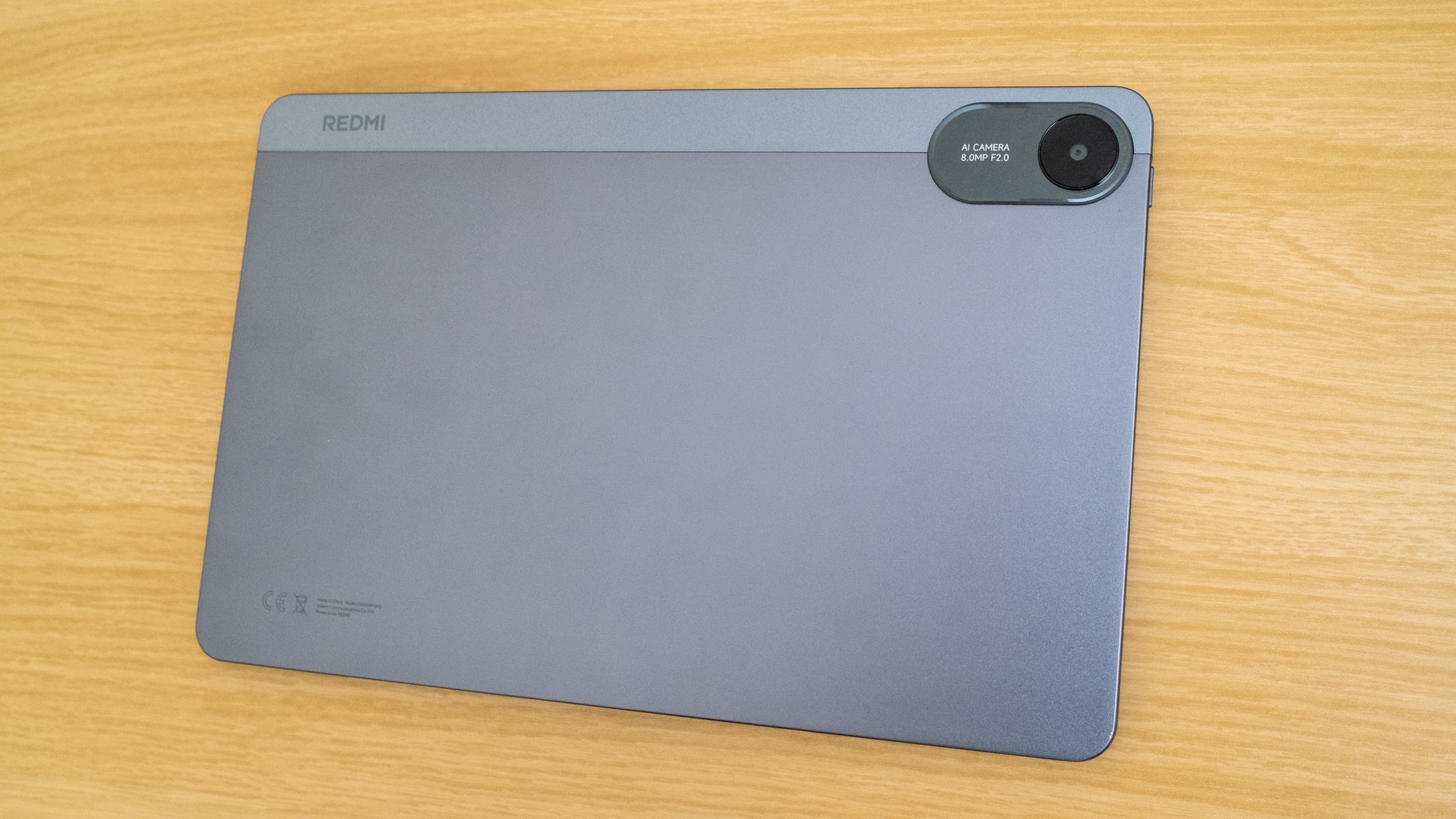
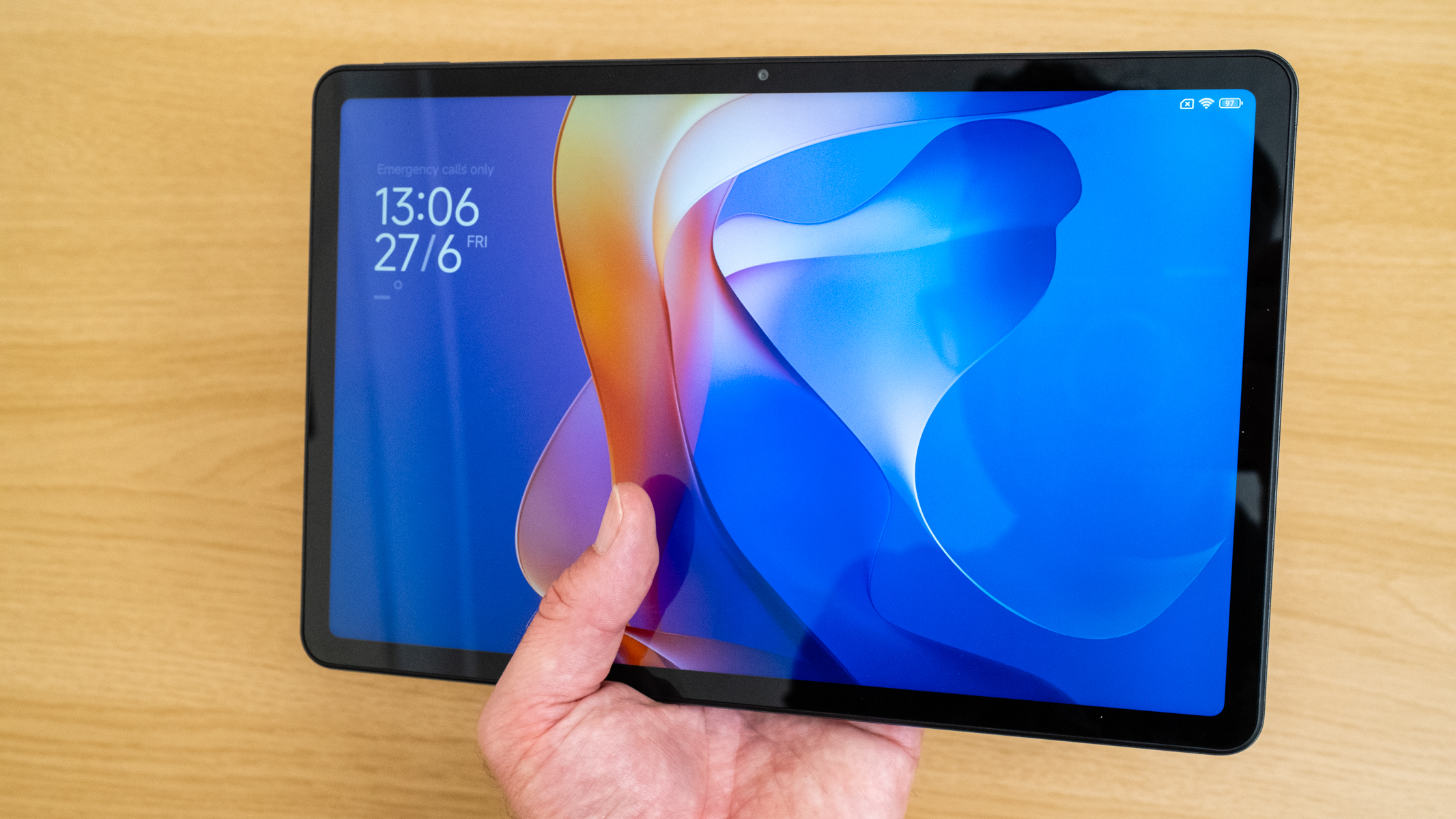
The Redmi Pad 2 is a good-looking tablet; there’s no getting away from the fact that the narrow bezel and the all-metal unibody make this budget tablet look and feel more expensive than it is. The tablet is also available in two colours: Graphite Gray and Mint Green. The lightly textured metal does feel good in the hand and provides a degree of grip that’s noticeably different to the screen, but a case of some kind will naturally provide more protection and improved grip.
This tablet offers an 11-inch screen, but with a 16:10 aspect ratio, it’s more rectangular than many other 11-inch tablets. This works well when streaming TV shows and movies, but perhaps most importantly, it means the tablet isn’t too wide and is comfortable to hold in one hand for use in portrait orientation. This is great when using apps that work best in portrait format, such as social media apps, and when reading eBooks and news websites, etc.
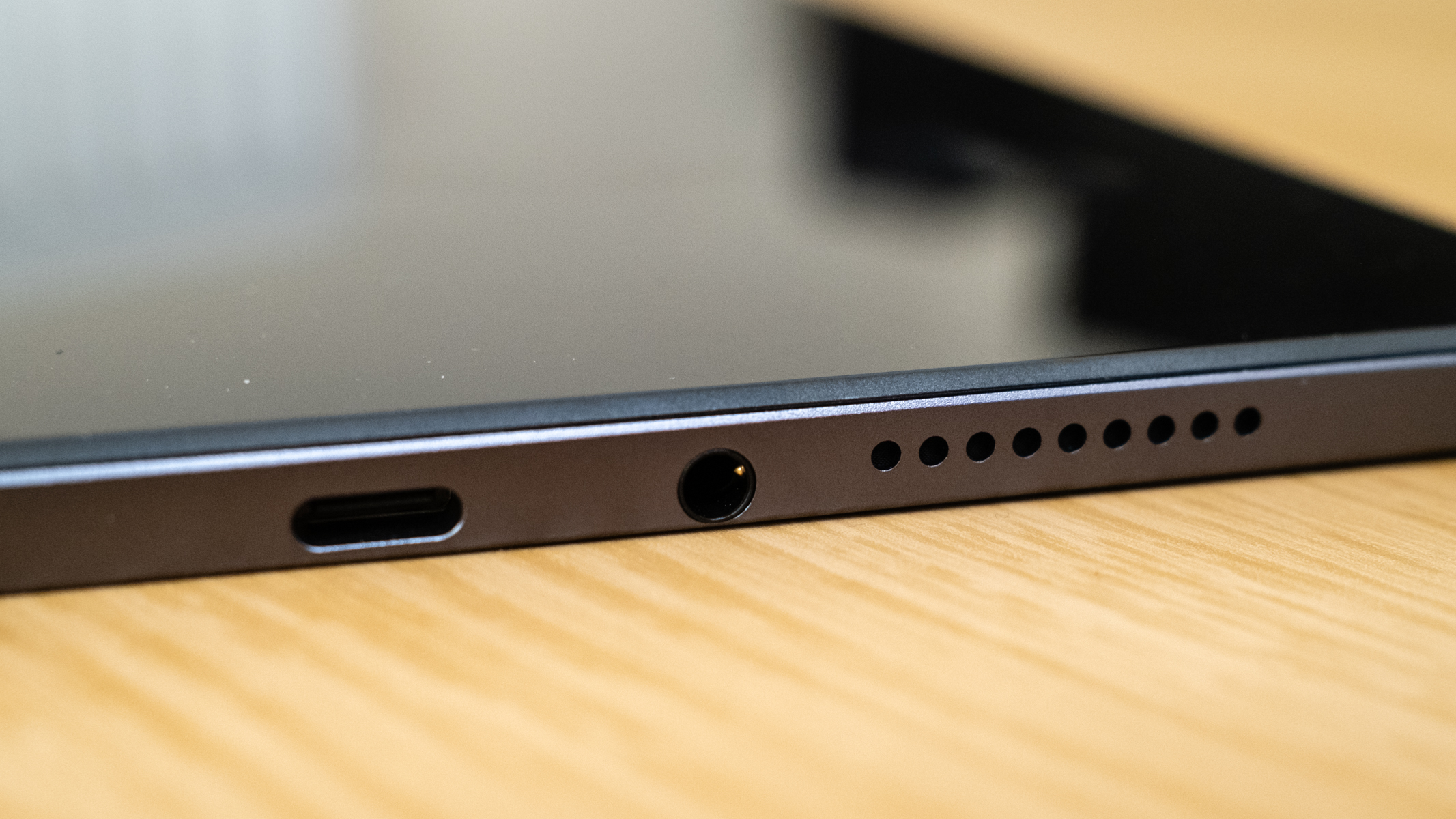
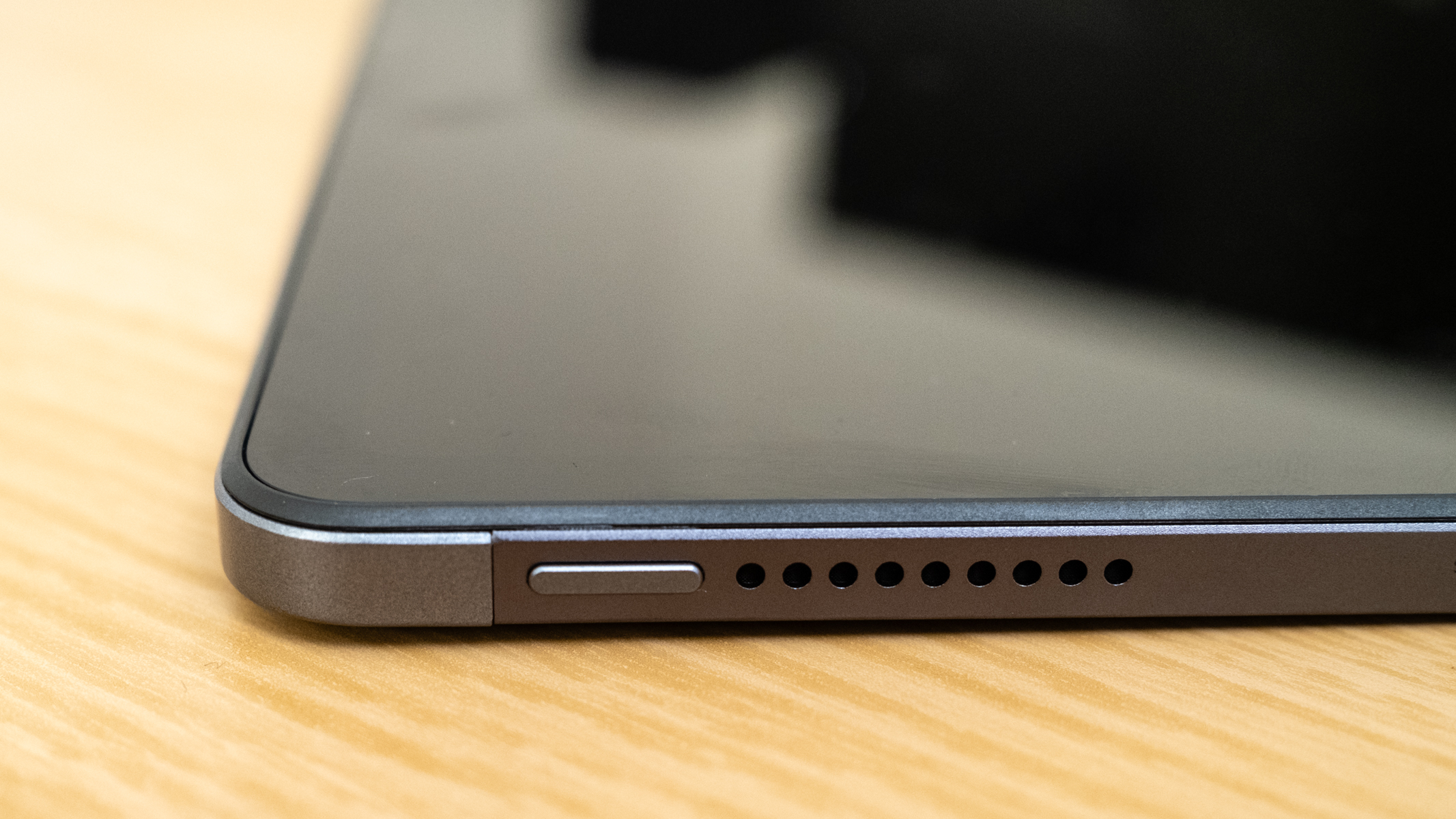
With dimensions of 10.02×6.54×0.29in / 254.58×166.04×7.36mm and a weight of 18oz / 510g, you can immediately see that this is a well-proportioned and fairly lightweight device. It still manages to pack in four speakers, an on/off switch, a volume control, a USB-C port and a 3.5mm headphone jack.
It’s not often you see a headphone jack these days – it does almost seem pointless in the world of earbuds, but why not? It is, however, positioned extremely close to the back edge of the tablet, which could put pressure on the cable if the tablet isn’t in a case and is just resting on your lap, bed or sofa. It’s a nice idea, but perhaps not the best execution; I’ll certainly be sticking to wireless headphones.
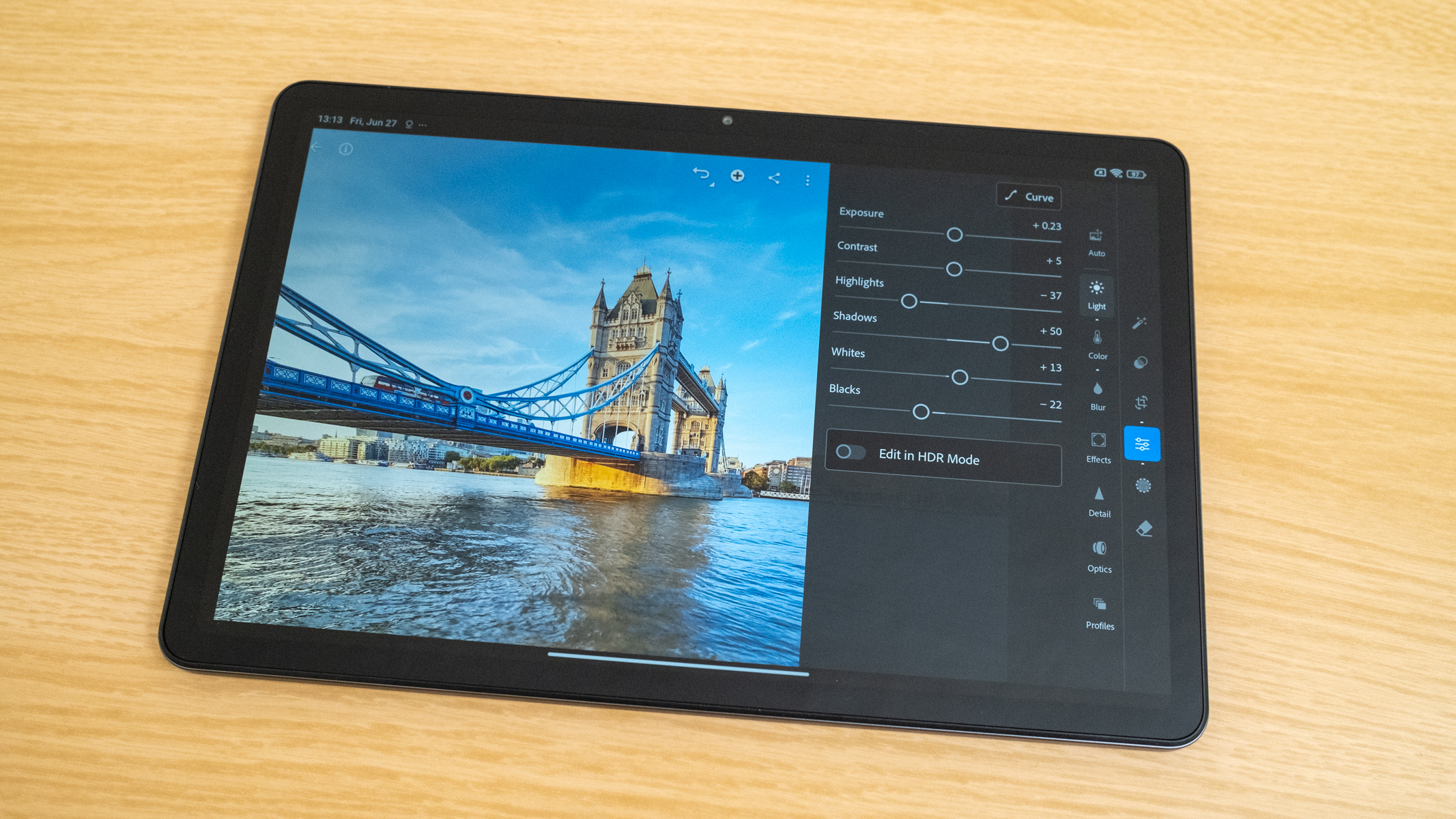
The Redmi Pad 2 features a generous 9000mAh battery, which Xiaomi claims provides up to 86 days on standby, 234 hours of music playback and 17 hours of video playback. I didn’t test the tablet to these extremes, but I was happy with the longevity of the battery when the tablet was used for web browsing, streaming, emails and app use, includingLightroomMobile to see how well the tablet could handle editing smartphone Raw files.
For this type of standard use, the Redmi Pad 2 didn’t skip a beat, and I was able to scroll throughYouTubeShorts quickly without any slowdowns or stuttering. It’s far from a serious productivity tablet that you could use to replace a laptop for many but not all tasks, but for everyday use, the processing power, screen and sound are more than adequate.
Despite not being a productivity powerhouse, the Redmi Pad 2 is compatible with the Redmi Smart Pen, which can be used for sketching in the included Mi Canvas app, an alternative drawing app from Google Play, for note-taking and for photo editing, etc. This is an optional extra and not an accessory that was included with the review unit, so I was unable to test it.
Whether or not you’d need the Redmi Smart Pen is very much a personal preference, but for this tablet I think it would only be worthwhile if you intend to sketch and draw. For all other tasks, using your forefinger for navigation is enough. If the tablet were more powerful and had a larger screen, a smart Pen would be much more useful, in my opinion.
Xiaomi Redmi Pad 2: Performance
Setting up the tablet is simple, like all tablets, although I did accidentally set up gesture rather than button control during the setup process. This was user error, and it was easy enough to fix this in the settings. The tablet runs Xiaomi HyperOS 2, which is based on Android 15 and Xiaomi’s Internet of Things platform, Vela. It’s nothing out of the ordinary as an OS, but it can’t be faulted except for the absence of split-screen functionality for viewing two apps at once.
This combination does bring into play a host of AI-powered features, ranging from speech recognition to even unique calculator features. Do these improve functionality, or are they simply a jump onto the current AI bandwagon? Realistically, some are useful and others are pointless gimmicks. For example, AI Gesture Recognition allows you to add special effects during video calls using gestures – make of it what you will.
If you own a Xiaomi smartphone running HyperOS 2 you can enjoy several syncing options across the phone and tablet including call sync, network sync which utilises the phone’s WiFi hotspot intelligently and shared clipboard. The Redmi Pad 2 can also be set up for interconnectivity withAppledevices and linked to Windows PC, so it can be incorporated into your existing device ecosystem.
In terms of the installed software, there is some bloatware included, but you can hide these apps from the homepage if they can’t be uninstalled. There are also some popular apps pre-installed, includingTikTokand Temu, installed already, which may save you time if you’d install them anyway. These can be deleted if not required.
When you compare this tablet to higher-end models released just two or three years ago, you’re getting some pretty decent hardware, including the 8GB of RAM and 256GB of storage in the more expensive model of the two.
The 11-inch screen is also excellent for a budget model at 2.5K / 2560x1600px with a 274ppi pixel density. It also offers a 10-bit colour depth, 1500:1 contrast ratio and a 90Hz refresh rate. Colours are great and the image is crisp, although viewing angles are minimal, so it’s best viewed straight on.
The screen provides a nice and clear image when using apps and watching streaming services, as well as doing some minor photo editing inAdobeLightroom Mobile andPhotoshopExpress, etc.
The screen is highly reflective, and it can be difficult to view darker scenes in movies and TV shows. This is a normal issue with tablets, so it’s certainly not unique to the Redmi Pad 2. The screen is also a fingerprint magnet and smears easily, which also makes viewing difficult.
Adding to the enjoyment of listening to music and watching movies, the quad speakers support Dolby Atmos, and the sound quality is good overall. Sound is clear, and although the bass isn’t horrific, it certainly lacks depth.
To test this, I played DJI Shadow – Nobody Speak and Tool – 7empest on YouTube at full volume to try different music genres. Everything remained clear with a dominant midrange, so you can certainly enjoy loud music and movies, but don’t expect too much.
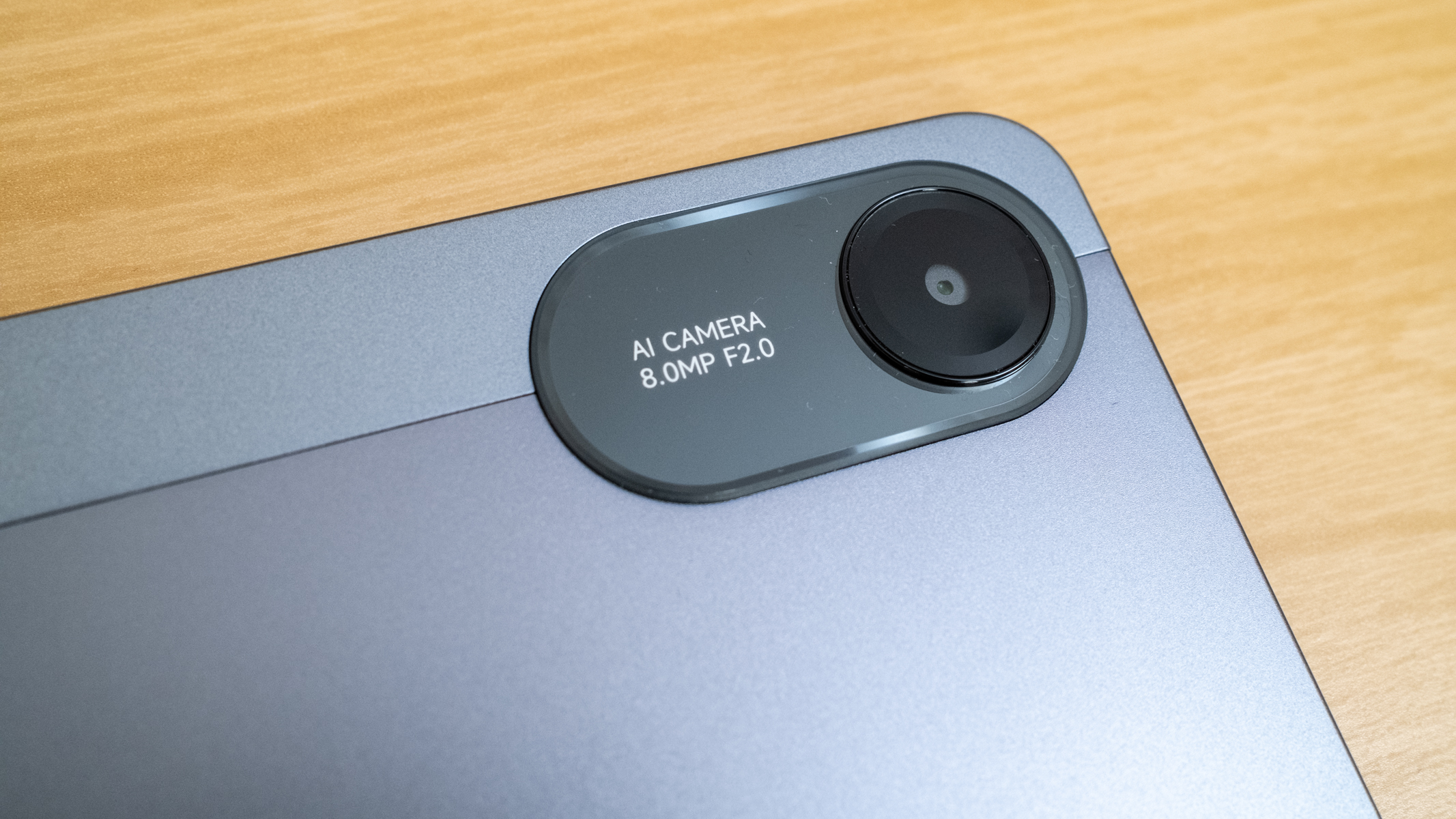
8MP rear-facing camera.
5MP front-facing camera.
Tablet cameras are infamously poor, and the Redmi Pad 2’s cameras won’t be winning any awards; particularly the front-facing camera, which is the one you’d typically use for video calls. Both are also quite low-res, and cameras of a higher quality would be a welcome improvement.
The main rear camera is 8MP and can capture video at 1080p 30fps and 720p 30fps, while the front-facing camera is 5MP and can capture video at 1080p 30fps and 720p 30fps.
When comparing photos taken with the two cameras, the rear camera isn’t bad overall, but fine detail is mushy. The front-facing camera is pretty poor, and the same scene shows even more detail loss and a significant softness across the whole image taken in bright light.
Tablets have never and will never be a good option for photography, but the front-facing camera is important for video calling, and it could have been much better here.
If you’re looking for a basic, low-cost tablet for general use, the Xiaomi Redmi Pad 2 will more than adequately cover your needs. This is especially if you go for the more powerful option with 8GB of RAM and 256GB of storage. The screen is great, and although the sound from the quad speakers lack depth overall, they can handle loud music without distortion and remain clear.
For the price, you’re getting a pretty good deal here, and while the Redmi Pad 2 isn’t up to the speed of more powerful productivity tablets with larger screens, it’s quite similar to more powerful tablets from a few years ago. So, if you’d like a tablet for entertainment around the house and on the go, the Redmi Pad 2 is worth a look.
Buy it…
You only need a tablet for entertainment and browsing.
You’d like a budget tablet with reasonable processing power.
???? Don’t buy it…
You get everything you need from your smartphone.
You need a larger and more powerful tablet for productivity tasks.