Best Copilot+ PCs in 2025: Top-rated AI laptops with Qualcomm, Intel, and AMD chips

Surface Laptop 7

Copilot+ PCs are laptops that allow you to take full advantage of Microsoft’s AI tools in Windows 11, and these are the best we’ve tested.

Copilot+ PCs take the idea ofAIPCs one step further by offering exclusive access to AI tools built into Windows 11. With all major laptop brands offering great Copilot+ laptops withQualcomm,AMD, and Intel hardware, it can be tough to figure out exactly what you need.

My top pick for most people isMicrosoft’s Surface Laptop 7, but my selection of top-rated alternatives and honorable mentions might have something better suited to your specific needs.

>>>Replacement battery for Microsoft Surface laptop 3 13.5 1867 1868

Best Copilot+ PCs we’ve tested in 2025

Savvy shoppers might notice that a lot of my top Copilot+ PC picks mirror those found in my roundup of thebest AI laptops. Yes, Copilot+ PCs are all AI laptops, but the reverse isn’t always true.

For example, the ASUS ROG Zephyrus G14 that I selected as thebest 14-inch gaming laptopoption in my other roundup is considered an AI PC thanks to its Ryzen NPU andNVIDIA RTXLaptop GPU.

However, the NPU’s 16 TOPS capacity doesn’t hit the 40+ TOPS requirement for Copilot+, barring it from the category. That’s why you won’t see it in this list of the best Copilot+ PCs.

The following laptops all have an NPU powerful enough to run Windows 11’s built-in Copilot+ AI tools likeWindows Recall,Click to Do,Cocreator, and more.

Best overall Copilot Plus PC
Surface Laptop 7
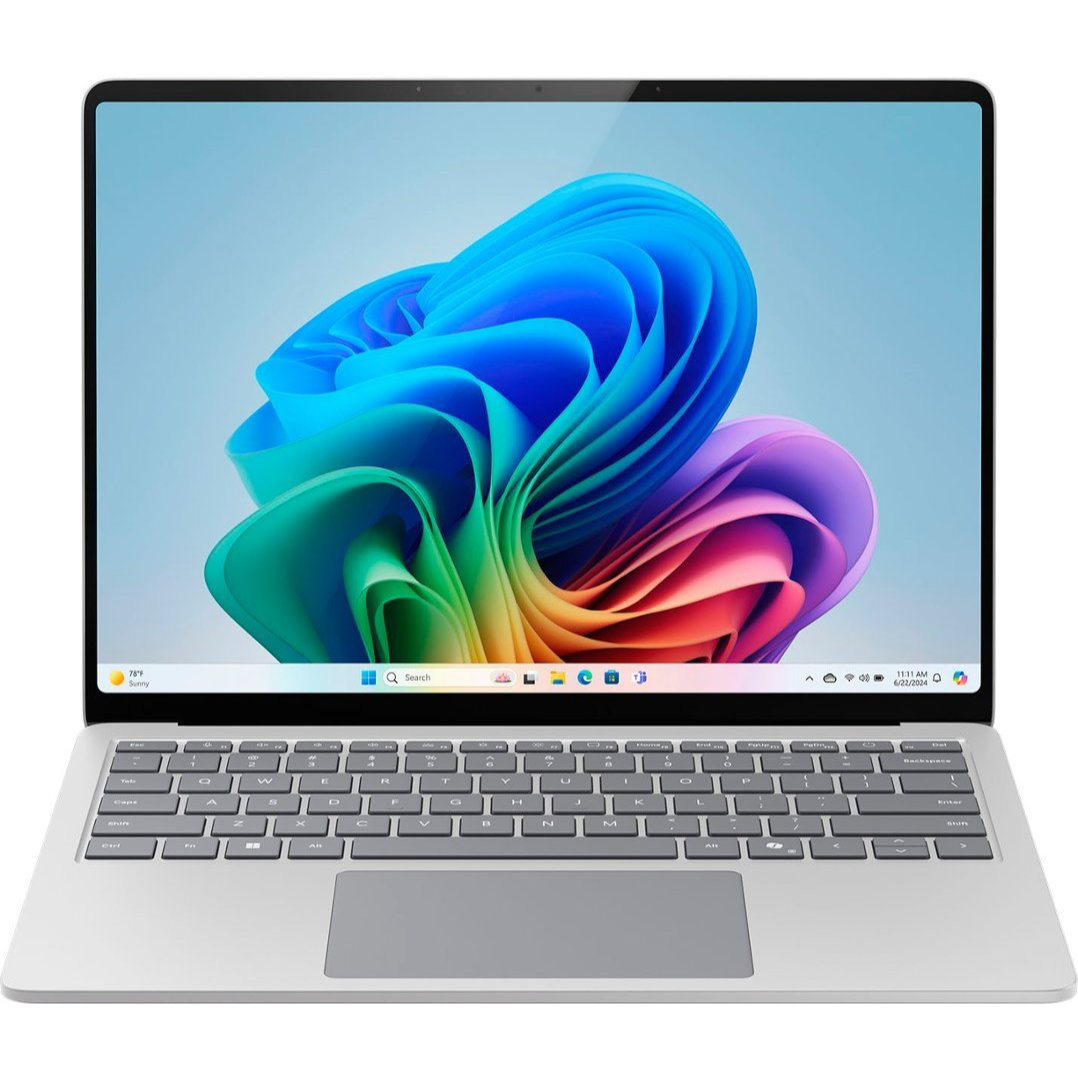
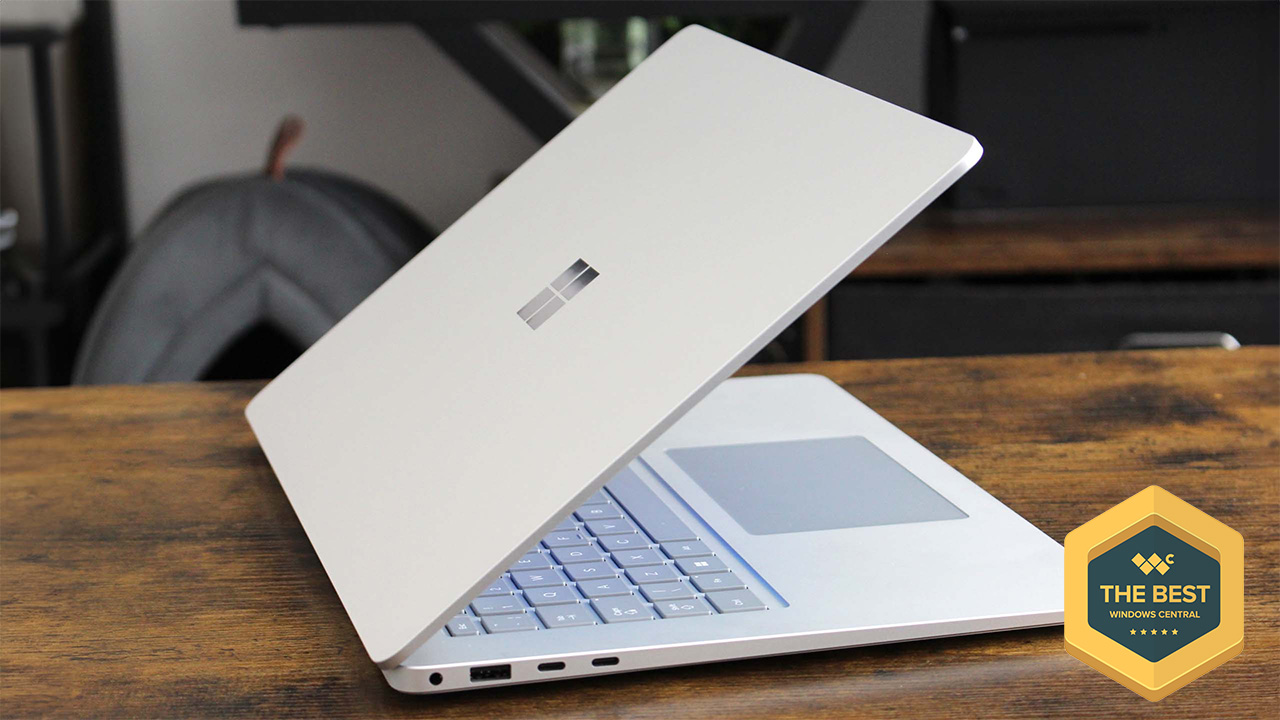
The Surface Laptop 7 was released as one of the first Copilot+ PCs, and it remains the top option.

1. Surface Laptop 7

The laptop built for Copilot+

Specifications

SoC:Snapdragon X Elite (X1E-80), Snapdragon X PlusNPU:Qualcomm Hexagon (45 TOPS)Memory:16GB, 32GB LPDDR5x (soldered)Storage:256GB, 512GB, 1TB M.2 PCIe 4.0 NVMe SSDBattery:54Wh or 66WhDisplay:13.8 (2304×1536) or 15 (2496X1664) inches, 3:2 aspect ratio, 120Hz, touch, Dolby Vision IQ

Reasons to buy

+Snapdragon X Elite is incredible
+Great battery life
+Gorgeous new design
+120Hz display

Reasons to avoid

-No anti-reflective coating option
-Presence sensing features missing

Microsoft’s Surface Laptop 7 was one of the first Copilot+ PCs to be announced in May 2024.

It’s powered by Qualcomm’s Snapdragon XSystems-on-Chip (SoC)with aNeural Processing Unit (NPU)capable of handling Windows 11’s AI tools, ultimately delivering excellent efficiency and snappy performance.

For the most power, I suggest opting for theSnapdragon X Elitechip, although models with theX Pluschip are still potent and cost less.

Our in-house testing with PCMark’s Application battery test saw the Laptop 7 go for more than 18 hours before needing a charge.

With the new performance hardware came a redesign, thinning out display bezels, rounding corners, blowing up the touchpad usingSensel haptics, and softening the edges.

“It’s basically perfect. It’s peak clamshell form factor. Of course, some minor areas could still be improved, but those are more subjective changes rather than objective ones. Things like adding an OLED screen is something that sounds like an upgrade on paper, but the IPS panel in here is already excellent and doesn’t run the risk of any burn-in.”

The Surface Laptop 7 comes in 13.8- and 15-inch sizes. The smaller IPS display has a 2304×1536 resolution, while the 15-inch version has a 2496×1664 resolution.

That comes out to 221 pixels-per-inch either way, and both screens offer a boxy 3:2 aspect ratio, smooth 120Hz dynamic refresh rate, touch functionality, andDolby Visionsupport.

also:Replacement adapter for HP 8300E AIO

Best thin and light Copilot Plus PC
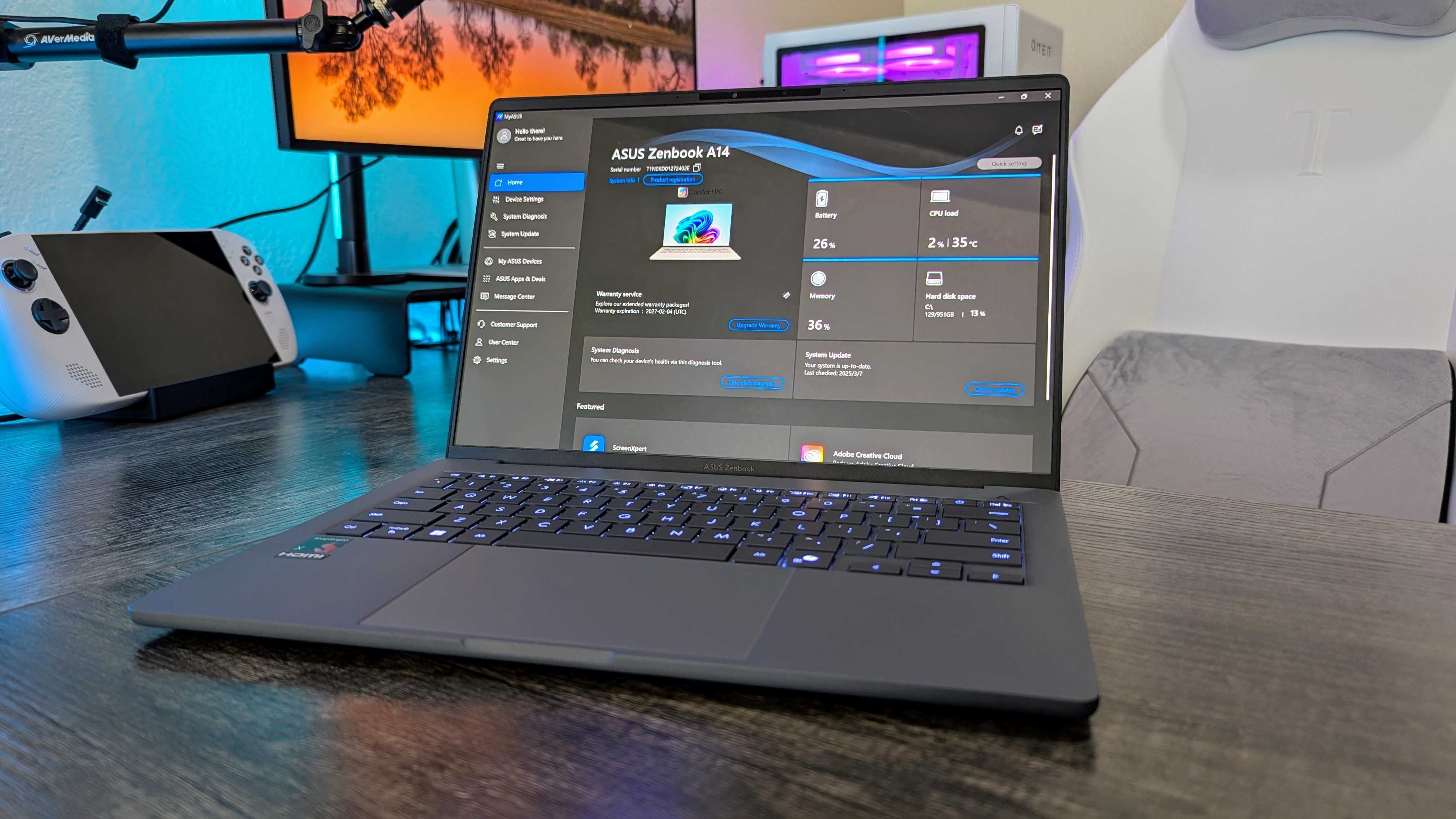
Image of the ASUS Zenbook A14 (2025).

2. ASUS Zenbook A14

The thinnest and lightest Copilot+ PC

Specifications

SoC:Qualcomm Snapdragon X X1-26-100NPU:Qualcomm Hexagon (45 TOPS)Memory:32GB LPDD5X-8533 (Soldered)Storage:1TB M.2 PCIe 4.0 NVMe SSDBattery:70WhDisplay:14 inches, OLED, FHD+, 60Hz, 0.2ms, 400 nits, VESA DisplayHDR True Black 600

Reasons to buy

+Refined, ultra-light, and surprisingly sturdy minimalist design
+Great selection of ports new and old
+Battery simply refuses to die
+Top-notch Windows experience

Reasons to avoid

-Slippery keyboard
-Easy to find the limits of the base Snapdragon X chipset
-Not quite the killer value we wanted it to be

The Zenbook A14 for 2025 focuses more on being as thin and light as possible rather than maximizing performance.

For those who want to travel light, the “Ceraluminum” material used for the chassis means you’re getting something that ASUS says is 300% stronger than aluminum; the Zenbook A14 is 21% lighter than the 2024 MacBook Air.

It’s built around Qualcomm’s new entry-level Snapdragon X1-26-100 SoC, complete with the standard NPU with up to 45TOPSof power for Copilot+ and other AI tools.

This chip also enhances efficiency, and you can expect, on average, more than 12 hours of battery life on a charge.

“There’s no absurd throttling being done to achieve that endurance, either. I tested the Zenbook A14 on and off the charger with identical settings, and observed a 0.7% drop in CPU performance and a 1% drop in GPU performance.”

The 14-inch display is no slouch, either. It has an OLED panel with FHD+ resolution, 60Hz refresh rate, 0.2ms response time, 400 nits brightness, and VESA DisplayHDR True Black 600 certification.

This is one great laptop for anyone who prefers to travel light, and a model with 16GB of RAM and a 512GB SSD costsabout $999. However, an early anti-Prime Day deal at Best Buy has itdown to $649.99as of my most recent update.

>>>Replacement battery for Asus G74S-XR1

Copilot Plus PC with best display
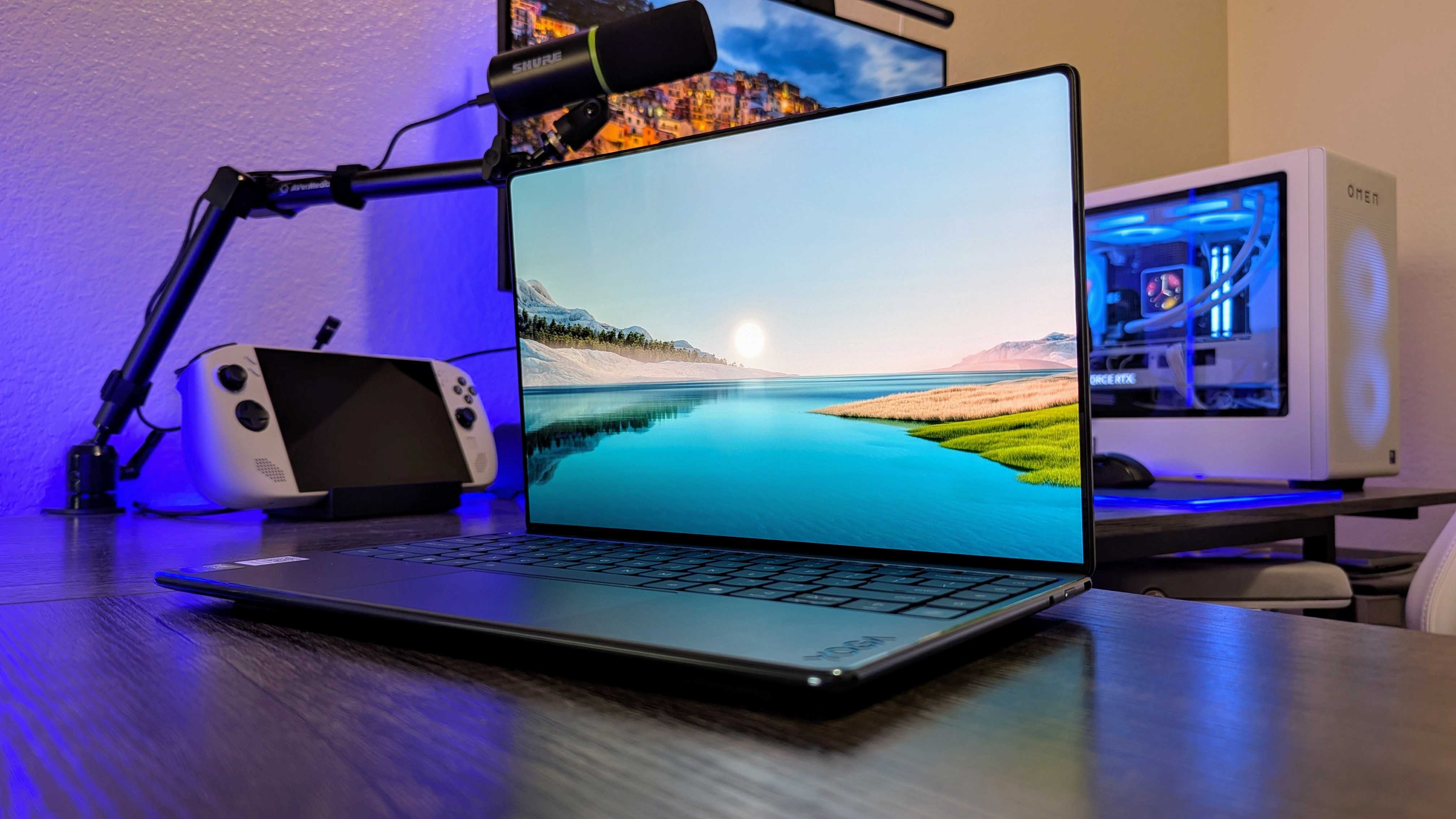
Image of the Lenovo Yoga Slim 9i 14 (Gen 10).

The Yoga Slim 9i (Gen 10)’s 14-inch OLED touch display is one of the best we’ve ever tested.

3. Lenovo Yoga Slim 9i (Gen 10)

Best display in a Copilot+ PC

Specifications

SoC:Up to Intel Core Ultra 7 258VNPU:48 TOPSMemory:Up to 32GB LPDDR5x-8533 (Soldered)Storage:Up to 1TB M.2 PCIe 4.0 NVMe SSDBattery:75WhDisplay:14 inches, 3840×2400, OLED, touch, 750 nits (HDR peak), 100% DCI-P3, 120Hz, Dolby Vision, DisplayHDR True Black 600

Reasons to buy

+A truly marvelous visual experience
+Memorable, gorgeous, and solidly built design
+Great performance on and off the charger
+Top-notch Lenovo keyboard with some useful additions

Reasons to avoid

-Awfully stingy with only two Thunderbolt 4 ports
-Battery life takes a hit because of that overkill display
-The webcam? Absolutely terrible, also because of that overkill display

Lenovo’s Yoga Slim 9i (Gen 10) is powered byIntel’s Core Ultra (Series 2)chips, with up to a Core Ultra 7 258V, 32GB of LPDDR5x RAM, and a 1TB M.2 PCIe 4.0 NVMe SSD.

The Intel CPU’s AI Boost NPU offers up to 47 TOPS of power, easily besting the 40 TOPS requirement for Copilot+. And because it has Intel Evo certification, you can expect snappy boot times, impressive everyday performance, and low standby battery drain.

A 75Wh battery is larger than you might expect to find in such a sleek laptop. Zachary Boddy tested andreviewed the Yoga Slim 9i (Gen 10), discovering that the laptop can, on average, go for about six hours on a charge without any performance or brightness compromises.

The 14-inch OLED display is really what makes this laptop great. It has a 4K resolution, it’s touch-functional, and it has a smooth 120Hz refresh rate that’s easy on the eyes.

The sRGB and DCI-P3 color gamuts get full coverage, and the panel can hit up to 750 nits brightness with HDR enabled.

“As beautiful as the physical laptop is, it’s the screen that has most consistently amazed me during my time with the Lenovo Yoga Slim 9i 14. For such a screen to be possible on a 14-inch laptop this compact is unbelievable, and you won’t find many other laptops right now that can compete.”

If it’s an industry-leading OLED display you desire, this Copilot+ PC should be a top choice.

Best convertible Copilot Plus PC
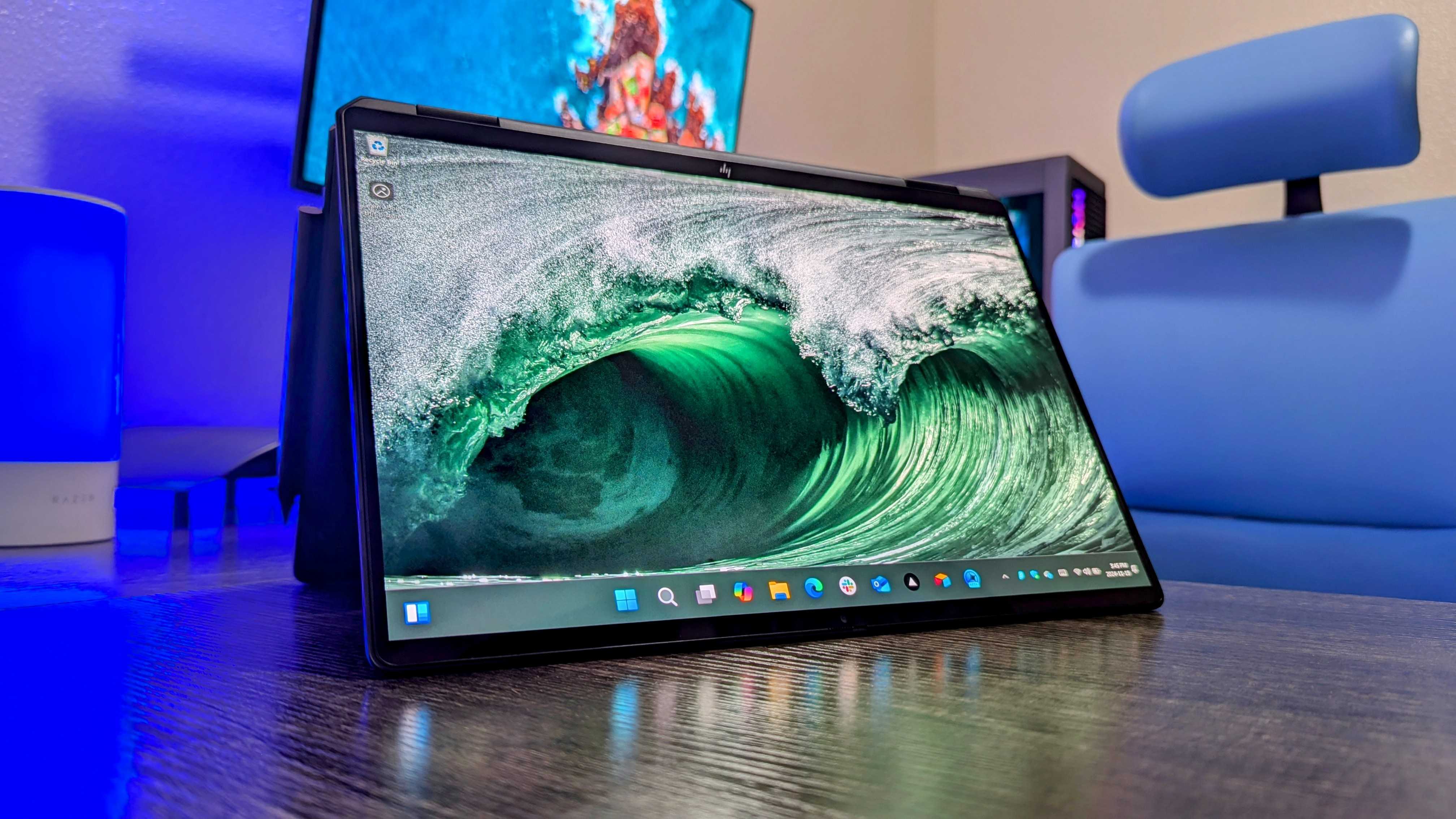
The HP OmniBook Ultra Flip 14 (2024) on a desk in tent mode.

4. HP OmniBook Ultra Flip 14 (2024)

Best convertible Copilot+ PC

Specifications

SoC:Up to Intel Core Ultra 9 288V (Series 2)NPU:48 TOPSMemory:Up to 32GB LPDDR5x (Soldered)Storage:Up to 2TB M.2 PCIe 4.0 NVMe SSDBattery:64WhDisplay:14 inches, 2880×1800, OLED, touch, 120Hz VRR, 0.2ms response time, HDR, 500 nits

Reasons to buy

+Subtly refined design that’s even thinner and lighter than last year
+Gorgeous and smooth 120Hz 2.8K OLED display
+Intel Core Ultra Series 2 leads to amazing battery life gains
+Best-in-class keyboard and haptic touchpad

Reasons to avoid

-Mighty expensive
-HP still loads on too many unwanted programs and apps

HP’s OmniBook Ultra Flip 14 convertible laptop was released in 2024 as a successor to the Spectre x360, and it’s every bit as good (if not better).

It’s thinner and lighter, and it’s more powerful than ever thanks to the inclusion of Intel’s Core Ultra “Lunar Lake” mobile chips inside.

All of Intel’s options for the OmniBook Ultra Flip come with an NPU capable of 48 TOPS, and with up to a Core Ultra 9 288V and 32GB of LPDDR5x RAM, you can trust that the laptop will handle a relatively heavy workload.

“That is to say, this laptop runs like a dream. It’s not a powerhouse workstation for heavy-duty creative work or hardcore gaming, of course, but it’s a stellar performer considering its compact stature and flexible design.Intel Evocertification guarantees short waits when booting up, waking from sleep, or logging in, as well as fantastic standby endurance.”

The sleek convertible design allows you to use the PC as a notebook or as a tablet, and the 14-inch touch display looks and performs well either way.

It has an OLED panel for stellar color and contrast, the 2880×1800 resolution is plenty crisp, it hits a 120Hz variable refresh rate, and it can manage up to 500 nits brightness.

An early anti-Prime Day deal at Best Buy has dropped prices by $400, and you can pick up a model with Core Ultra 7 CPU, 16GB of RAM, 1TB SSD, and 3K OLED display for$1,199.99as of my most recent update.

Best 2-in-1 Copilot Plus PC
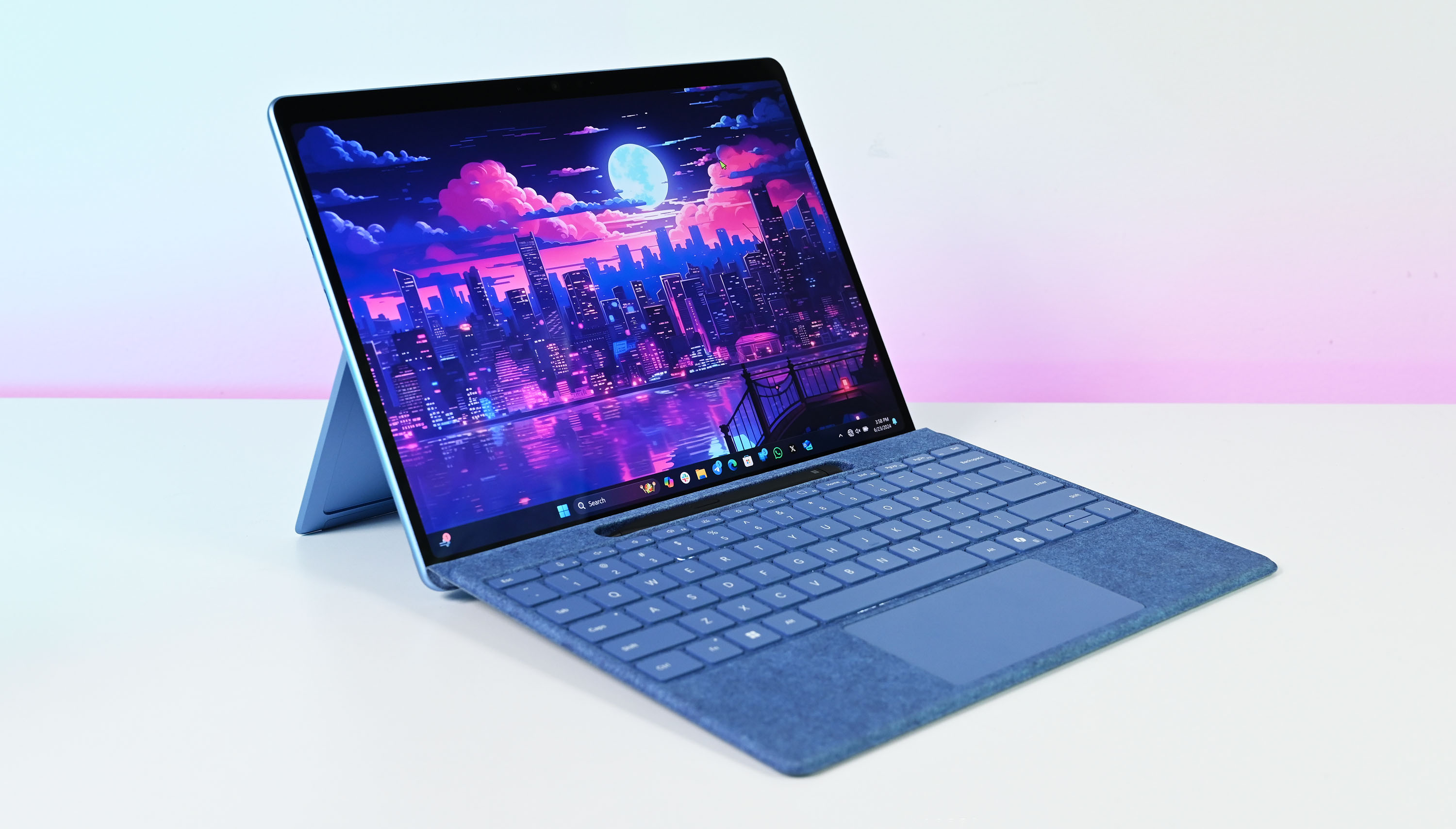
Microsoft Surface Pro 11 with Qualcomm Snapdragon X Elite

5. Surface Pro 11

Most versatile Copilot+ PC for most users

Specifications

SoC:Snapdragon X Elite (X1E-80), Snapdragon X Plus (X1P-64)NPU:Qualcomm Hexagon (45 TOPS)Memory:16GB, 32GB LPDDR5x (Soldered)Storage:256GB, 512GB, 1TB M.2 PCIe 4.0 NVMe SSDBattery:LCD: 48WH, OLED: 53WhDisplay:13 inches, 2880×1920 (2.8K), OLED or LCD, 3:2 aspect ratio, 120Hz, touch

Reasons to buy

+2.8K OLED touch display with inking
+The best 2-in-1 design on the market
+Starts at a competitive price
+Tons of versatility for most users
+Lots of configuration options

Reasons to avoid

-Keyboard and active pen sold separately
-No 5G connectivity until Fall 2024

Microsoft’s Surface Pro 11 was the first Copilot+ PC revealedto the world on May 20, and it should prove to be the most versatile option for most users. It retains thestellar 2-in-1 designfrom recent Surface Pro predecessors, with a fold-out stand on the back and a detachable keyboard/touchpad portion. It’s as easy to use as a tablet as it is a notebook.

The biggest news is likely the inclusion of an OLED touch display. It’s the first time that Microsoft has added an OLED option alongside the usual LCD, perfect for anyone who needs deep color and contrast. The display measures 13 inches, it has a boxy 3:2 aspect ratio ideal for a tablet, and it hits a 2880×1920 resolution. A dynamic refresh rate hits up to 120Hz, and inking support is included.

“New this year is the optionalOLED panel, which offered 550 nits of brightness in my tests and is VESA DisplayHDR 600 (high-dynamic range) compatible. This makes movies and compatible video games pop with extreme brightness (up to 900 nits, according to Microsoft). There is also support forDolby Vision, a form of HDR that enhances contrast in video content encoded in supported movies.”

On that note, the new Surface Pro Flex keyboard and Surface Slim Pen are both accessories sold separately. While many older Pro keyboards are compatible with the Pro 11, the new Pro Flex keyboard finally adds wireless connectivity, allowing you to use it when separated from the tablet.

A combination Pro Flex keyboard and Surface Slim Pen addsabout $450to the total price, but you can get the keyboard alone forabout $350.

Powering the new Surface Pro 11 is either aQualcomm SnapdragonX Elite (X1E-80) or Snapdragon X Plus (X1P-64)System-on-Chip (SoC). The more powerful X Elite is tied to the OLED display, while the X Plus comes with an LCD display. You can otherwise get up to 32GB of LPDDR5x RAM and up to 1TB of M.2 PCIe 4.0 NVMe solid-state drive (SSD) that can be upgraded after purchase.

Optional5Gconnectivity to complement standardWi-Fi 7is now also available.

The best Prime Day deal I spotted during my most recent update is for a Surface Pro 11 and keyboard bundle. Instead of $1,349.99, it’s down to$999.99 at Best Buy.

Best AMD Copilot Plus PC

Asus Zenbook S 16 (UM5606) - Review 2024 - PCMag UK

6. ASUS Zenbook S 16 (UM5606)

Best Copilot+ PC with AMD hardware

Specifications

SoC:Up to AMD Ryzen AI 9 HX 370NPU:50 TOPSMemory:Up to 32GB LPDDR5x (Soldered)Storage:1TB M.2 PCIe 4.0 NVMe SSDBattery:78WhDisplay:16-inch 3K (2880×1800), 120Hz, OLED, touch

Reasons to buy

+Color-accurate 3K OLED display with 120Hz refresh rate
+Off-white chassis option looks great with a unique texture
+All-day battery life with traditional x86-64 processor

Reasons to avoid

-50 TOPS NPU is often idle and unused in Windows Task Manager
-Built-in touchpad shortcuts for ScreenXpert can be annoying

ASUS’ Zenbook S 16 (UM5606) was our first opportunity to testAMD’s new Ryzen AI 300 mobile CPUswith an NPU capable of up to 50 TOPS of AI power.

With up to the sizzling Ryzen AI 9 HX 370 CPU and an integrated AMD Radeon GPU, you can expect snappy performance no matter what you’re doing. Better yet, battery life is quite good, hitting more than 13 hours in PCMark 10’s rundown benchmark.

“What stands out the most for ASUS is the fantastic value, starting from only$1,399.99 at Best Buyto bag a 120Hz OLED screen with a color-accurate display, albeit one that performs best indoors and away from natural sunlight is a total bargain when you also factor in the all-day battery life. As more apps open up to cross-platform NPUs, AMD could pull ahead of its rivals. Still, for now, ASUS benefits primarily from AMD’s powerful Radeon 800M internal graphics and Zen 5 CPU.”

The display measures up to the laptop’s impressive performance and efficiency. It’s a 16-inch OLED screen with a crisp 2880×1800 resolution and 120Hz refresh rate.

In Wilson’s testing, it reached about 375 nits brightness (without HDR enabled) and hit 100% coverage for DCI-P3 and sRGB color gamuts.

Honorable mentions & recent reviews
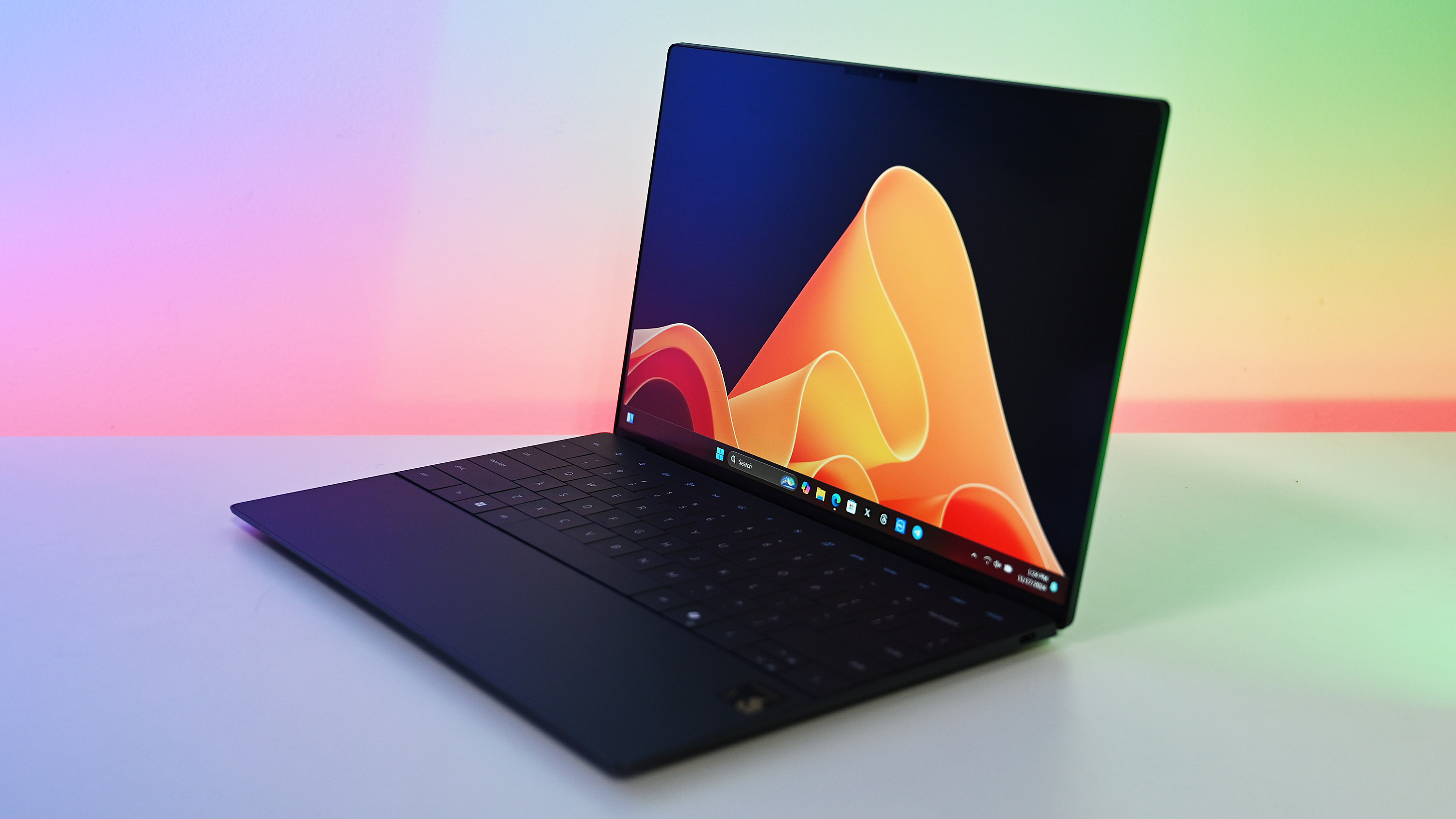
Dell XPS 13 (9345)

The six Copilot+ PCs I’ve included above have the best mix of features for a variety of users, but they’re not the only laptops we’ve tested.

Here are a few more Copilot+ laptops that you might want to consider.

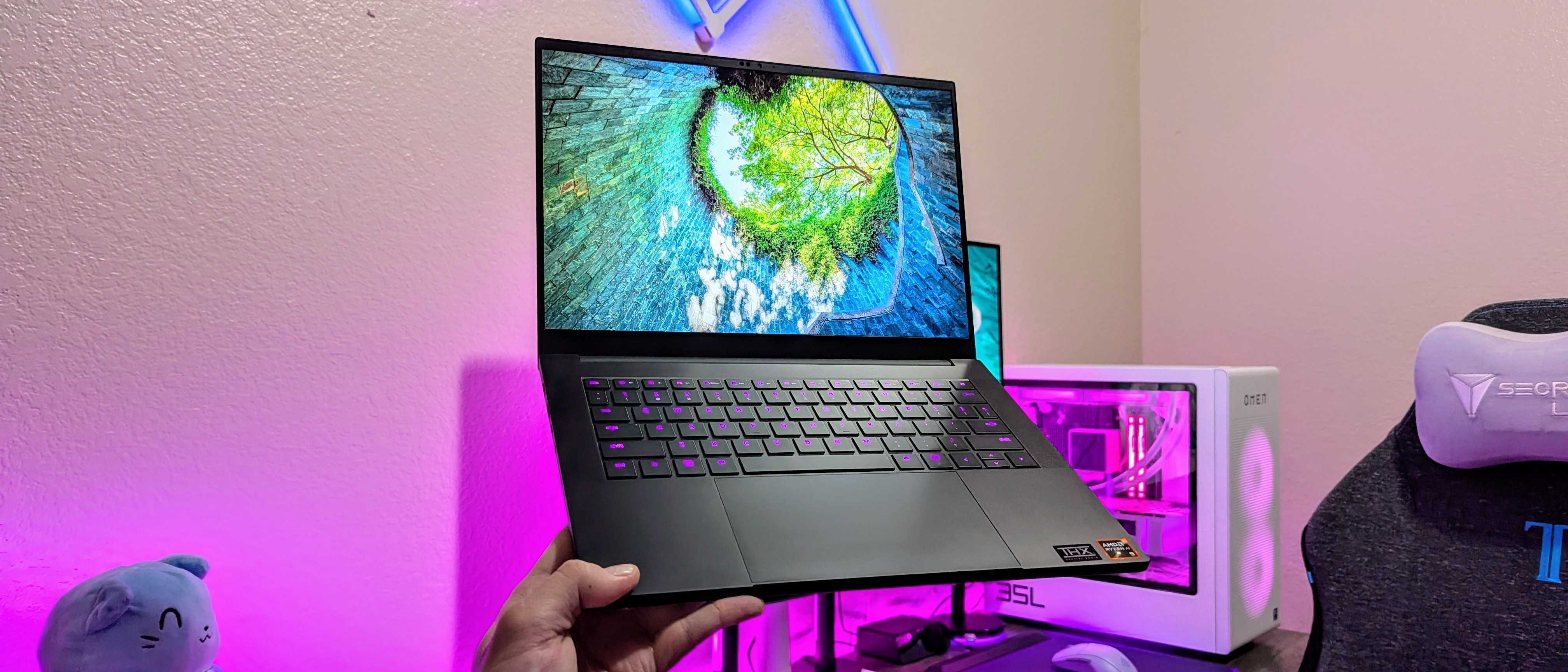
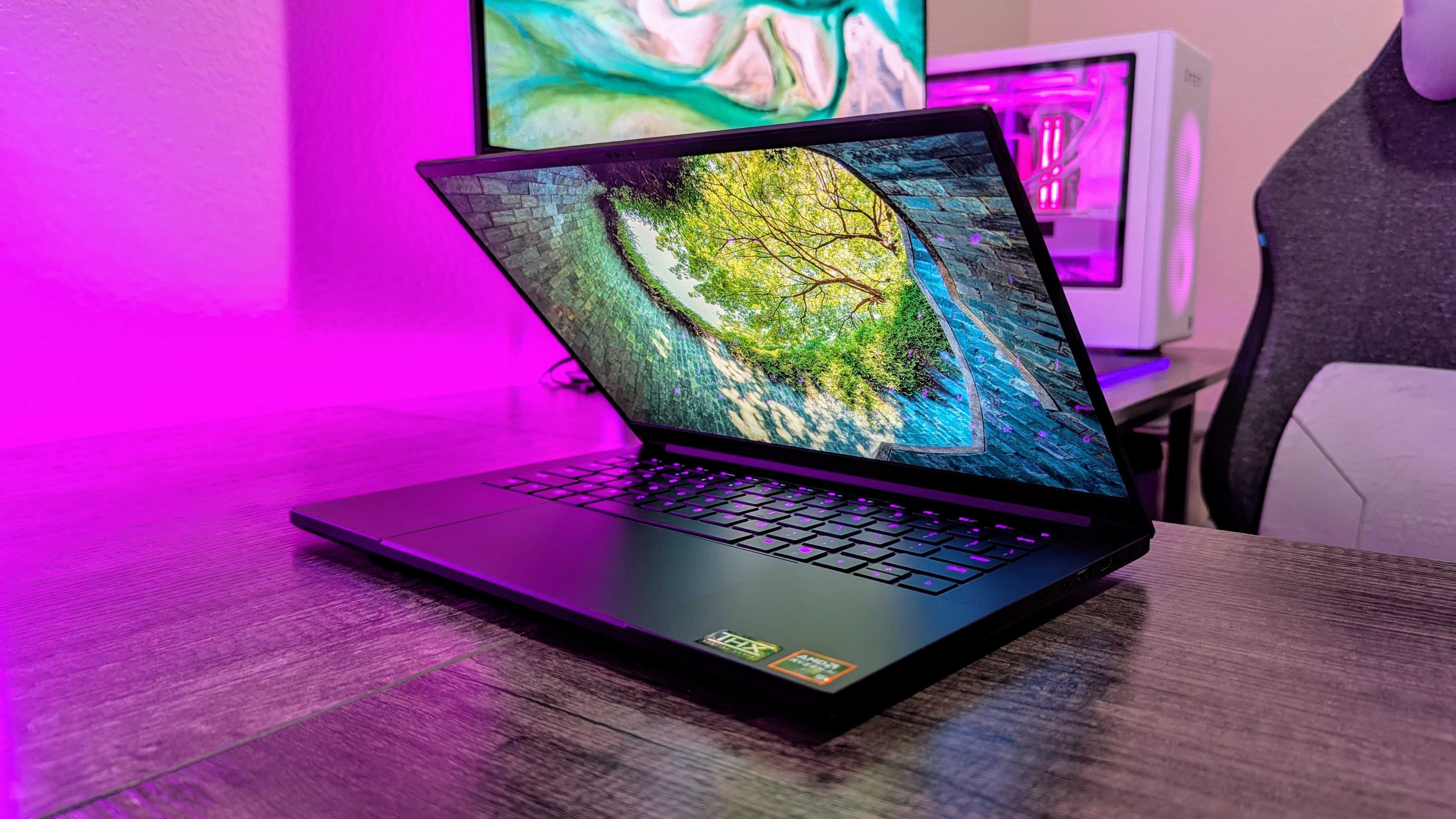
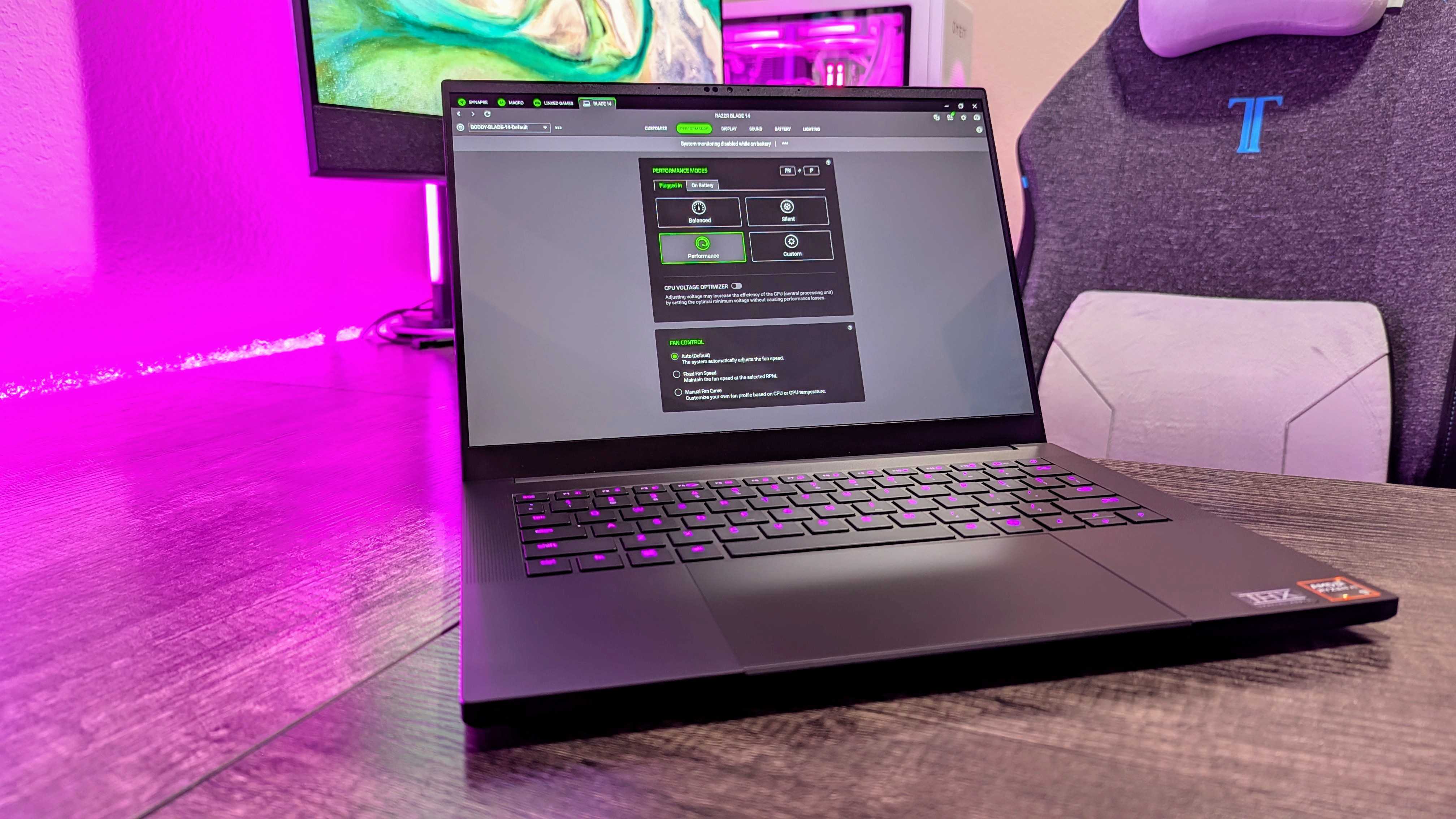
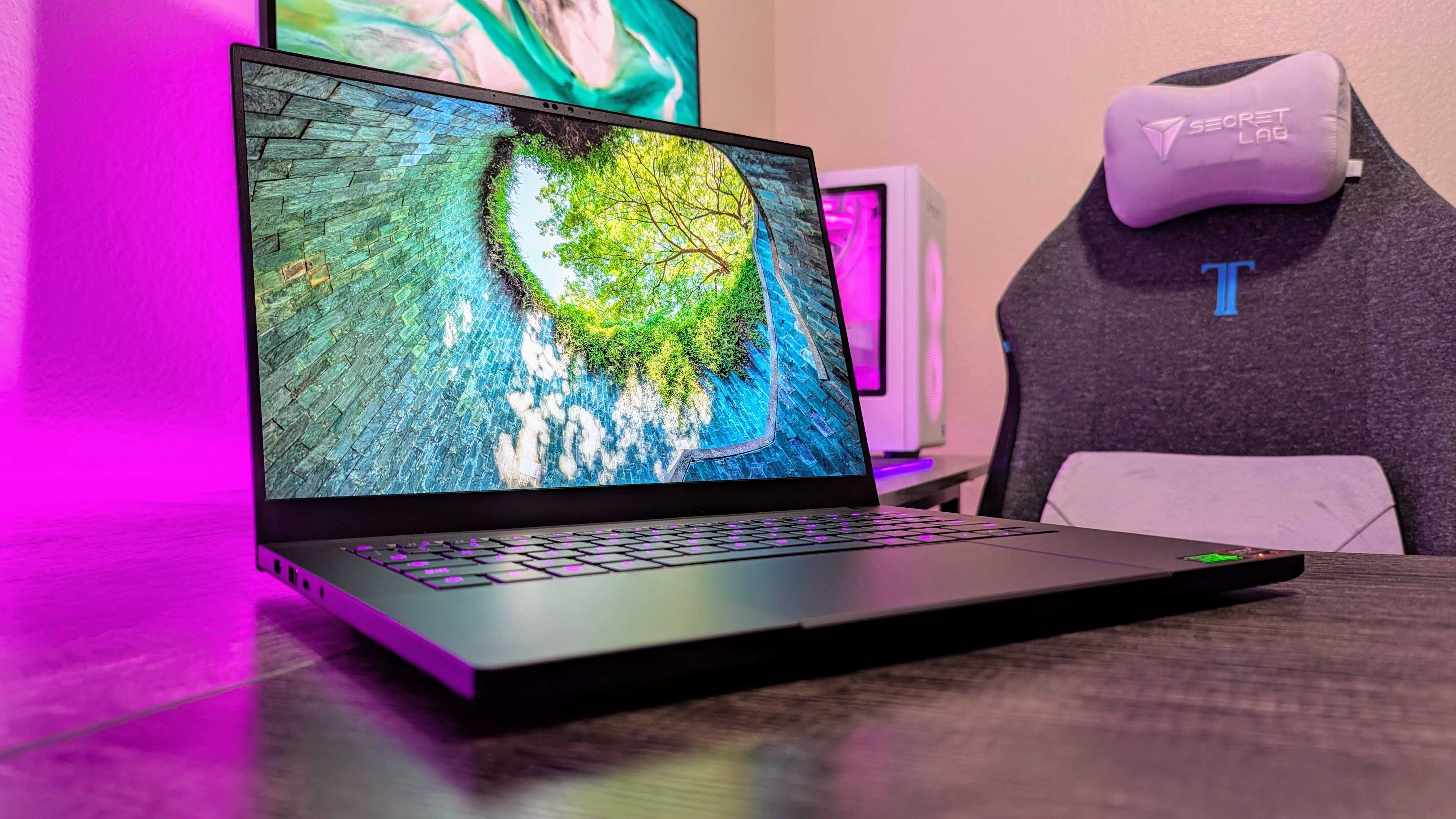
  • Razer Blade 14 (2025):The new Blade 14 for 2025 arrives with a fresh design that’s the “pinnacle of premium laptop design,” according to our review. Get it with up to an AMD Ryzen AI 9 365 CPU and NVIDIA RTX 5070 Laptop GPU. 
  • Lenovo ThinkPad X1 2-in-1 (Gen 10):Need a secure and durable business convertible? The new ThinkPad X1 2-in-1 is a beautiful PC with lots of added security and AI features, plus it’s a strong performer thanks to Intel Core Ultra (Series 2) chips.
  • HP EliteBook X 14 (G1a):This durable, secure, and feature-laden business laptop powered by AMD Ryzen AI 300 CPUs is the right choice for professionals who crave Copilot+ tools.
  • Dell XPS 13 (9345):Dell’s Qualcomm-powered XPS 13 wowed us with its stellar battery life, futuristic and compact design, and high-end display options. 
  • ASUS ProArt P16 (2024):Creators who need a powerful Copilot+ can take advantage of the color-accurate OLED display and strong AMD Ryzen AI 300 CPU performance. 
  • HP ZBook Ultra 14 (G1a):This 14-inch mobile workstation is home to the most powerful mobile CPU AMD has to offer, making it perfect for AI developers, enterprise users, and pros everywhere. 
  • HP EliteBook Ultra 14 (G1i):This ultra-premium business Copilot+ PC focuses on a thin and light build and the features desired by professionals and prosumers. 
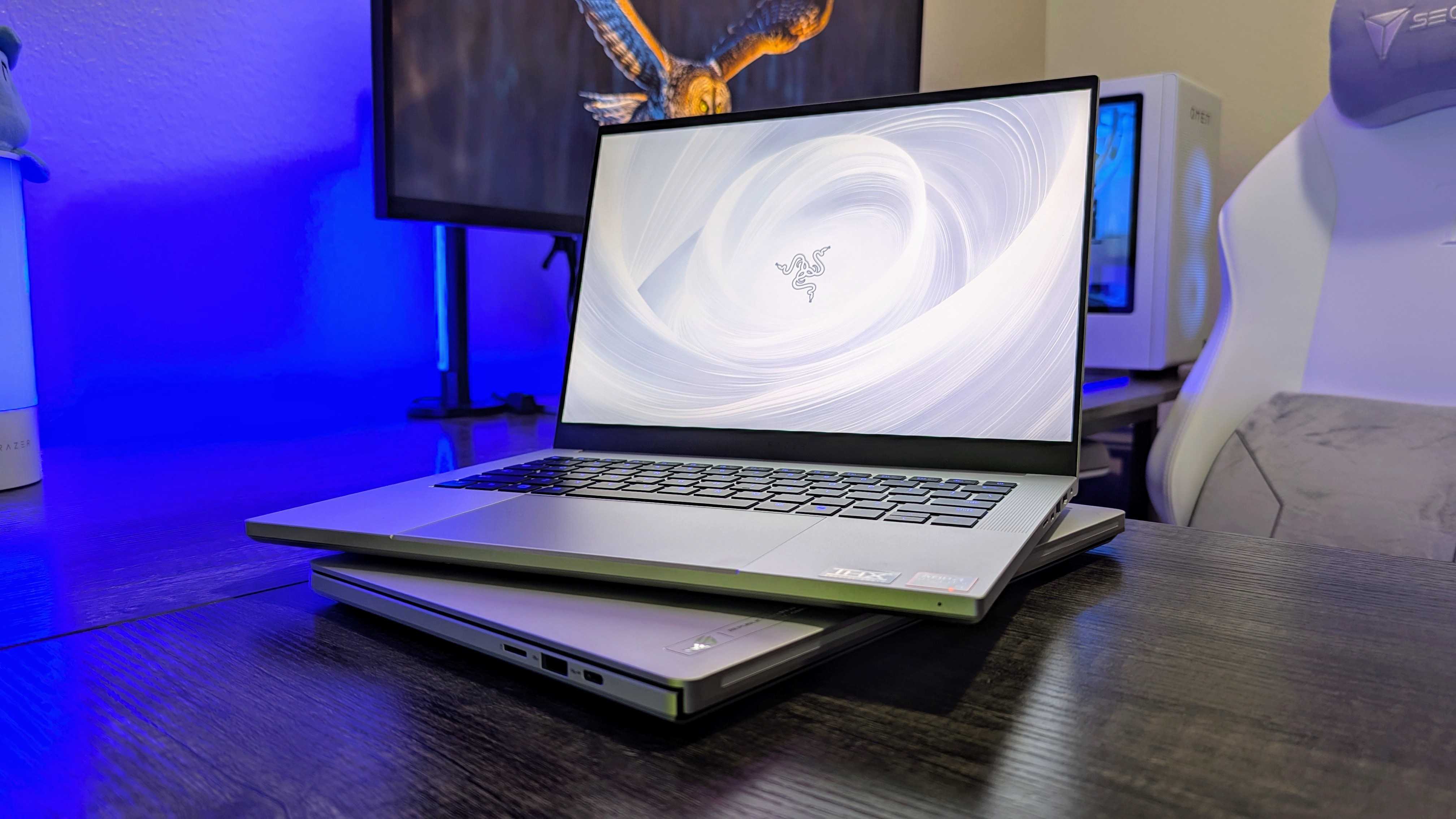
The Razer Blade 14 is amazing — but should “normal” people actually buy this ultra-premium gaming laptop?

Who should spend their money on the expensive Razer Blade 14?

Image of the Razer Blade 14 (2025).

It’s difficult to find fault with the Razer Blade 14, but that doesn’t mean you should spend your money on it.

I recently reviewed the Razer Blade 14 (2025), the latest iteration (and a complete redesign) of Razer’s best-selling and most portablegaming laptop.

I awarded the new Blade 14 a healthy 4.5/5 star rating and generally praised this premium and powerful device, but hovering over every item of praise was the overbearing price tag attached to it.

That begs the question —Razermay have crafted an incredible gaming machine, but what kind of person should actually spend their hard-earned money on it?

Statistically speaking, most of the people reading this article probably don’t. Here’s what sets theRazer Blade 14apart from most laptops, and exactly who should consider making it their next companion.

>>>Replacement battery for Razer Blade RZ09-01302E22 RZ09-0102 RZ09-01161 RZ09-01301E41

What makes the Razer Blade 14 (2025) so special?

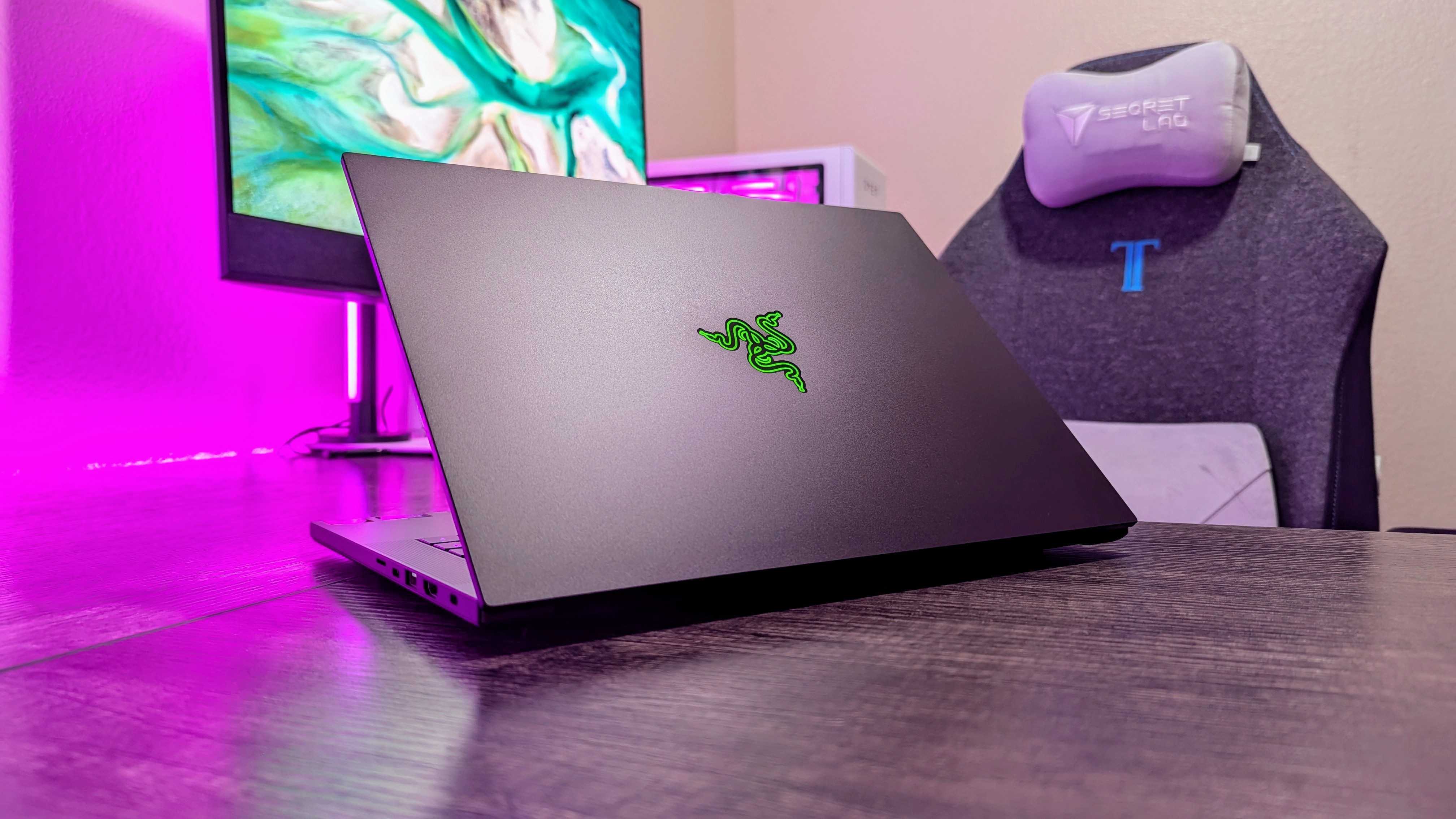
Image of the Razer Blade 14 (2025) gaming laptop.

The Razer Blade 14 is packing some serious firepower.

14-inch laptops are a dime a dozen, even if you only consider premium options from companies likeHP,Lenovo,Dell,Apple, and many more. So, where does the Razer Blade 14 fall?

Unlike most premium 14-inch devices, the Blade 14 is designed with gaming and creation in mind. That means it packs some of the most powerful hardware you can squeeze into a laptop, despite being around 16mm thick (to put it into perspective, that’s actually thinner at points thanthe Surface Laptop 7 we reviewed).

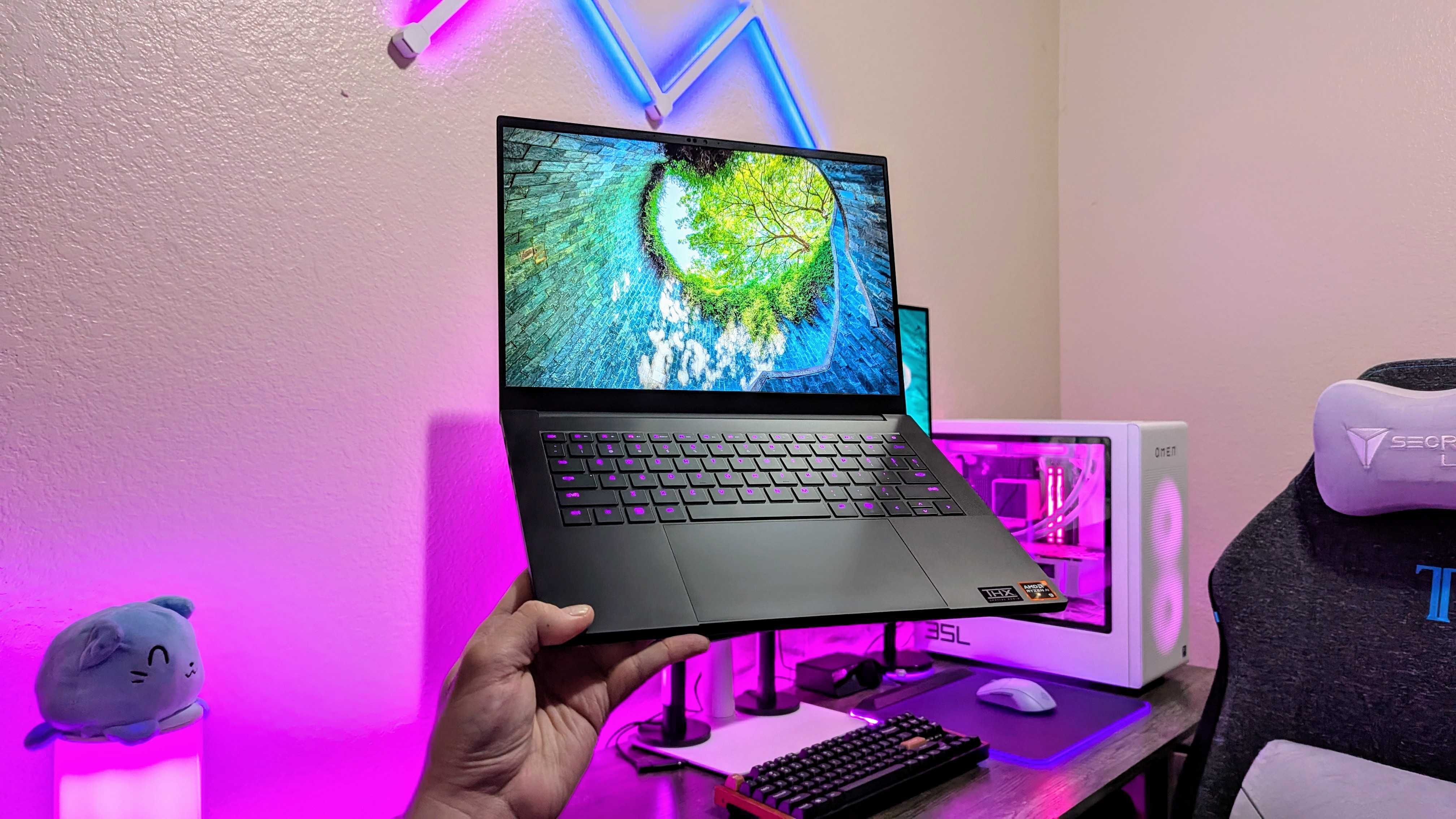
The Razer Blade 14 has a lot of other things going for it: an attractive and durable body milled out of a single block of high-grade aluminum, a vibrant and responsive 120HzOLEDdisplay, a bolsterious six-speaker system with spatial audio, all the ports you could ask for, andWindows Hellofacial recognition to log you in without a password.

Under the hood, though, you’re getting one of the bestAMD Ryzen AIchipsets and anNVIDIA GeForceRTX 50-series GPU, which enables high-performance gaming, content creation,andsupport for all the bestAIfeatures aCopilot+ PCcan offer.

That’s a whole lot of PC in a small package.

>>>Replacement battery for Razer Blade 15 Base 2020

Aren’t normal laptops also quite powerful now?

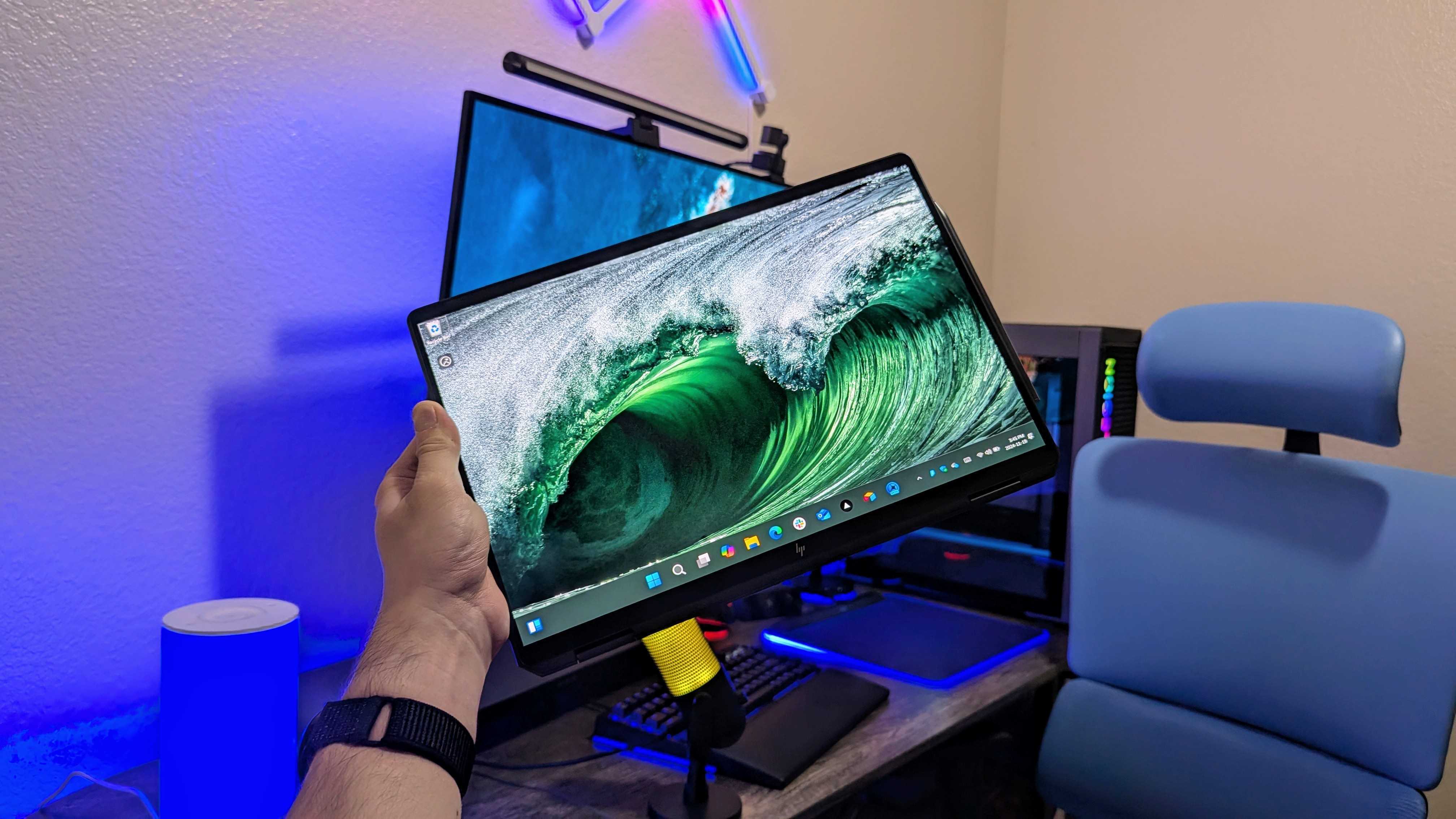
The HP OmniBook Ultra Flip 14 (2024) held in the hand in tablet mode.

For most people looking for a capable, premium 14-inch laptop, I’d recommend the OmniBook Ultra Flip before the Blade 14.

There’s simply no debating whether the Razer Blade 14 is one of the most powerful 14-inch laptops ever made — it is. That doesn’t mean that all other 14-inch laptops are slow, though; they’re simply designed for something else.

Takethe HP OmniBook Ultra Flip 14 (2024) I reviewed. This is still one ofthe best Windows laptopsI’ve ever tested, and it’s the laptop I chose to use as my backup whenever I’m not reviewing something else.

It’s thinner and lighter than the Blade 14, boasts a versatile 2-in-1 design with touch and stylus input, and true all-day battery life (where the Blade 14 can only make it through a full day if you cut some corners). It’s alsocheaperthan the Blade 14, despite arguably offering more features.

There’s no discrete NVIDIA GPU inside, nor is theIntel Core Ultra (Series 2)chipset it relies on as performant as the RyzenAIat the Blade 14’s center, but performance is still buttery smooth for 99% of what 99% of people do on their computers… even gaming.

Obviouslythe Razer Blade 14 will play games at higher resolutions, higher framerates, and higher settings.Of courseit will render video faster. But the OmniBook Ultra Flip can still play most PC games at lower settings just fine, and that’s all most people need.

>>>>Replacement adapter for Razer Blade 15

Why should I consider the Razer Blade 14?

Image of the Razer Blade 14 (2025).

There are a lot of great laptops that will do what people need it to do for less than the Blade 14.

If you need a reliable and competent 14-inch Windows laptop and are willing to pay for a premium device with more features, there are plenty of excellent alternatives like the HP OmniBook Ultra Flip 14 — many with more versatile and portable designs, longer-lasting batteries, and even more AI features.

If you need a powerful gaming laptop that will spend most of its time plugged in, there are plenty of excellent alternatives like theLenovo Legion Pro 7i (Gen 10) I reviewed— many with far superior performance, greater thermal management, better keyboards, and larger and faster displays.

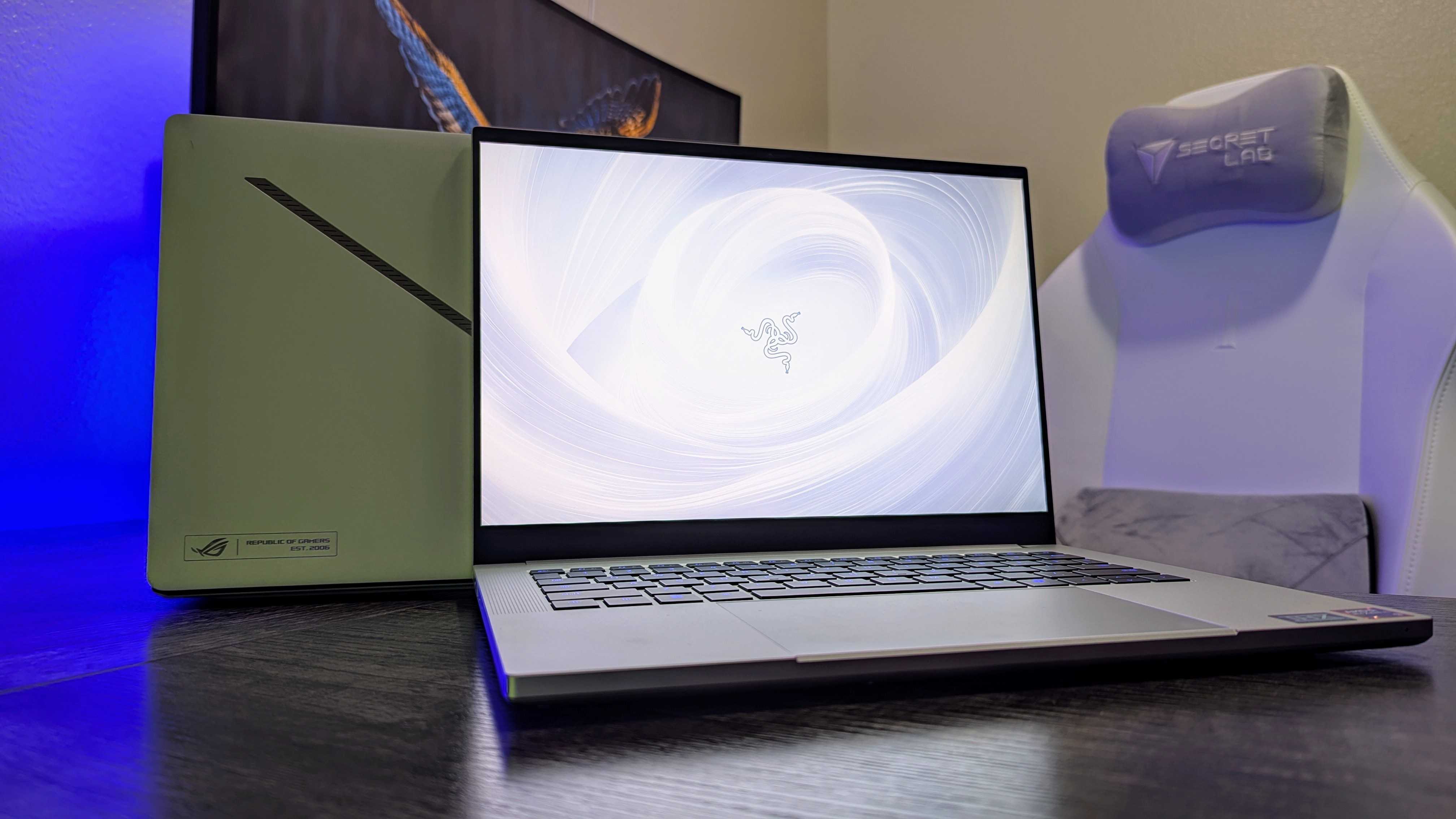
Even if you need a laptop that carefully straddles the gap — by offering most of the performance of a 16-inch gaming laptop with most of the portability and features of a 14-inch ultrabook — I’d still suggest considering something likethe ASUS ROG Zephyrus G14 (2024) I reviewed.

That laptop targets a similar niche as the Razer Blade 14 (2025), and italwayscosts a lot less from configuration to configuration. I also love that laptop (so stay tuned for my review of the 2025 update, because I have that in hand right now).

Image of the Razer Blade 14 (2025) gaming laptop.

The Razer Blade 14 is a phenomenal feat of engineering, and it’ll serve the people who need it well.

That’s a lot of “buts,” and I can still happily recommend the Razer Blade 14 (2025). All I’m offering is a word of caution; be sure the Blade 14 is the tool you need to get the job done.

Depending on your needs, you can find better battery life, better performance, or better value in many of the otherbest Windows laptops.

If what you need, though, is a thin and light luxury laptop with an industry-leading premium design, enough performance for all the greatest PC games and most demanding workloads, and a battery capable of lasting a full day when you need it to, then the Razer Blade 14 is thepeakof that specific category.

Just be prepared to pay for it, asthe Razer Blade 14 (2025) startsfrom $2,299.99 at Razer. It’s not a question of whether the Blade 14 is worth it, because itdoesjustify that cost — it’s a question of whether it’s worth it toyou.

HOW IMPORTANT IS HAVING DRAM IN AN SSD?

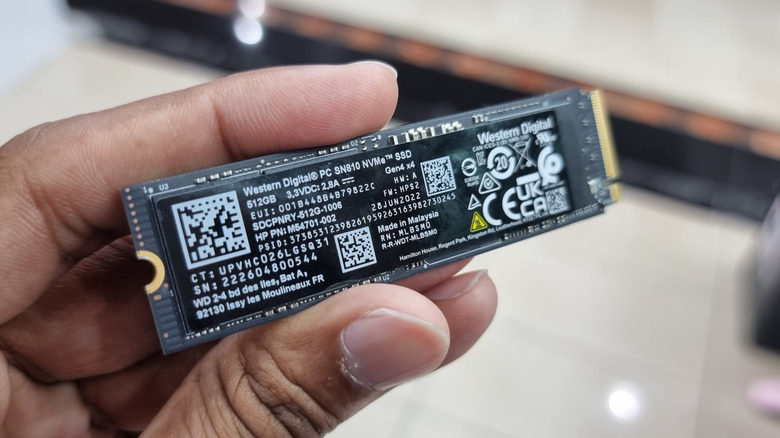
male hand holding wd sn810 ssd

You might have seen the words “DRAM” and “DRAM-less” tossed around when you’re out shopping for a new SSD and scratched your head. It’s almost confusing; doesn’t your PC already have RAM? Yes, but your storage drive can have its own dedicated memory chip. It’s a seemingly small detail, but it does have some effect on your PC’s performance and the drive’s lifespan.A Solid State Drive with DRAM includes a dedicated memory chip that acts as a cache for frequently accessed data. Its main job is to hold a digital map, or index, of where all your data is stored across the SSD’s NAND flash memory cells. This is similar to how a CPU uses its L1, L2, and L3 caches to grab data faster than it could from your main system memory. Likewise, the DRAM gives the SSD controller a shortcut, so it doesn’t have to search the entire drive to find what it needs.A DRAM-less SSD, as the name suggests, skips this dedicated memory chip to cut costs. But that’s not to say it doesn’t need any memory at all. Instead, it either stores its data map directly on the much slower NAND flash memory or it uses a feature called Host Memory Buffer (HMB). HMB allows the SSD to use a small chunk of your computer’s existing DRAM for its caching needs. For instance, some modern drives can tap into up to 64MB of your CPU’s DRAM to handle this mapping process instead of having their own chip. >>>Replacement battery for Razer RZ09-0510SGM4-R3G1 BLADE 16 2023 GEFORCE RTX 4070Do you really need an SSD with DRAM?

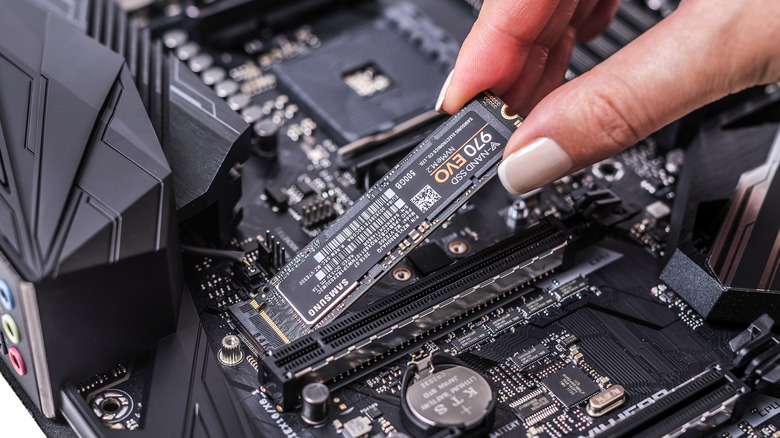
samsung evo 970 ssd being plugged into a system

If you’re focused heavily on raw performance, slotting an SSD with DRAM into your system can make a difference. Such SSDs generally exhibit superior overall performance, especially in tasks involving random access and multitasking. Sure, DRAM-less drives are great with sequential file transfers, but they may experience performance degradation when managing complex workloads. Another plus for DRAM is longevity. Drives with DRAM tend to have higher endurance thanks to greater efficiency in a process known as wear-leveling. This is because the process of spreading the program and erasing cycles evenly across all memory blocks prolongs the drive’s life.Moreover, as mentioned above, DRAM-less SSDs rely on HMB — a feature proven problematic for some. The Windows 11 24H2 update, late in 2024, caused disruptive Blue Screen of Death (BSOD) errors on specific 2TB Western Digital and SanDisk drives due to a conflict where the OS’s new memory allocation method for HMB triggered a flaw in the SSDs’ original firmware. While Western Digital released a firmware update to fix the incompatibility, some users are still reporting issues.That said, DRAM SSDs do come with their drawbacks (even if they’re relatively minor). Adding a DRAM chip increases prices anywhere between $15 and $35, which may prove high for some, considering the ever-rising SSD prices. DRAM also requires a lot of power because its data must be continuously fetched and written, making DRAM-less drives possibly a more power-efficient choice for laptops.>>>Replacement battery for Razer Blade Ryzen 14 2021 2022Still, your choice should depend on your specific needs and budget. You should absolutely go for a DRAM SSD if you’re a power user doing high-end content creation like video editing or using AutoCAD. A DRAM-less SSD, on the other hand, is a fantastic budget-friendly choice for less intense scenarios.

Razer Blade 14 (2025) review: Finally understanding why this is Razer’s best-seller

The Razer Blade 14 (2025) is an excellent compact gaming laptop, if you’re willing to pay the price.

Image of the Razer Blade 14 (2025) gaming laptop.

Verdict

Following the trail blazed by its 16-inch sibling, the Razer Blade 14 is entering 2025 with a fresh new design, more power, and a whole lot of AI features. It’s Razer’s best-selling machine made better than ever, even though most people don’t really need this class of device. I also suggest opting for the silver colorway if you dislike dealing with constant fingerprint marks and smudges.

Pros

  • +The pinnacle of premium laptop design
  • +Beautiful OLED display and shockingly good speakers
  • +Excellent performance, including with AI features
  • +Decent battery life, if you adjust some settings

Cons

  • -Can get very warm
  • -The black chassis and keys are serious fingerprint magnets
  • -Still an expensive machine

I recently reviewed the Razer Blade 16 (2025)and found it to be a massive improvement over its predecessor, agaming laptopthat felt mismatched with its engorged price tag.

It’sRazer’s smallestgaming laptopthat is its best seller, though, and the Blade 14 received the same treatment for 2025 as the Blade 16 — a thinner and lighter redesigned chassis, and all-newAMDandNVIDIAhardware for better gaming performance and moreAIfeatures.

The result? One of the greatest compact gaming laptops you can buy. The Blade 14 is a seriously impressive display of engineering with far more strengths than weaknesses, but the real question most should be asking is: who should actually buy the Razer Blade 14 (2025)

>>>Replacement battery for Razer Blade RZ09-01302E22 RZ09-0102 RZ09-01161 RZ09-01301E41

Blade 14 review: Pricing and specifications

Image of the Razer Blade 14 (2025) gaming laptop.

I had to aggressively clean this laptop multiple times while photographing it.

Like always, the Razer Blade 14 (2025) is a ridiculously pricey laptop, but you are getting the pinnacle of premium design, as well as most of the features you could ask for in a laptop.

The Razer Blade 14 (2025) startsfrom $2,299.99 at Razer, which is equipped with anAMDRyzenAI9 365 chipset,NVIDIA GeForceRTX 5060 GPU, 16GB of RAM, and 1TB of SSD storage.

My review configuration upgrades to an RTX 5070 GPU and 32GB of RAM for$2,699.99 at Razer. If you want the best of everything,you can upgrade to 64GB of RAM and 2TB of SSD storage for$2,999.99 at Razer.

>>>Replacement battery for Razer Blade RZ09-0102 RZ09-01161E31 RZ09 14 Series

There’s also a “Mercury White” (it’s silver) colorway.

SpecRazer Blade 14 (2025)
Display14-inch OLED, 16:10 aspect ratio, 2.8K (2,880 x 1,800) resolution, 120Hz refresh rate, 0.2ms response time, 400 nits max brightness, 100% DCI-P3 color gamut, NVIDIA G-SYNC & Advanced Optimus support, Calman Verified
CPUAMD Ryzen AI 9 365 (Zen 5, 10 cores, 20 threads, up to 5GHz max boost)
GPUUp to NVIDIA GeForce RTX 5070 (Blackwell, 8GB GDDR7 VRAM)
NPUAMD XDNA 2 (Up to 50 TOPS)
MemoryUp to 64GB LPDDR5X @ 8,000MHz
StorageUp to 2TB M.2 2280 NVMe PCIe Gen 4×4 SSD (expandable up to 4TB)
Ports2x USB Type-C 4.0 ports (40GBps, DisplayPort 1.4 via Radeon 880M iGPU, 100W Power Delivery 3.0), 2x USB Type-A 3.2 Gen 2 ports (10GBps), 1x HDMI 2.1 port, 1x microSD card slot (UHS-II), 1x 3.5mm audio jack, 1x Kensington Nano Security Slot
ConnectivityWi-Fi 7 2×2, Bluetooth 5.4
Battery72Whr, 200W charger
Dimensions310.7 x 224.3 x 15.8-16.2mm (12.23 x 8.83 x 0.62-0.64in)
Weight1.63kg (3.59lbs)
Warranty1-year limited laptop warranty, 2-year limited battery warranty, RazerCare support

In the box, you’ll find the Razer Blade 14 (2025) gaming laptop, Razer’s proprietary 200W DC charger, and 1 month of Xbox Game Pass Ultimate. Razer also offers its RazerCare extended warranty and colorful Razer skins for the Blade 14.>>>Replacement battery for Razer Blade Ryzen 14 2021 2022

Blade 14 review: Design and build quality

Image of the Razer Blade 14 (2025) gaming laptop.

It’s still obviously a Razer laptop, but this design is more refined.

The Razer Blade design language is iconic at this point, and Razer hasn’t dramatically changed its hand with the latest round of redesigns. This is all about refinement, and the finer details do make a sizeable impact.

The new Blade 14 is 11% smaller thanthe Razer Blade 14 (2024) we reviewed, dropping around 2mm in thickness and a third of a pound in weight. It’s still CNC-milled out of a single block of high-grade aluminum, but it’s sleeker and more comfortable than before.

Razer didn’t make any noticeable changes to its anodization and electrochemical bonding process, though, so the matte black color looks as amazing as always — until you touch it, where it’ll greedily hold on to every smudge.

I mentioned inmy initial hands-on of the new Razer Blade 14that it felt like Razer finally closed the gap withthe ASUS ROG Zephyrus G14 I reviewed, and my mind hasn’t changed. The Blade 14 always had phenomenal build quality, but the new design is a big improvement in aesthetics.

Image of the Razer Blade 14 (2025) gaming laptop.

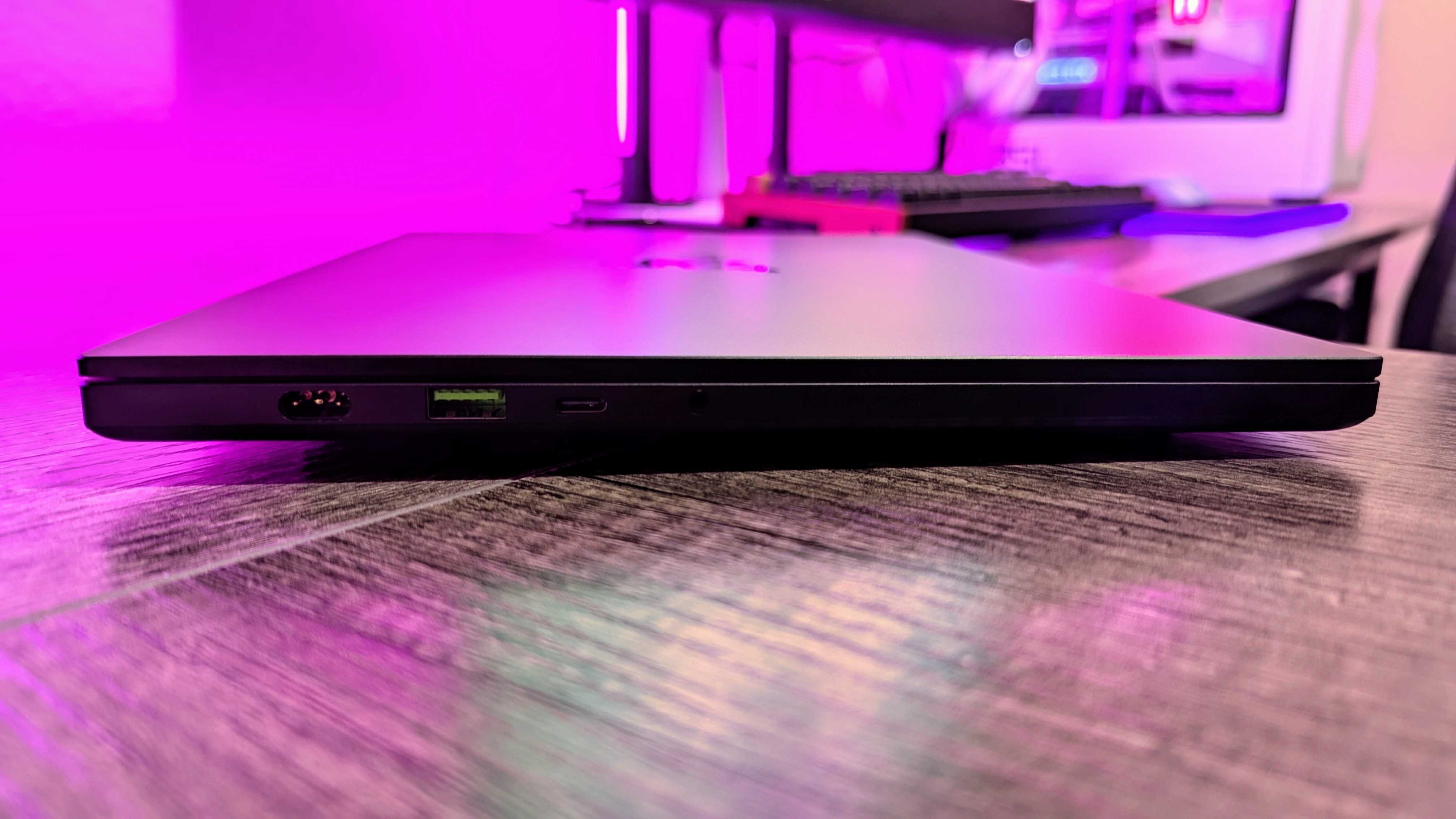
On the left side, you’ll find the 200W Razer charging port, a USB Type-A 3.2 Gen 2 port, a USB Type-C 4.0 port, and a 3.5mm audio jack.

Image of the Razer Blade 14 (2025) gaming laptop.

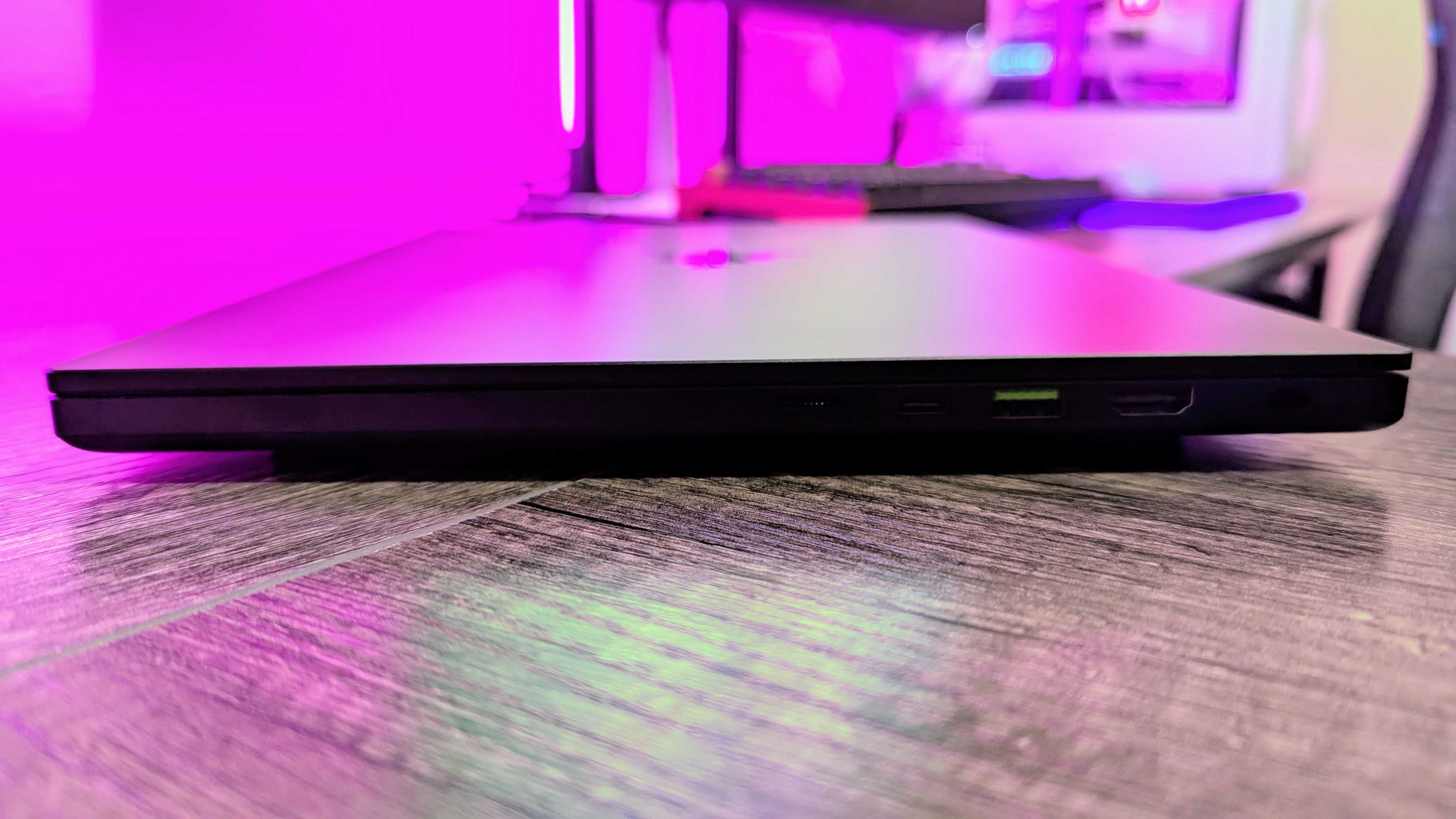
On the other side, you’ll find a Kensington Nano Security Slot, a second USB Type-A 3.2 Gen 2 port, and HDMI 2.1 port, a second USB Type-C 4.0 port, and a microSD card slot.

It’s impressive enough to make a 14-inch gaming laptop smarter, faster, thinner, and lighter in one go, but where Razer really surprised me is that it didn’t cut any features to make those reductions… In fact, it addedmore.

You’re looking at a very familiar array of ports, with connectivity rivaling much larger laptops thanks to dualUSB4ports withThunderbolt 4capabilities (including 100W Power Delivery for when you’re on the move and need a quick charge), full bandwidthUSBType-A ports, andHDMI 2.1display output.

However, Razer actually added a new microSD card slot as well, which will make some peopleveryhappy. I’ll talk more about them later, but there’s also an additional two speakers under the hood, so the Blade 14 rocks the same six-speaker system as both its larger siblings.

Blade 14 review: Display quality

Image of the Razer Blade 14 (2025) gaming laptop.

Not everyone will prefer this display, but I really like it.

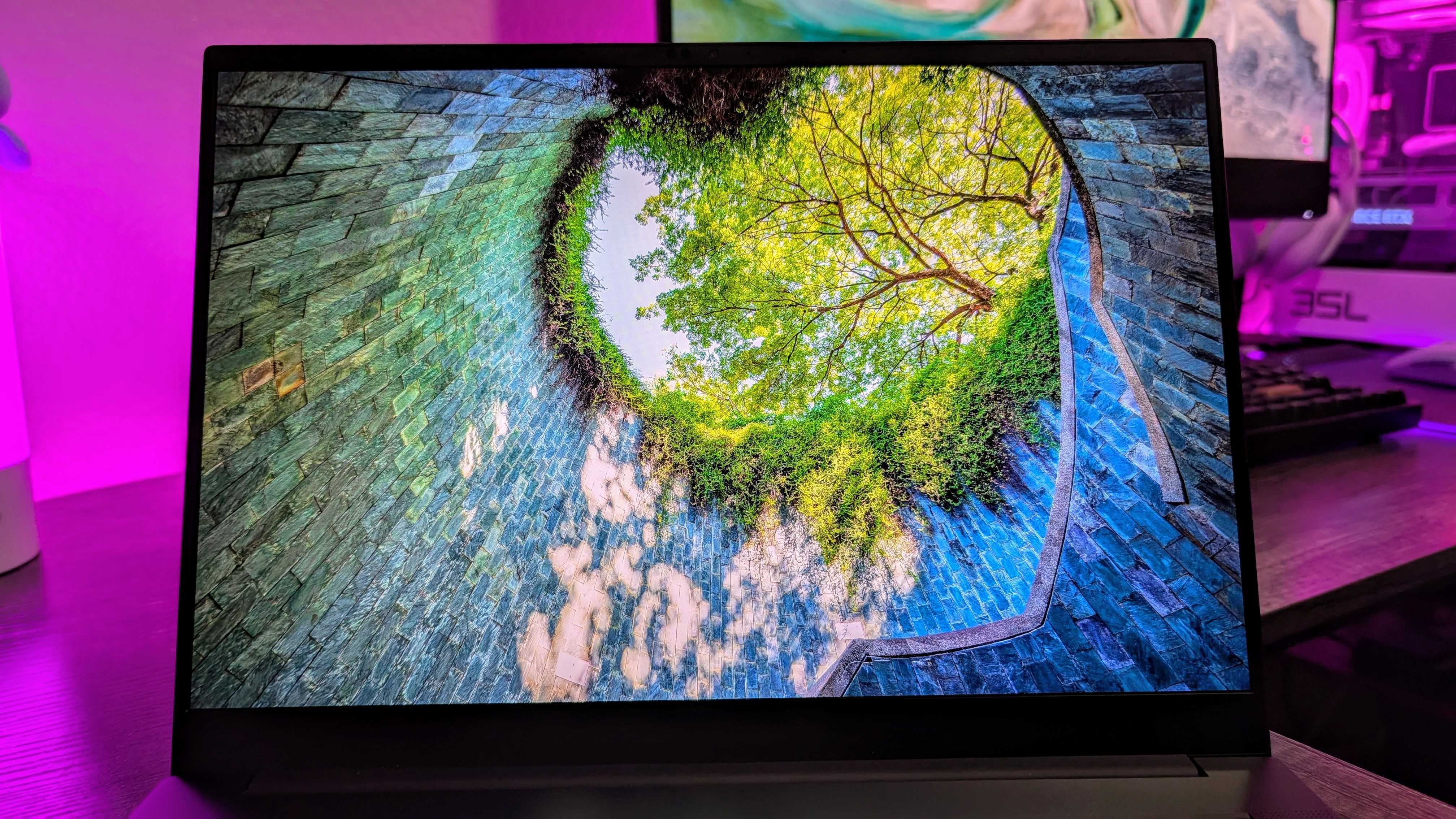
On the display front, last year’s Blade 14 rocked an IPS LCD panel with a 240Hz refresh rate. This year, Razer decided to follow in the wake of many other premium, 14-inch laptops with a higher resolution, lower refresh rateOLEDdisplay.

You’re looking at a 2.8K resolution (1800p instead of 1600p from last year), a 120Hz refresh rate, a blisteringly fast 0.2ms response time, and all the vibrant colors and punchy contrast expected from OLED.

It’s a familiar screen, and that comes with the same strengths and weaknesses. On one hand, this displaylooksgorgeous and offers best-in-class performance for gaming. While the refresh rate has technically been downgraded, 120Hz is perfect for the Blade 14’s capabilities, and everything looks crisp and defined.

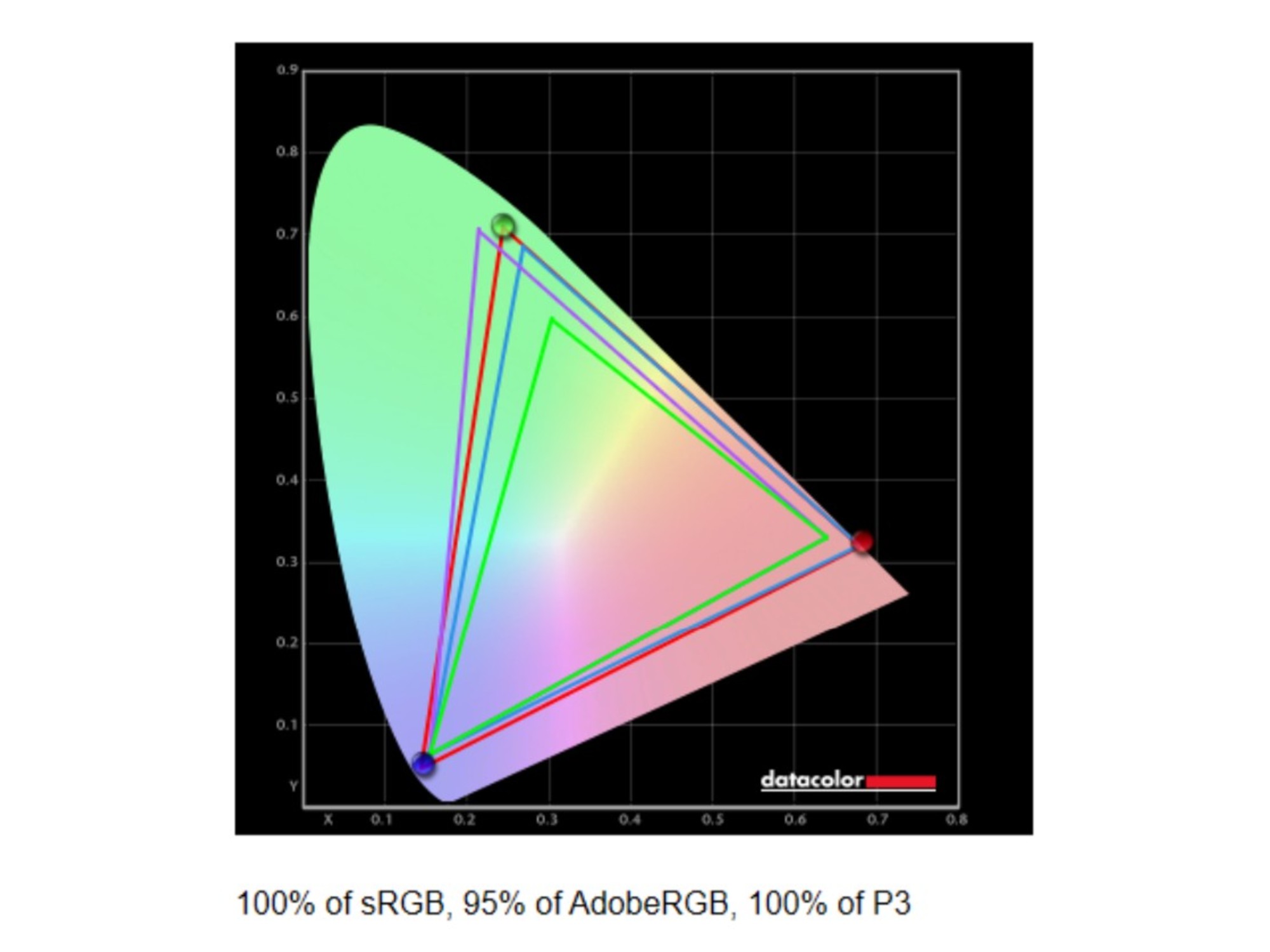
Benchmark results for the Razer Blade 14 (2025) gaming laptop.

This screen is even more color accurate, and Synapse includes the factory color calibration report to keep it that way.

The new OLED display is also more color accurate than last year’s panel, which will make a difference for creators. White balance is very consistent across higher brightnesses, too, so photo and video editors shouldn’t have any complaints.

High Dynamic Range (HDR) support is here, although Razer didn’t disclose the exact standards to me. Either way, though, this is where the weaknesses come in. This OLED display boasts only average brightness, and it’s noticeably lower than last year’s IPS LCD screen.

On top of the lowered brightness, you do also need to contend withPulse-Width Modulation (PWM) for dimming. Most people won’t be affected, but there are sensitive users who may experience headaches or eye fatigue from the rapid flickering at lower brightnesses, and Razer sadly doesn’t offer an alternative display option for the Blade 14.

SettingBrightness (nits)BlackContrastWhite point
0%4.40Infinite6,800K (0.308, 0.326)
25%30.30Infinite6,600K (0.312, 0.330)
50%910Infinite6,500K (0.313, 0.330)
75%210.40Infinite6,500K (0.313, 0.331)
100%398.70Infinite6,500K (0.312, 0.331)

The new OLED display is also more color accurate than last year’s panel, which will make a difference for creators. White balance is very consistent across higher brightnesses, too, so photo and video editors shouldn’t have any complaints.

High Dynamic Range (HDR) support is here, although Razer didn’t disclose the exact standards to me. Either way, though, this is where the weaknesses come in. This OLED display boasts only average brightness, and it’s noticeably lower than last year’s IPS LCD screen.

On top of the lowered brightness, you do also need to contend withPulse-Width Modulation (PWM) for dimming. Most people won’t be affected, but there are sensitive users who may experience headaches or eye fatigue from the rapid flickering at lower brightnesses, and Razer sadly doesn’t offer an alternative display option for the Blade 14.

Blade 14 review: Performance and thermals

Image of the Razer Blade 14 (2025) gaming laptop.

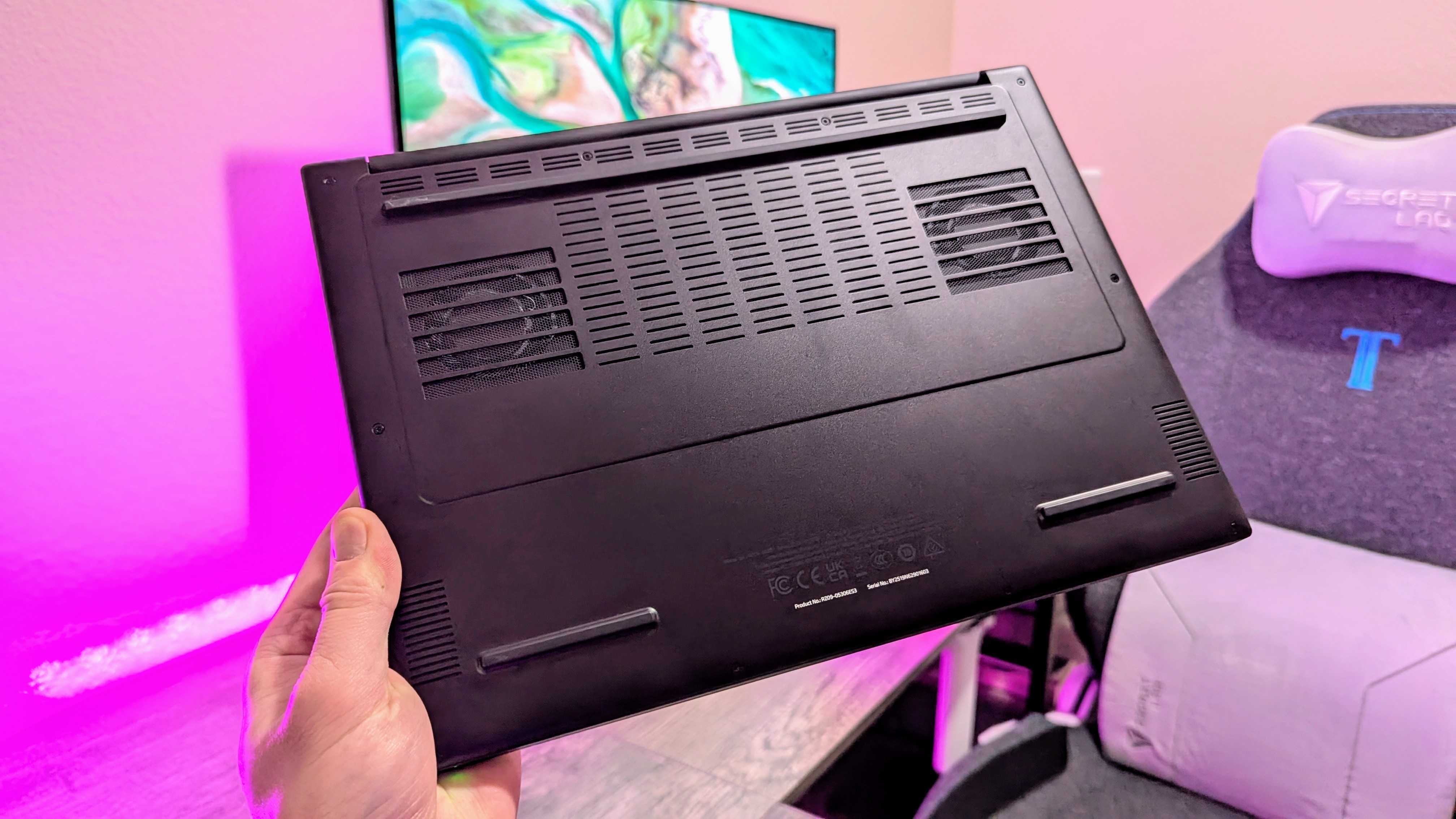
Part of the new Blade 14 is a completely redesigned thermal hood, which debuted with the Blade 16.

It’s a given that you’ll have to sacrifice some performance with a 14-inch gaming laptop, because that’s how physics works. Still, the latest Blade 14 is consistently more performant than its predecessor while being both thinner and lighter, and there are some reasons for that.

Largely, it’s due to the completely redesigned thermal hood, which moves the hottest components under the same comprehensive vapor cooling chamber and refined dual-fan system. On the other side, the newAMD Ryzen AIandNVIDIA GeForceRTX 50-series hardware are more efficient than the last generation.

AMD, especially, makes a big difference here. I have a lot of respect for the latest Ryzen AI chipsets, which can’t quite compete withIntelandQualcomm’s most efficient mobile hardware, but easily bests both in terms of gaming, creative, and AI performance.

The result is an excellent computing experience. The Blade 14 feels every bit as responsive as it should, considering how much it costs, and is completely quiet the majority of the time.

My only complaint is that AMD still isn’t as good as Intel orQualcommwhen it comes to quickly waking from sleep or standby.

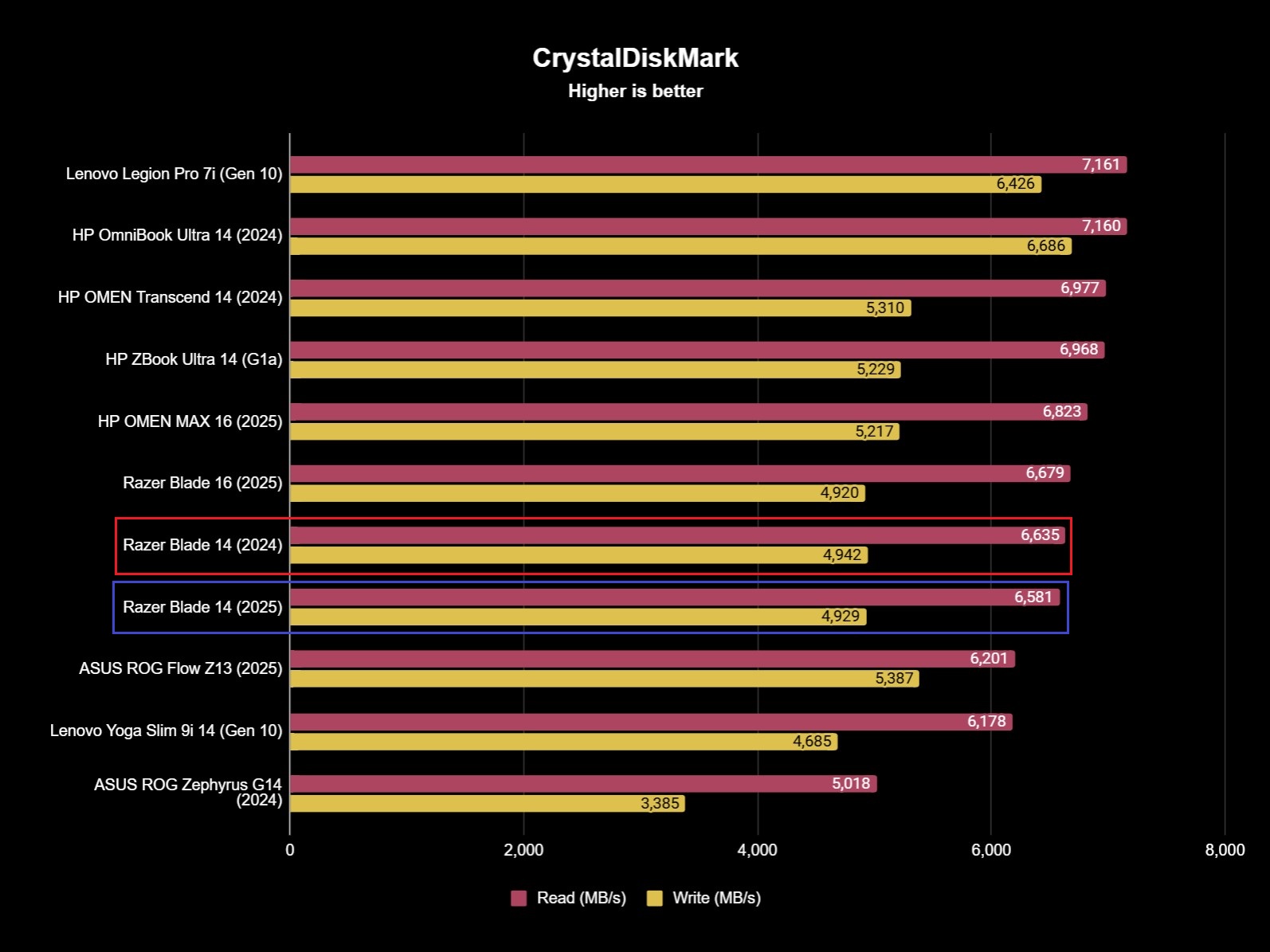
Benchmark results for the Razer Blade 14 (2025) gaming laptop.

Razer is clearly using the same PCIe Gen4 SSD as last year, which is… Fine.

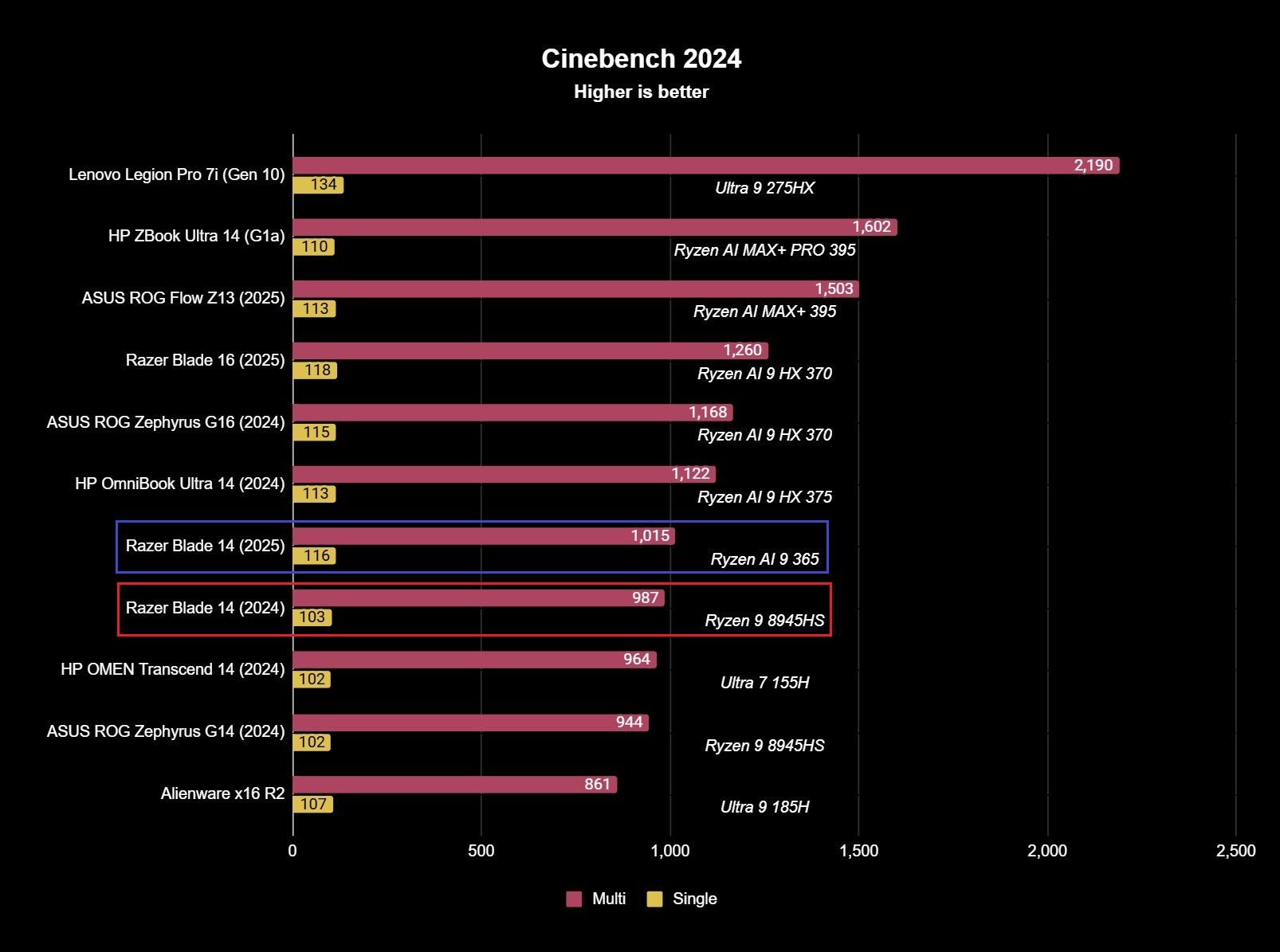
Benchmark results for the Razer Blade 14 (2025) gaming laptop.

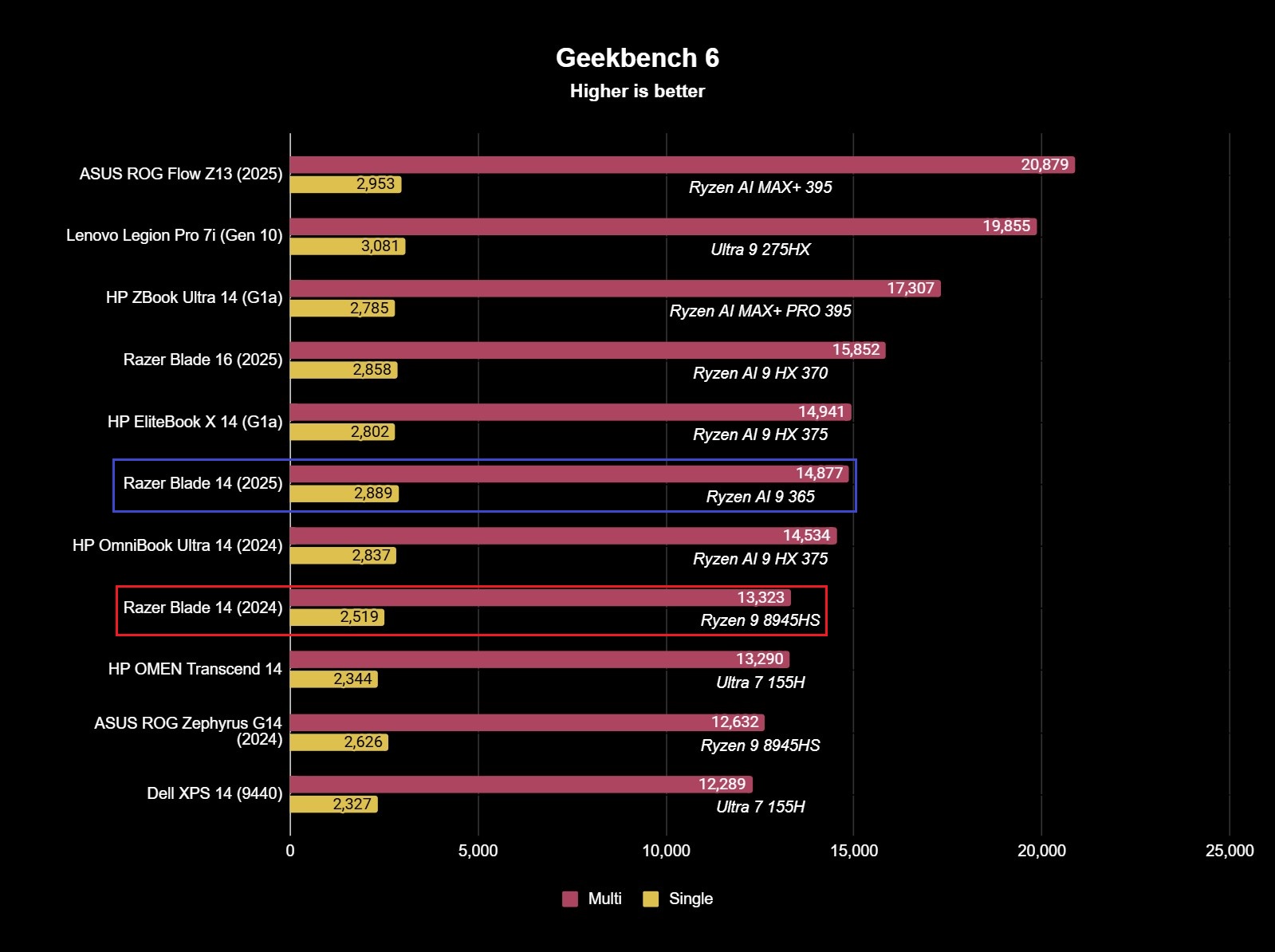
There are more powerful 14-inch laptops in terms of CPU performance, but the Blade 14 is up there.

Benchmark results for the Razer Blade 14 (2025) gaming laptop.

Year-over-year performance gains aren’t mind-boggling, but the Blade 14 is consistently more powerful.

Benchmark results for the Razer Blade 14 (2025) gaming laptop.

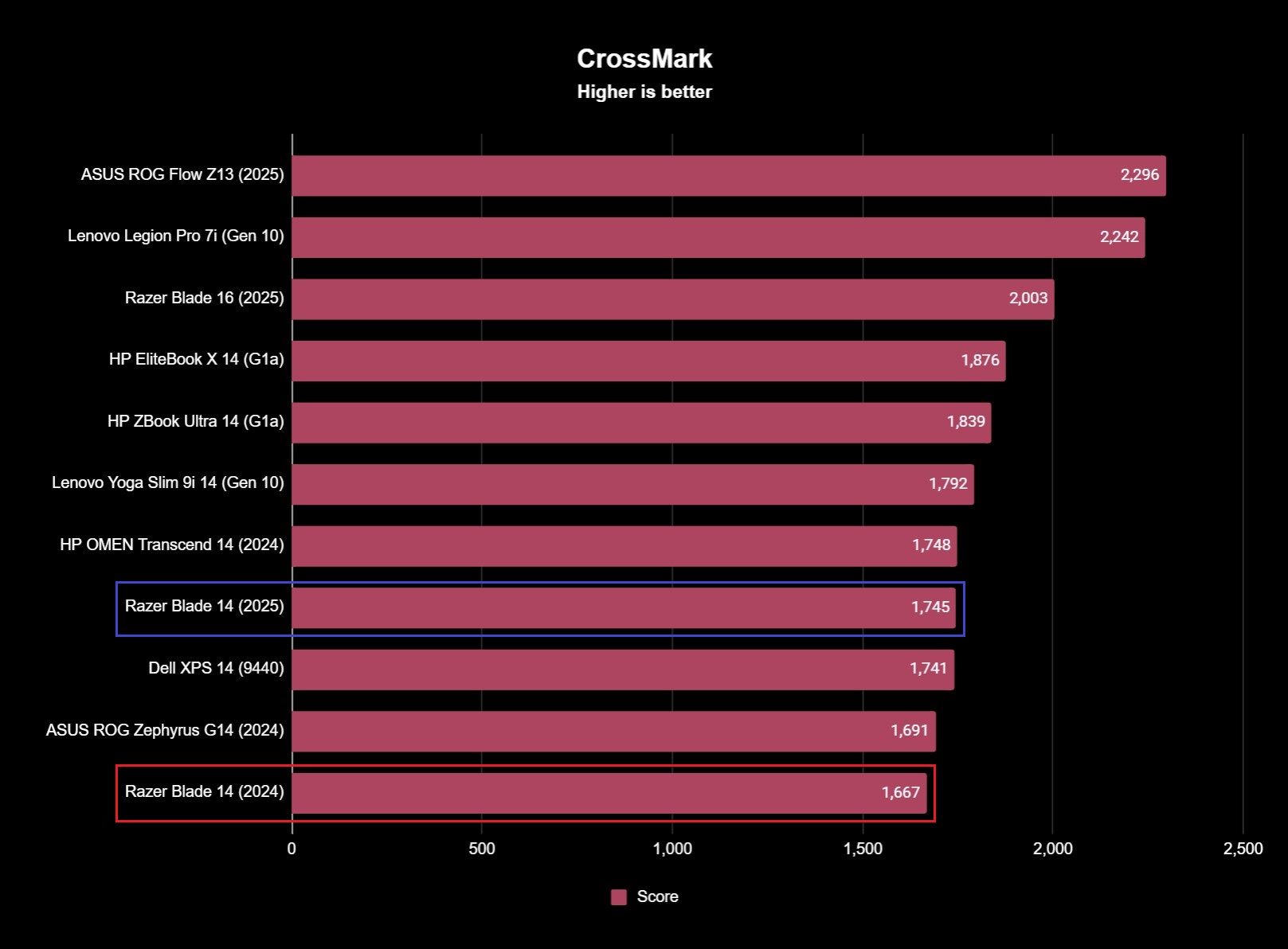
You see this with general productivity, too; this Blade 14 simply feels more responsive.

Benchmark results for the Razer Blade 14 (2025) gaming laptop.

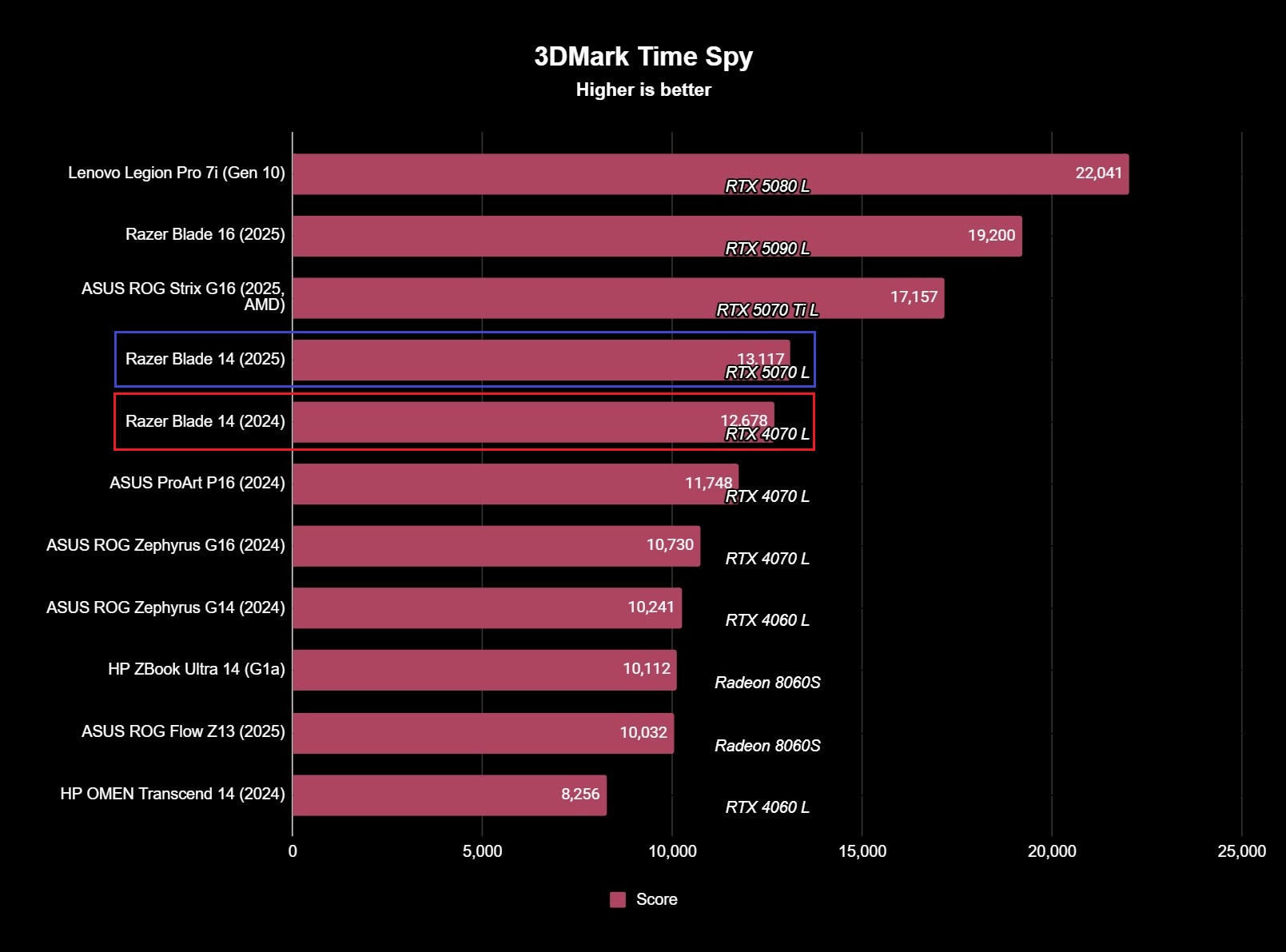
Once again, the RTX 5070 isn’t a huge leap over the 4070, but the improvement is there.

Benchmark results for the Razer Blade 14 (2025) gaming laptop.

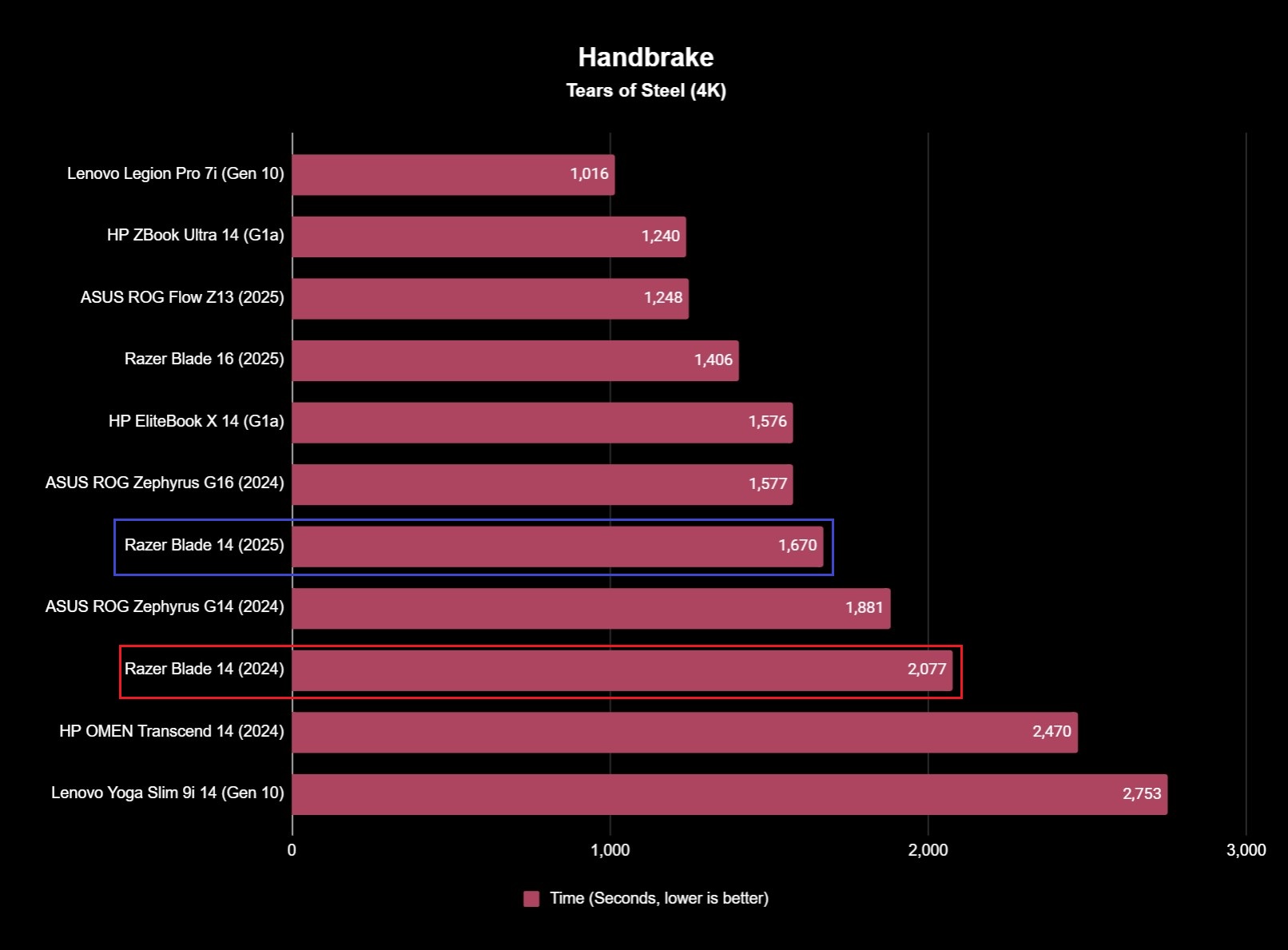
AMD laptops always perform well when encoding 4K video.

There were no surprises when benchmarking the Blade 14. Its AMD Ryzen AI 9 365 is a highly capable 10-core chipset, but it’s also far from themostpowerful in the Ryzen AI lineup.

The same goes for the NVIDIA GeForce RTX 5070, which is a balanced mid-range GPU with 8GB of VRAM, so it’s more than enough for all the best PC games right now. In the Blade 14, that 5070 is running at 115W TGP, which is less than Razer’s larger laptops but competitive with other 14-inch gaming machines.

Year-over-year, performance gains are minimal (around 12% for CPU and 3% for GPU), but the Blade 14 (2025) possesses one extremely important advantage: much better thermal performance.

The new Blade 14 runs cool and quiet most of the time, but the fans can get loud as they spin up — at least it’s a low whir, rather than a high whine. The Blade 14’s keyboard deck can also get hot, but never quite hot enough that I couldn’t comfortably touch it.

I ran the Blade 14 through 3DMark’s Time Spy benchmark 25 times consecutively, and there was a 99.1% similarity between the best and worst loops. For comparison, the Blade 16 scored 98.1%, which is where a lot of modern gaming laptops land.

  • Forza Horizon 5 —106 FPS(Extreme preset, 1600p resolution, 120Hz refresh rate, v-sync enabled, NVIDIA DLSS Super Resolution/Frame Generation/Reflex Low Latency disabled)|74 FPS(Max settings, NVIDIA DLSS Super Resolution set to Auto, NVIDIA DLSS Frame Generation/Reflex Low Latency enabled)
  • Gears 5 —81 FPS(Ultra preset, 1600p resolution, uncapped framerate, v-sync enabled)
  • Call of Duty: Black Ops 6 —92 FPS(Extreme preset, 1600p resolution, 120Hz refresh rate, v-sync enabled, NVIDIA DLSS Super Resolution set to Performance, NVIDIA DLSS Frame Generation disabled, NVIDIA Reflex Low Latency enabled)
  • Cyberpunk 2077 —51 FPS(Ray Tracing: Ultra preset, 1600p resolution, 120Hz refresh rate, v-sync enabled, NVIDIA DLSS Super Resolution Transformer Model set to Auto, NVIDIA DLSS Frame Generation disabled, NVIDIA Reflex Low Latency enabled)|51 FPS(Ray Tracing: Overdrive preset, v-sync disabled, NVIDIA DLSS Multi-Frame Generation set to 4x, NVIDIA DLSS Ray Reconstruction enabled)

When gaming, the Razer Blade 14 (2025) is a competent performer for QHD (1600p) gaming at high to ultra settings, and games will still look great on the 14-inch display at a lower 1200p resolution if you’d prefer more frames.

I had zero issues with the Blade 14’s performance, but I have two interesting things to note: first, the RTX 5070 may benefit from NVIDIA’s DLSS AI upscaling and multi-frame generation, but the improvements aren’t nearly as dramatic as the 5070 Ti and up.

Secondly, the Blade 14 sometimes behaves weirdly with NVIDIA Advanced Optimus, where switching to the discrete GPU causes the display to freeze on its static RGB pixel array until you close the laptop and open it again. It only happened twice, but I’ve never experienced that with any other laptop.

Blade 14 review: Software and AI experience

Image of the Razer Blade 14 (2025) gaming laptop.

Razer Synapse is good, and Razer doesn’t load a bunch of other crap on the Blade 14.

The Razer Blade 14 follows the Blade 16 as one of Razer’s first trueAI PCs, thanks to the AMD Ryzen AI silicon inside. This is a fullCopilot+ PC, so it’s future-proofed to get all the bestWindows 11features as they’re released.

Razer isn’t really taking advantage on its own, with no real AI features to speak of, but between the 50 TOPSNeural Processing Unit (NPU)and the NVIDIA GPU, the Blade 14 should be able to handle any AI task you throw at it across productivity, creativity, and gaming workloads.

Beyond that, this is a clean build of Windows. You’ll find the typical NVIDIA and AMD apps, but basically nothing else beyond Razer’s Synapse and Chroma applications for managing your laptop, Razer accessories, and RGB lighting.

Razer Synapse 4 doesn’t go crazy with the amount of control it gives you over your Blade 14, but all the basics you need are there, plus a few more.

Blade 14 review: Battery experience

Image of the Razer Blade 14 (2025) gaming laptop.

No gaming laptop can expect multi-day battery life, but AMD Ryzen AI gives the Blade 14 a better shot than most.

You shouldn’t be buying a gaming laptop if you need amazing endurance, but the Blade 14 attempts to strike that balance better than most, with some degree of success.

Running the Blade 14 through an hour-long loop of genericMicrosoft Officetasks resulted in a battery drain of 22%, while looping an HD video at 50% volume took off 21% of the battery.

That’s already a bit better than most 16-inch laptops, and running aWindows Battery Reportshowed I was able to get around 6 hours of actual usage out of the Blade 14 without throttling every feature into the ground, which isn’t bad.

With some compromise, like disabling the keyboard lighting, reducing performance, and lowering screen brightness, you can get the Blade 14 through a full work day (as long as you’re not constantly spinning up that GPU).

On battery power, expect to lose around 30% and 37% of your CPU and GPU performance, respectively — that’s a sizeable bump down, but it’s again better than a lot of larger gaming laptops.

Blade 14 review: Keyboard and touchpad

This keyboard isn’t much different, but it’s solid.

Image of the Razer Blade 14 (2025) gaming laptop.

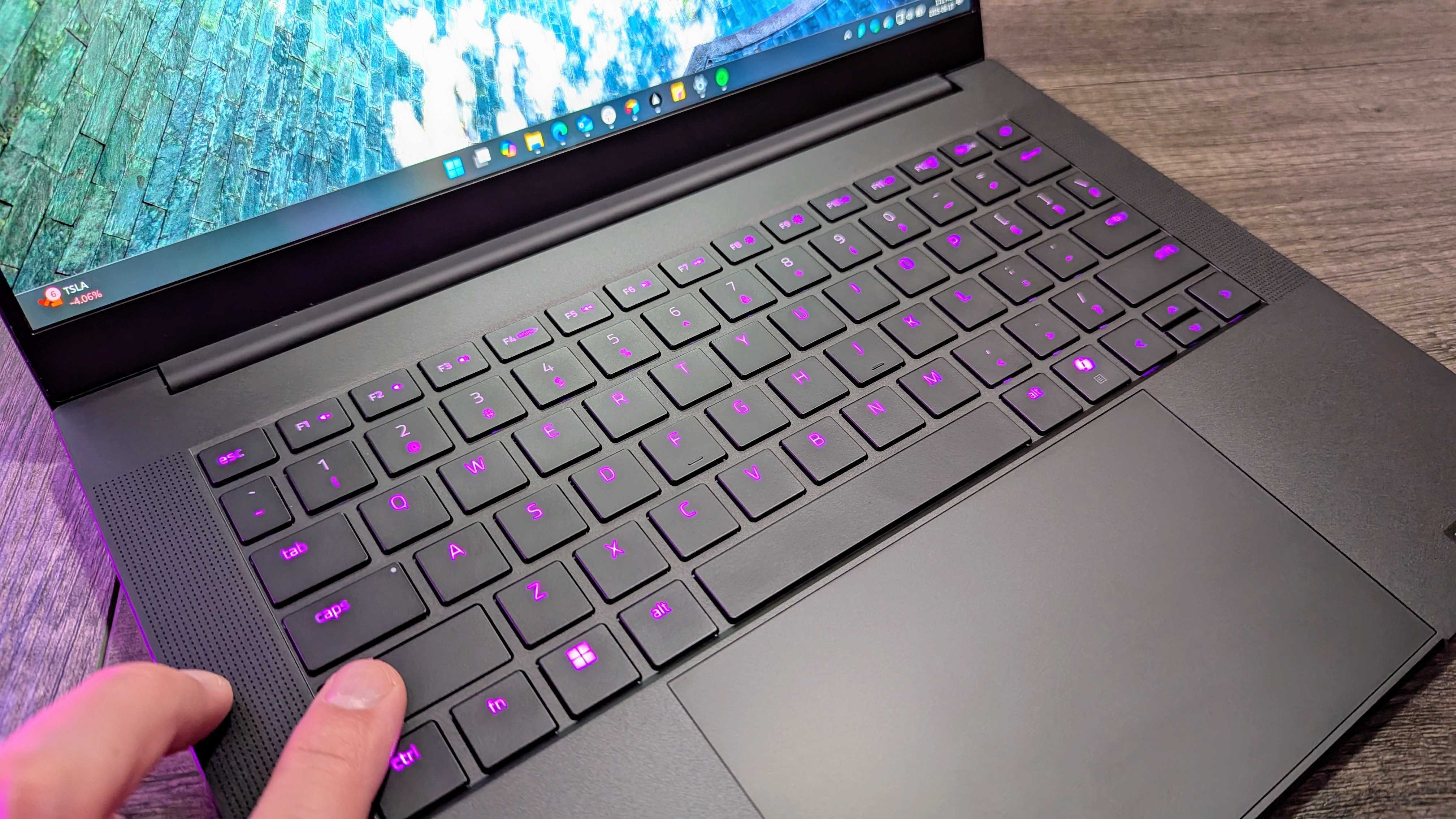
I still love the two-stage lighting for highlighting secondary functions.

The keyboard is one area where the Blade 14 didn’t receive the same treatment as its big sibling, as it’s still the shallow 1mm keyboard as before. Off the bat, this isn’t my favorite keyboard in a 14-inch laptop by any means, but I enjoyed typing and gaming on the Blade 14 more than I expected.

Key action is tactile and responsive, and I do like this layout. Razer also implemented its two-stage RGB lighting for keys with secondary functions, helpfully highlighting them when you press the Fn or Shift keys. It’s an amazing detail that all premium laptops should adopt.

As an aside, Razer still has some of thebestRGB lighting in the business, so the per-key lighting on the Blade 14 looks fantastic and is easy to customize.

The touchpad is still comically large, which some people will love. It’s a mechanical touchpad, rather than a more premiumhaptic touchpad, but it’s at least coated in slick, high-quality glass, employsMicrosoft Precision driversfor gesture support, and is responsive and precise to use.

Blade 14 review: Other hardware

Image of the Razer Blade 14 (2025) gaming laptop.

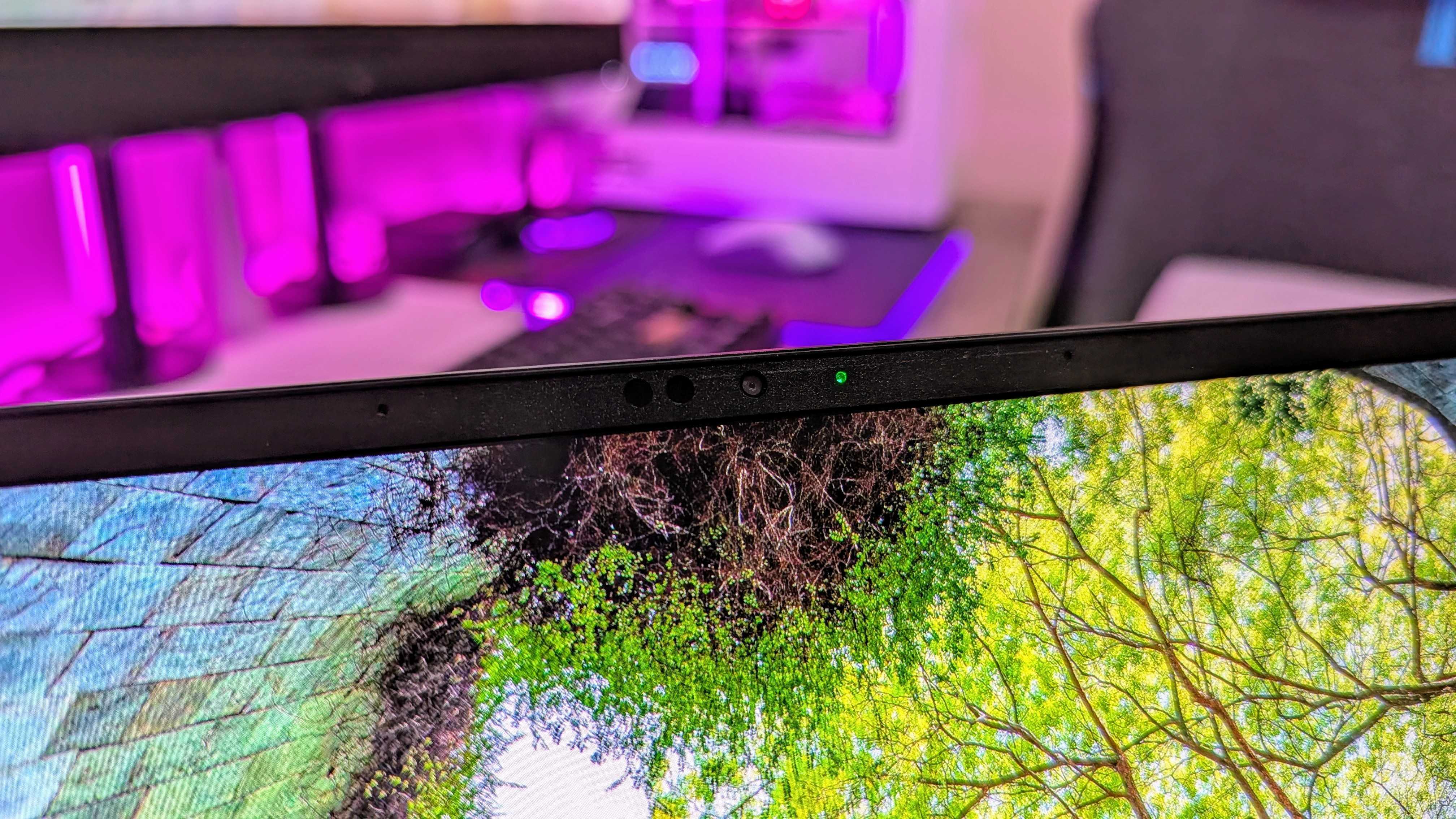
You do at least get Windows Hello facial recognition, which is nice.

The Razer Blade 14 is undoubtedly a premium laptop, so it boasts a lot of luxuries you’re not guaranteed elsewhere… But Razer didn’t stuff everything and the kitchen sink in here.

The front-facing, FHD webcam and microphone array are decent and more than usable, but nothing exceptional. You at least get an IR sensor forWindows Hellofacial recognition, butthat feature no longer works in the dark(and you don’t get a fingerprint sensor for backup authentication).

There’s also no proximity sensor for theHuman Presence Detection (HPD)features common with other premium AI laptops, nor an ambient light sensor for automatic brightness or color temperature adjustment. Most people won’t miss those features, though.

Wireless connectivity is at least cutting edge withWi-Fi 7and Bluetooth 5.4 on board, although I do wish Razer would bake its proprietary HyperSpeed Wireless technology into its laptops for easy accessory pairing.

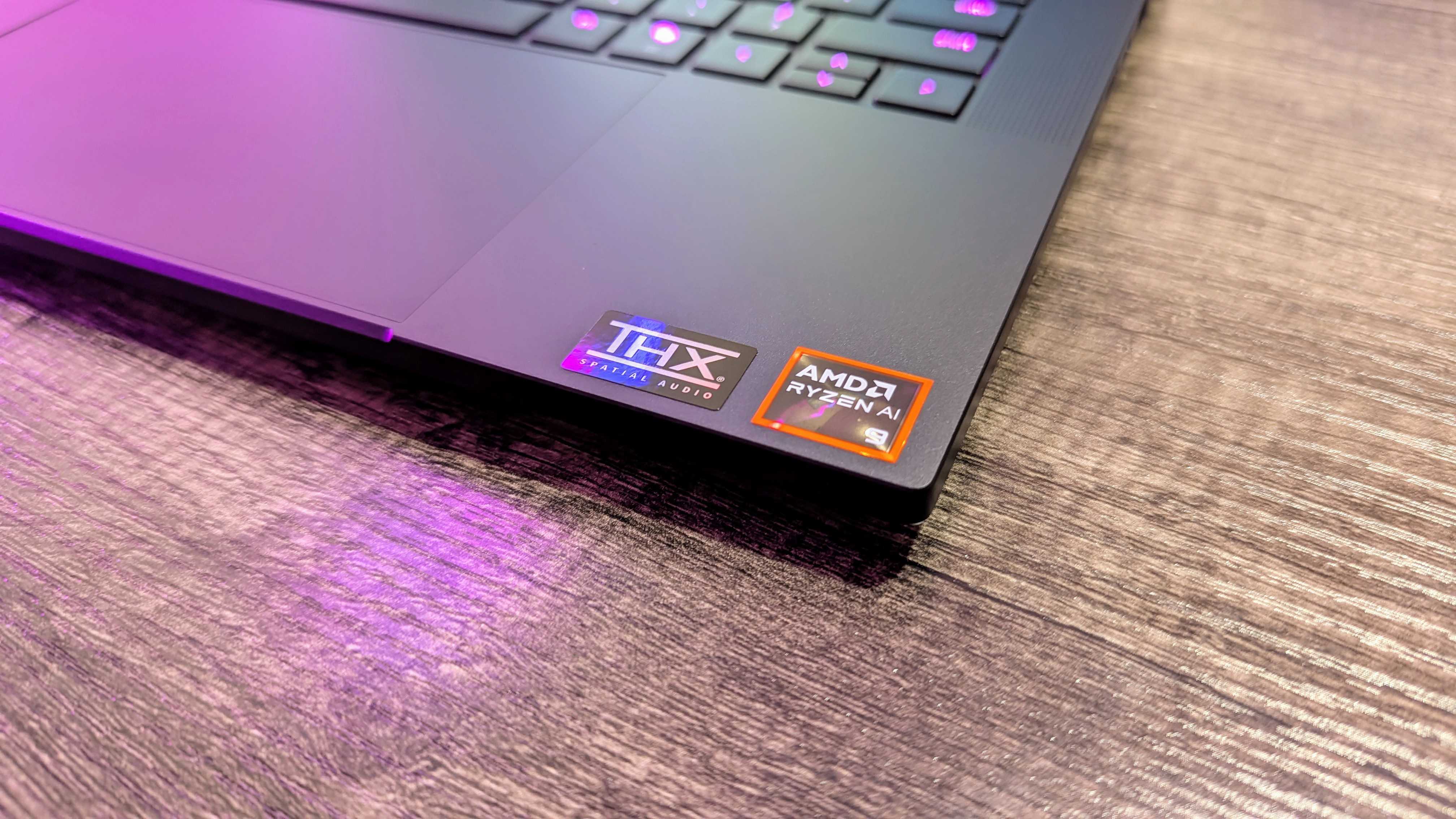
One area where the Blade 14 is hands-down at the cutting edge is with audio, as it boasts a mighty impressivesixspeakers packed into its petite frame, tuned with THX 7.1 surround sound in mind. Physics still plays a part with such a small laptop, but these speakers are really good.

Blade 14 review: My final thoughts

Image of the Razer Blade 14 (2025) gaming laptop.

✅You should buy this if …

  • You want a premium 14-inch laptop with power for high-end gaming.
  • You want your laptop to make a statement with its design.
  • You want a gaming laptop designed with AI features in mind.

❌You should not buy this if …

  • You only plan to occasionally use the discrete graphics.
  • Reliable, all-day battery life is an absolute must.

Razer laptops have never been known to be affordable, and the Blade 14 is no exception. This is a costly machine, and a lot of that is tied up in the intricate way Razer constructs it.

The redesigned Razer Blade 14 (2025) is easily my favorite Razer laptop so far, though, and proves to me why the smallest in the lineup is also the best-selling. This is an excellent gaming companion with enough power for all the latest and greatest games, but a design thin and light enough to carry around with you everywhere.

It’s also more capable of surviving a full day of work than most gaming laptops, making it a potent option for those who want a premium device for work, play, creativity, and — increasingly important — artificial intelligence.

The Blade 14 is still overkill for a lot of people, though, and those only planning to casually game or occasionally use those beefy NVIDIA graphics may be better off with one of the shockingly capable Intel or AMD ultrabooks from companies like Lenovo or HP.

Those of you who know what they need, though, canget the Razer Blade 14 (2025)from $2,299.99 at Razerright now. If you want my recommendation, get it in silver.

Samsung Galaxy Flip 7 vs. Fold 7: Pocket-Size Style or Productivity Powerhouse?

Samsung’s newest foldable phones differ not just in style, but also in price—by nearly $1,000. Is the sleek, selfie-friendly Flip 7 your perfect match, or does the high-powered, book-style Fold 7 better suit your needs? Let’s break down the specs to help you choose.

Samsung Galaxy Z Flip 7 hands-on review: Feels like flip phone perfection |  Tom's Guide

Samsung Galaxy Z Flip 7

Bottom Line

The Z Flip 7 is the smaller and more portable of the two phones and has dedicated selfie software. It costs far less than the Fold, but it’s not as good for multitasking.

What Samsung Galaxy Z Fold 7 color should you buy? | Android Central

>>>Replacement battery for Samsung Galaxy Z Fold 6

Samsung Galaxy Z Fold 7

Bottom Line

The Z Fold 7 is a book-style foldable that is a powerful productivity tool, but it’s immensely expensive and somewhat large.Samsung’s new Galaxy Z Flip 7 and Galaxy Z Fold 7 bank on the “thinner-and-lighter is better” mantra as their main selling point. But in addition to refined designs, trimmer dimensions, and the usual bevy of spec updates, the Flip and Fold more clearly define their purposes. Both still feature inner and outer screens, but they have more focused features, software, and tools that set them apart more than ever. I got a chance to spend some time with the phones ahead of their July 15 release, and am here to highlight what makes each foldable unique to help you decide which is right for you.

Full SpecsSamsung Galaxy Z Flip 7Samsung Galaxy Z Fold 7
Operating SystemAndroid 16Android 16
CPUExynos2500Qualcomm Snapdragon 8 Elite for Galaxy
Dimensions3.37 by 2.96 by 0.54 folded, 6.56 by 2.96 by 0.26 inches closed6.24 by 2.87 by 0.35 inches folded, 6.24 by 5.64 by 0.17 inches open
Screen Size6.9 inches8 inches
Screen Resolution2,520 by 1,080 pixels2,184 by 1,968 pixels
Camera Resolution (Rear; Front-Facing)50MP, 12MP; 10MP200MP, 12MP, 10MP; 10MP, 10MP
Battery Life (As Tested)31 hours26 hours

>>>Replacement battery for Samsung Galaxy Z Fold5

Pricing: The Fold Is About Twice the Price

Samsung Galaxy Z Fold 7 and Z Flip 7

It’s not even close, not really. The Galaxy Z Fold 7 is Samsung’s biggest and most powerful device, and it has always carried a shockingly high price tag to match. It starts at $1,999.99 for the 256GB model, which is $100 more than last year’sZ Fold 6. Meanwhile, the Z Flip 7 is about half as much at $1,099.99, which is the same price as last year’sFlip 6.Left to right: Galaxy Z Fold 7, Z Flip 7 (Credit: Eric Zeman)

The Fold 7 comes with 256GB, 512GB, or 1TB of storage, each of which is paired with 12GB of RAM. It’s surprising that Samsung didn’t boost the 1TB model’s RAM to 16GB. The Flip 7 ships in 256GB or 512GB models, also with 12GB of RAM. Samsung has yet to provide a full breakdown on the pricing for each model, but you can expect jumps of at least $100 to $120 for each successive bump in storage.

You get a better processor with the Fold, which packs a QualcommSnapdragon 8 Elitechip. Meanwhile, the Flip drops to a Samsung-made Exynos 2500 processor. The former is the top chip available to mobile phones today; we don’t know too much about the latter.

More capable processor or not, with a $900 price difference between them, it’s clear which one is more affordable.

Winner: Galaxy Z Flip 7

>>>Replacement battery for Samsung Galaxy Z Fold5

Size and Design: One Folds Like a Book, One Flips Like a Clamshell

Samsung Galaxy Z Fold 7

The full-size Z Fold 7 unfolds like a book to measure 6.24 by 5.64 by 0.17 inches (HWD) open. It’s taller and wider, but 48% thinner than the older model. It’s sort of like what you’d get if you took last year’s phone and pressed it flatter with an iron. It measures 6.24 by 2.87 by 0.35 inches when closed. It’s less heavy than the older model, but still fairly weighty at 7.58 ounces.Galaxy Z Fold 7 (Credit: Eric Zeman)

Samsung Galaxy Z Flip 7

The Z Flip 7 is more pocketable and flips open vertically like a clamshell phone of old. It measures 6.56 by 2.96 by 0.26 inches when open and 3.37 by 2.96 by 0.54 inches closed. It weighs 6.63 ounces. Like the Fold, it gains height and width in favor of less depth, though it’s hardly thinner compared with the 0.59-inch thickness of the Flip 6.Galaxy Z Flip 7 (Credit: Eric Zeman)

Both phones are made from Armor Aluminum and have Corning Gorilla Glass Ceramic 2 and Gorilla Glass Victus 2 to prevent breaks. Samsung redesigned the hinges, which are smoother than ever, and carried over theIP48dust and waterproof rating from the outgoing models. They can handle larger dust particles (up to 1mm) and full immersion in about 5 feet of water for up to 30 minutes.

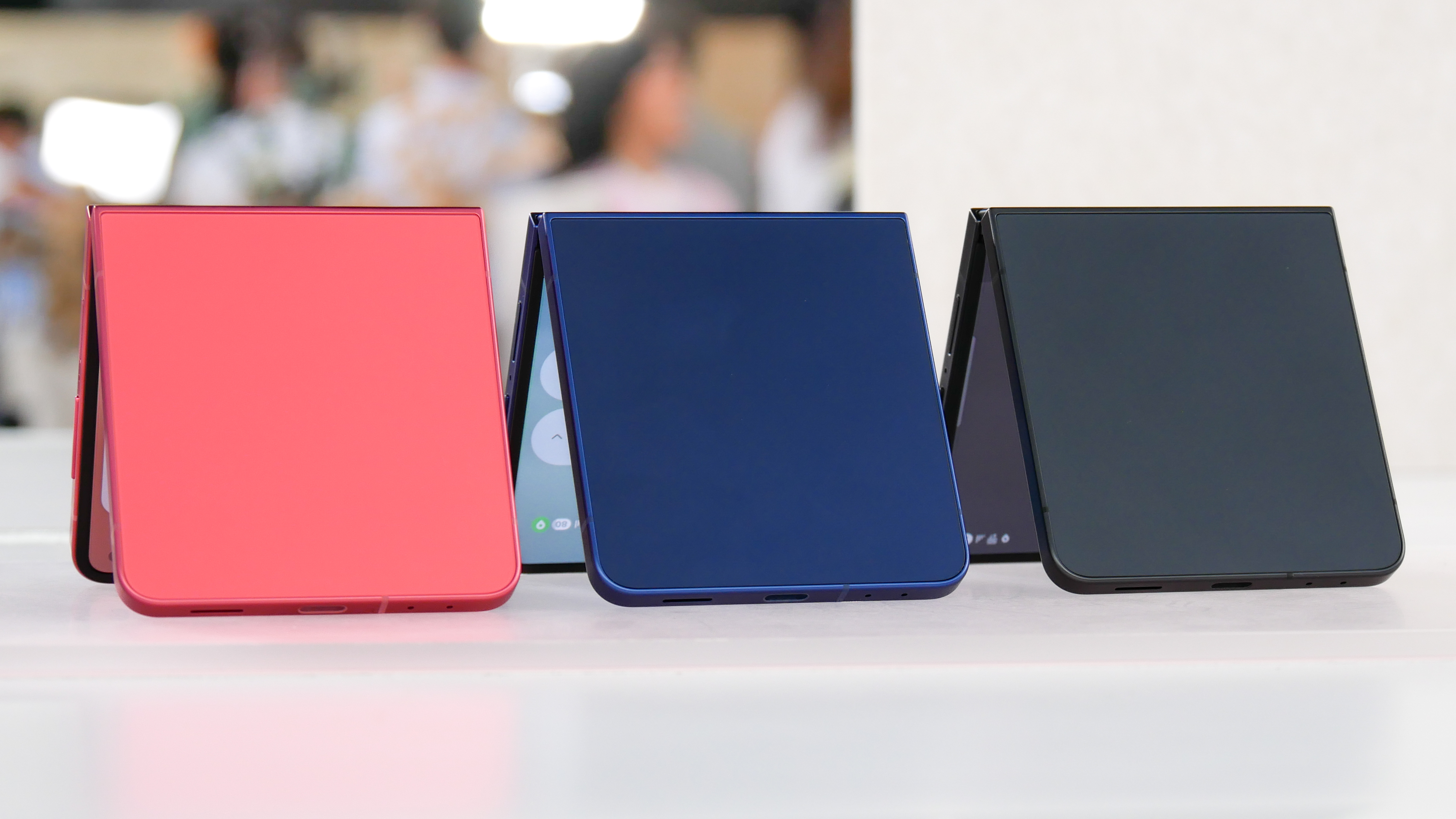
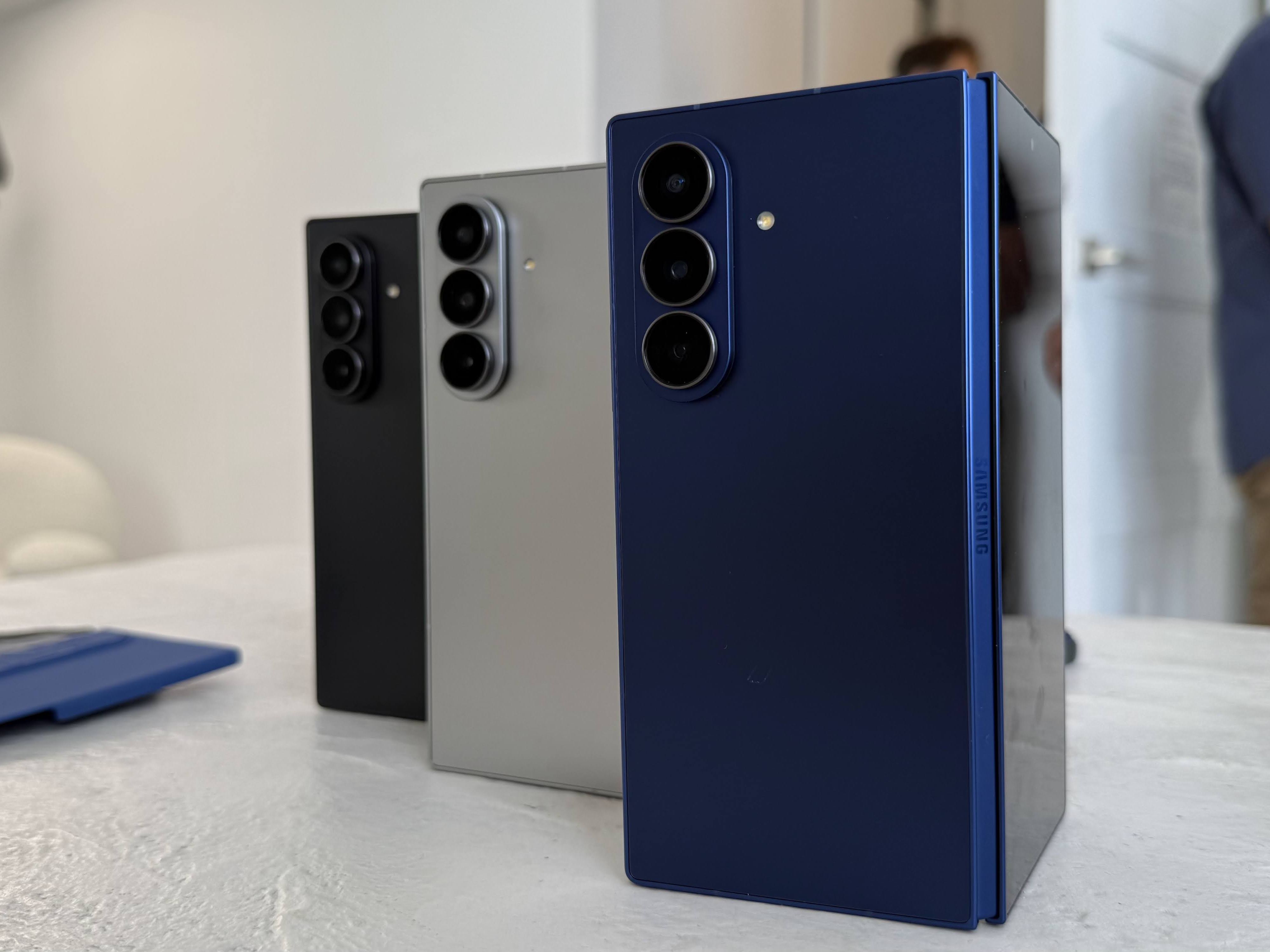
Samsung reduced the color options year over year, and the selection is rather slim. The Z Fold 7 is available in Blue Shadow, Jet-Black, or Silver Shadow, while the Z Flip 7 is available in Blue Shadow, Coral-Red, or Jet-Black. You can get either in Mint (green) as an exclusive from Samsung’s website.

The Fold 7 is as large as any flagship smartphone, and the Flip 7 is half as much when closed.

Winner: Galaxy Z Flip 7


Screens: A Bigger Screen Equals More Multitasking

Samsung increased the size of all the screens this year. The Z Fold 7 now has a 6.5-inch outer display with a resolution of 2,520 by 1,080 pixels, a pixel density of 422ppi, a 21:9 aspect ratio, and a120Hz refresh rate. It’s the same shape as most other phone screens now, which makes it easier to use. The inner screen jumps from 7.6 inches to 8.0 inches and has 2,184 by 1,968 pixels for a density of 368ppi. It also has a 120Hz refresh rate. This is an incredible amount of screen real estate to have in your pocket.

Samsung Galaxy Z Fold 7 inner display

Galaxy Z Fold 7 inner display (Credit: Eric Zeman)

The Flip 7 has a 4.1-inch outer screen with 948 by 1,048 pixels at 342ppi and 120Hz. It’s capable of running more apps and widgets than before, but it’s not quite as powerful as the full outer screen of the Fold 7. The inner screen measures 6.9 inches with 2,520 by 1,080 pixels in a 21:9 aspect ratio and a 120Hz refresh rate. The Flip’s main screen is the same size as the Fold 7’s outer screen.

Samsung Galaxy Z Flip 7 inner screen

Galaxy Z Flip 7 inner screen (Credit: Eric Zeman)

All four displays are incredibly bright, have hard-to-see creases, and provide more real estate than ever, but the Fold is much better for multitasking.

Winner: Galaxy Z Fold 7

Cameras: The Fold Has More to Flip Out About

Samsung Galaxy Z Fold 7

The Z Fold 7 takes a big leap forward this year, upgrading from a 50MP main sensor to the same 200MP sensor found in theGalaxy S25 UltraandS25 Edge. Samsung says it offers all the same features. The sensor can handle 2x optical zoom, macro shots, and 200MP, 50MP, or 12MP photos. Otherwise, it appears to carry over the 12MP ultra-wide sensor (now with autofocus) and the 10MP telephoto camera (with 3x optical zoom) lens on the Fold 6. The 10MP selfie camera on the cover is unchanged, too, but the user-facing camera that’s part of the display has been improved from 4MP to 10MP. Samsung also dropped the under-display technology for a regular old punch hole. Last, it improved the field of view to 100 degrees, allowing it to capture super-wide group photos.Galaxy Z Fold 7 in silver, blue, and black (Credit: Eric Zeman)

Samsung Galaxy Z Flip 7

Samsung didn’t give the Flip 7 as much to brag about. From a hardware perspective, it ports over the entire stack from the Flip 6, which includes a 50MP main camera, a 12MP ultra-wide camera, and a 10MP selfie camera. Dedicated selfie software adds some appeal.Both phones gain access to the latest ProVisual Engine processing software, which Samsung says enables features like always-on 10-bit HDR+ color capture, noise suppression, and clear night videography. However, the Fold 7 has Qualcomm’s best ISP on board, and we know little about the Exynos ISP.Galaxy Z Flip 7 (Credit: Eric Zeman)

Samsung says Fold 7 buyers will be as happy with their phone as shutterbugs are with the photo-first Galaxy S25 Ultra.

Winner: Galaxy Z Fold 7

Battery and Charging: The Smaller Phone Has More Battery

Samsung Galaxy Z Fold 7

Samsung sticks with the same 4,400mAh battery it has used for the last three versions of the Z Fold. Meanwhile, the Z Flip 7’s battery grows slightly from 4,000mAh to 4,300mAh. Both phones continue to support 25W wired charging and 15W wireless charging. They also support reverse wireless charging, but at a pokey 5W.Galaxy Z Fold 7 (Credit: Eric Zeman)

As with last year’s phones, Samsung says both the Fold and the Flip’s batteries will reach a 50% charge after plugging them in for just 30 minutes. You’ll have to provide the charger, though, as neither ships with one in the box.Samsung claims the Z Fold 7’s battery can provide up to 26 hours of video playback, and the Z Flip 7 can run for 31 hours doing the same. That’s for a 720p video stored locally.

In testing, last year’s Fold 6 ran for 11 hours and 30 minutes and the Flip 6 ran for 16 hours and 20 minutes. The former is less than most modern slab-style phones, while the latter is in line with today’s flagships. If the Fold and Flip 7 make any improvements at all here, you should be in good shape.

Winner: Tie


Software: Galaxy AI and Gemini Galore

Both phones gain new AI powers that are accessible from their outer and inner displays, whether they are opened or closed. The Flip takes a bigger step forward, though it all depends on whether you actually use the software.

Samsung Galaxy Z Flip 7

According to Samsung, the Fold 7 and Flip 7 are the first phones to ship withAndroid 16and include One UI 8 on top. Each will receive seven years of OS and security upgrades.The Galaxy Z Flip 7’s Flex Window (Credit: Eric Zeman)

Samsung went out of its way to explain that the Flip 7 can now access Gemini Live right from the outer screen. A simple press of the side button allows you to start conversations with Google’s chatbot and ask follow-up questions without ever opening the phone. The Flip outer screen also gets the Now Bar and Now Brief, which are AI tools ported over from the Galaxy S25 line that provide real-time information about various things like the weather, news, and your daily schedule.

The Fold 7’s best AI-assisted features are centered on the camera and photo apps. Photo Assist moves, erases, or enlarges objects. Portrait Studio lets you clean up your people pics. Audio Eraser can automatically delete the unwanted background noise in your recordings. Side-by-side editing is possible on the Fold’s giant screen, which lets you see the original and edited photo at the same time.

Winner: Tie


Which Galaxy Foldable Is Right for You?

The use cases for the Galaxy Z Flip 7 and Z Fold 7 are quite different, as are their prices, sizes, and capabilities. In the end, that should make it relatively easy for you to decide between them. Consider the following:

  • If you want a smaller, less costly phone with plenty of AI, the Z Flip 7 is the right model for you.
  • If you’re willing to pay a premium and want a phone for multitasking, productivity, and photography, pick the Z Fold 7.