Apple has never been shy about giving its display technology an impressive name. Now, PROLED XDR Display is the latest term attracting attention, particularly among Mac users, creative professionals and anyone considering a new high-end laptop.
At first glance, PROLED XDR sounds like another marketing label. But there is a genuine reason this technology is interesting. It sits at the intersection of OLED-style contrast, advanced LED backlighting and Apple’s push towards brighter, more accurate displays.
With UK consumers increasingly working from home, editing photos and video, gaming and consuming HDR content on laptops, display quality has become much more than a luxury specification.
So what exactly is a PROLED XDR Display, and does it actually make a difference?
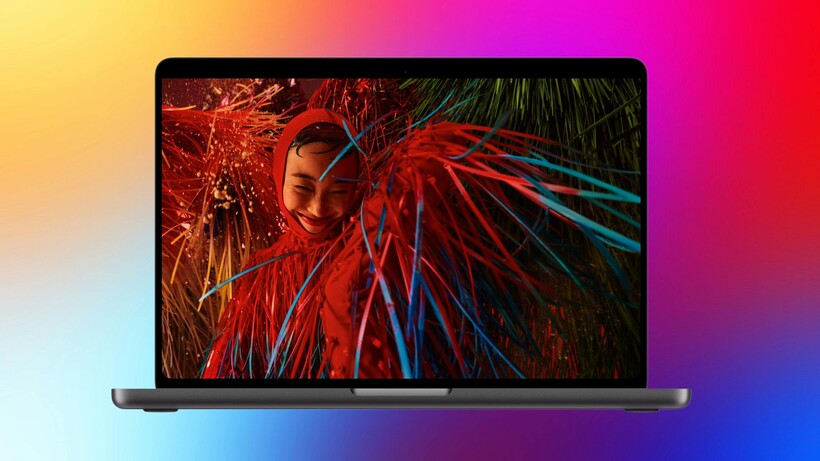
What does PROLED XDR actually mean?
The simplest way to understand PROLED XDR technology is to think of it as a high-end display system designed to deliver extremely bright highlights, deeper contrast and more precise control over different areas of the screen.
The “XDR” part refers to Extended Dynamic Range. Apple has already used the XDR branding for its professional displays, where the goal is to reproduce a wider range between the darkest blacks and brightest highlights.
Traditional LCD panels rely on a backlight that illuminates the display. The problem is that the backlight cannot always be controlled precisely enough, so bright objects can cause unwanted light around darker areas.
Advanced LED backlighting addresses this by dividing illumination into many individually controlled zones.
The result is better HDR display performance, improved contrast and brighter highlights without simply making the entire screen brighter.
Why is this different from a standard LED screen?
A conventional laptop LCD may have a relatively basic backlight. Even if the panel itself is good, it has limited control over where light is produced.
A PROLED XDR screen takes a more sophisticated approach.
Rather than treating the entire display as one illuminated surface, advanced backlighting can adjust different sections independently. A bright window against a dark night scene can therefore appear considerably more dramatic.
This is particularly useful when watching HDR films.
Imagine a dark scene featuring a city skyline with thousands of lights. A conventional LCD may struggle to keep the dark sky genuinely dark while maintaining bright lights. With more precise local dimming, an XDR-style display can make the lights stand out while preserving shadow detail.
That is the fundamental attraction of the technology.
PROLED XDR vs OLED: which is better?
This is where things become particularly interesting for British buyers.
OLED remains one of the most popular premium display technologies because each pixel can effectively control its own light. That allows OLED screens to achieve incredibly deep blacks and excellent contrast.
So why would anyone want an LED-based XDR system?
Brightness is one of the key reasons.
High-end LED and Mini-LED technologies can deliver extremely bright highlights, which can be particularly useful for HDR content. They can also avoid some of the long-term concerns associated with OLED, including potential image retention or burn-in under certain usage conditions.
That does not mean PROLED XDR automatically beats OLED.
OLED vs Mini-LED remains a genuine debate. OLED generally has the advantage for perfect blacks and pixel-level contrast, while sophisticated LED systems can compete strongly on brightness and sustained HDR performance.
For professional users, the choice may ultimately depend on the type of work being done.
Why does brightness matter so much?
For years, display manufacturers competed mainly on resolution. Today, brightness and dynamic range are becoming just as important.
A screen can have an enormous number of pixels, but if it cannot reproduce bright highlights properly, HDR content may still look flat.
This is where high brightness HDR displays become valuable.
A laptop with a powerful XDR display can make sunlight, reflections, explosions and other bright elements appear considerably more realistic. For photographers and video editors, accurate highlight reproduction can also make it easier to judge how content will look on other HDR devices.
For everyday users, there is a simpler benefit: the display can remain easier to see in bright environments.
That could be particularly useful for people working in cafés, trains or offices with strong overhead lighting — familiar scenarios for many UK laptop owners.
A major advantage for creative professionals
The real target audience for PROLED XDR displays is likely to be professionals.
Photographers need accurate colour reproduction. Video editors need reliable HDR performance. Designers need consistent brightness and contrast. Developers may simply appreciate having a screen that makes long working sessions more comfortable.
The technology becomes especially compelling when paired with a high-resolution panel.
A sharp display combined with strong contrast, wide colour coverage and precise backlighting can make everything from RAW photographs to 4K HDR video look considerably more convincing.
For MacBook Pro users, this could make the display one of the strongest reasons to choose a premium model rather than a cheaper notebook.
What about everyday users?
You do not need to edit Hollywood films to appreciate a good display.
Streaming services increasingly offer HDR content, while YouTube, gaming platforms and modern smartphones are producing increasingly sophisticated video.
That means the average British consumer is already surrounded by HDR content.
A PROLED XDR laptop display could therefore improve everything from watching a Netflix drama to browsing photographs.
The difference may not be as dramatic when reading emails or writing documents, of course. Text does not suddenly become revolutionary simply because the backlight is more advanced.
But switch to a high-quality film, photograph or game, and the advantages become much easier to see.
The disadvantages: premium technology comes at a price
There is no such thing as a free upgrade.
The first issue is cost. Advanced display technology requires sophisticated panels, backlighting and control systems, and those costs are reflected in premium hardware.
There is also the potential for blooming.
Even with highly sophisticated local dimming, a bright object displayed against a completely black background can sometimes create a small halo of light. OLED has an inherent advantage here because individual pixels can switch off independently.
Power consumption can also become a consideration when pushing a display to very high brightness levels.
And then there is the question of whether everyone actually needs it.
For someone who mainly writes emails, browses the web and works with spreadsheets, spending significantly more for an advanced HDR display may not deliver enough practical value.
Why this matters in the UK right now
The British technology market is increasingly focused on premium computing, AI-powered laptops and devices designed to last longer.
As laptop prices rise, consumers are becoming more interested in whether a machine will remain useful for several years rather than simply offering the fastest processor today.
That puts the screen firmly in the spotlight.
A processor upgrade might make certain applications faster, but you look at the display every single time you use the laptop.
For people considering Apple’s latest professional hardware, PROLED XDR display technology could therefore be one of the most meaningful upgrades — particularly for creative work and entertainment.
Is PROLED XDR the future of laptop displays?
Possibly, although OLED is unlikely to disappear.
The more realistic future is a market where OLED, Mini-LED and advanced XDR-style technologies coexist, each targeting different users.
OLED will remain attractive for those who prioritise perfect blacks and pixel-level contrast. Meanwhile, advanced LED systems can continue pushing brightness, durability and HDR performance.
The important change is that displays are no longer simply about resolution.
The next generation of premium screens will compete on brightness, contrast, colour accuracy, HDR, efficiency and how intelligently every part of the panel can be controlled.
That is what makes PROLED XDR interesting.
It is not simply another way of saying “high resolution”. It represents a broader shift towards displays that can reproduce a much wider and more convincing range of light.
For British consumers shopping for a premium laptop, that could make the screen just as important as the processor sitting underneath it.
And if you’re buying a MacBook for the next five years rather than the next five months, that is something worth paying attention to.
Apple Laptop Batteries – Shop a wide selection of Apple Laptop Batteries at www.oriccabattery.co.uk Fast Shipping. 30 Day Replacement Guarantee.